
Your roof looks darker on one side because that side retains moisture longer, creating ideal conditions for biological growth. North-facing slopes and shaded areas dry out slower, allowing algae like Gloeocapsa magma, moss, and lichen to take hold and spread. Prevailing winds drive moisture and spores onto specific slopes, accelerating the problem further. Understanding exactly what’s growing—and whether it signals cosmetic or structural damage—can save you from costly repairs down the line.
Key Takeaways
-
North-facing slopes receive less sunlight, staying damp longer and promoting algae, moss, and lichen growth that causes visible darkening.
-
Shaded areas from trees or structures dry slower, retaining moisture and organic debris that accelerates biological growth on one side.
-
Prevailing winds drive moisture and spores onto windward slopes, increasing biological growth and dark staining on exposed sections.
-
Algae like Gloeocapsa magma feeds on limestone in shingles, creating dark streaks concentrated where moisture and shade persist longest.
-
Discoloration darkening after dry weather suggests trapped moisture, indicating one side may have compromised roofing materials requiring inspection.
What’s Actually Causing That Dark Discoloration?
That dark patch spreading across one side of your roof isn’t just dirt — it’s almost always a biological growth called Gloeocapsa magma, a type of algae that feeds on the limestone filler in asphalt shingles.
As it colonizes, it produces a dark pigmented sheath to protect itself from UV radiation, creating those characteristic black or gray streaks.
Moss and lichen often follow, embedding root-like structures directly into the shingle surface.
Left untreated, these organisms accelerate shingle deterioration and void manufacturer warranties.
Proper roof maintenance requires identifying the specific growth type before applying any cleaning techniques, since moss, algae, and lichen each respond differently to treatment.
Misidentifying the problem leads to ineffective cleaning and repeated damage cycles. Regular cleaning serves as preventative care to save costs and extend your roof’s lifespan.
Why One Side of Your Roof Gets It Worse
Your roof’s geometry determines which side takes the brunt of biological growth.
North-facing slopes receive less direct sunlight, keeping surfaces damp longer and creating the ideal conditions for moss, algae, and mold to establish themselves.
Prevailing winds compound the problem by driving moisture and airborne spores directly into shaded sections, accelerating colonization on one side while the sun-exposed opposite slope stays comparatively clean. Regular roof cleaning is essential for maintaining roof condition and preventing these issues from escalating.
Sun Exposure Matters
One of the most overlooked reasons for uneven roof discoloration is differential sun exposure. In the Northern Hemisphere, your roof’s north-facing slope receives considerably less direct sunlight due to the sun angle staying mainly to the south. This reduced UV exposure means moisture lingers longer, creating ideal conditions for moss, algae, and lichen to colonize that surface.
Seasonal variations compound the problem. During winter months, the sun sits lower on the horizon, further limiting light reach on north-facing slopes while the south-facing side dries efficiently after rain.
That persistent dampness accelerates biological growth, which is why your darker side almost always faces north or northeast. It’s not a coincidence — it’s a predictable consequence of how your roof interacts with the sun’s trajectory throughout the year.
Shade Accelerates Growth
Beyond sun angle alone, shade from nearby trees, structures, or even your own roofline dramatically intensifies biological growth on one side of your roof.
Shade effects compound the moisture problem considerably — shaded surfaces dry slower, stay cooler, and retain organic debris longer. These conditions create an ideal environment where algae, moss, and lichen establish themselves faster and spread more aggressively.
You’ll notice distinct growth patterns on shaded roof sections that simply don’t appear on sun-exposed areas.
A north-facing slope already receives less direct sunlight, but if nearby evergreens or an adjacent structure blocks what little sun it does get, biological colonization accelerates markedly.
What begins as minor discoloration can progress into thick moss coverage within a single season, embedding itself into shingles and causing premature deterioration.
Wind Drives Moisture
Shade accelerates biological growth, but wind shapes how moisture reaches your roof in the first place. Prevailing wind patterns push rain, fog, and airborne debris toward specific roof faces, creating uneven moisture retention across your roofline.
Windward-facing slopes consistently receive:
-
Higher volumes of wind-driven rain that penetrate shingles at low angles
-
Organic debris—leaves, pollen, dirt—deposited by gusts and trapped in surface texture
-
Salt-laden air in coastal zones that accelerates material breakdown
-
Repeated wet-dry cycles that weaken surface coatings faster than sheltered sides
The leeward side dries faster and collects less debris.
Your windward slope stays damp longer, feeding the algae, moss, and lichen colonies that produce that characteristic dark discoloration you’re seeing from the street.
Is the Darkness Moss, Algae, or Just Dirt?
Before you assume your roof just needs a rinse, you need to identify what’s actually causing the discoloration—because moss, algae, and dirt behave differently and require different treatments.
Moss appears as thick, green, or brownish clumps with visible texture. It holds moisture against your shingles and requires targeted moss removal techniques, including soft washing and post-treatment biocides.
Algae typically shows up as dark, streaky staining—often black or greenish—caused by Gloeocapsa magma, a cyanobacterium feeding on your shingles’ limestone filler. Effective algae prevention tips include zinc or copper strip installation and annual soft wash treatments.
Dirt and debris, by contrast, tend to look uneven and patchy without biological structure. Misidentifying the cause leads to ineffective treatment and accelerated roof deterioration. Regular maintenance should include trimming tree branches to increase sunlight and reduce moisture retention on your roof.
When Roof Discoloration Signals Real Damage
Most of the time, a darker section of roof is cosmetic—biological growth or dirt that a professional cleaning resolves without lasting consequences. But when discoloration accompanies soft or spongy decking, cracked or missing shingles, or interior water stains on your ceiling, you’re likely dealing with structural damage rather than surface staining. If you notice any of these warning signs, you need to act immediately, because moisture intrusion compounds quickly and turns a manageable cleaning issue into a costly repair. Regular gutter cleaning frequency can help prevent such moisture-related issues from developing.
Staining Versus Structural Damage
While a darker patch on one side of your roof is often just surface staining from algae, moss, or debris buildup, it can also indicate structural damage that requires more than a cleaning crew.
Distinguishing between staining types and threats to structural integrity is critical before scheduling any service.
Watch for these warning signs that go beyond cosmetic discoloration:
-
Sagging or uneven roofline beneath the darkened area
-
Soft spots or visible rot on fascia boards and decking
-
Interior water stains aligning with the discolored section
-
Granule loss on shingles exposing bare asphalt underneath
If you notice any of these alongside surface discoloration, contact a licensed roofing contractor before pursuing cleaning.
Treating structural damage as a staining issue delays necessary repairs and worsens deterioration.
Signs of Moisture Intrusion
Roof discoloration that stems from moisture intrusion behaves differently than surface staining, and recognizing the distinction can prevent costly structural repairs down the line.
Unlike algae or moss growth, moisture indicators typically include dark streaking that originates from flashing seams, valleys, or penetration points. You’ll often notice these intrusion signs accompanied by soft decking, sagging rooflines, or interior water stains on ceilings directly below the affected area.
Granule loss on asphalt shingles adjacent to dark patches also signals water has compromised the material’s integrity. If discoloration appears darker after dry weather rather than wet weather, trapped subsurface moisture is likely the cause.
At that point, professional inspection becomes necessary before any cleaning service is appropriate.
When to Act Immediately
Not all roof discoloration warrants the same urgency, but certain visual cues demand immediate action before conditions worsen. If you’re noticing any of the following, don’t delay scheduling a professional inspection:
-
Sagging or bubbling shingles alongside dark staining, indicating trapped moisture and structural compromise.
-
Interior water stains or odors suggesting active leakage tied to exterior biological growth.
-
Black streaking near ventilation points, which raises health concerns due to potential mold spore infiltration into living spaces.
-
Rapid discoloration spread across previously unaffected roof sections within a single season.
These conditions move beyond cosmetic issues into territory that threatens both your home’s structural integrity and your household’s air quality.
Taking immediate action at these early warning stages greatly reduces repair costs and prevents irreversible damage to underlying roofing materials.
Can You Clean a Discolored Roof Without Damaging It?
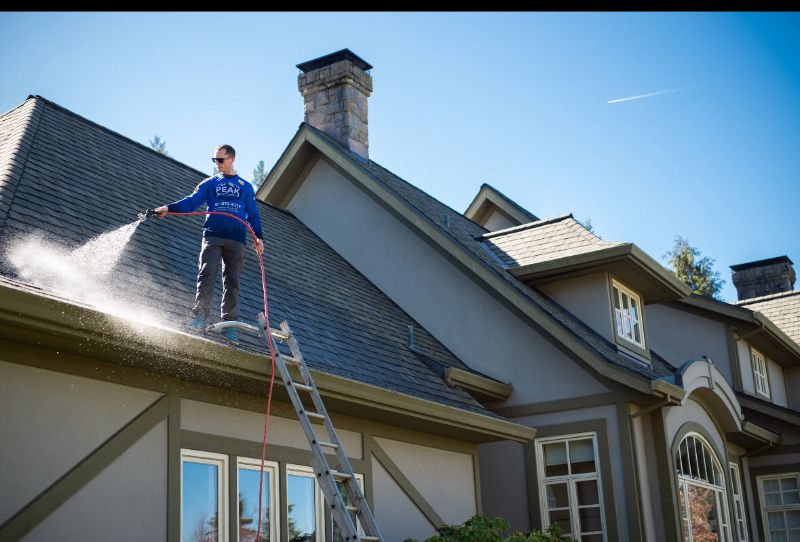
Yes, you can clean a discolored roof without damaging it—but the method matters. High-pressure washing is one of the most common mistakes homeowners make. It strips granules from asphalt shingles, voids manufacturer warranties, and accelerates deterioration.
The right approach relies on gentle techniques like soft washing, which uses low pressure combined with effective solutions—typically sodium hypochlorite-based treatments—to kill algae, moss, and lichen at the root. This method cleans thoroughly without compromising your roofing materials.
Applying the solution correctly, allowing proper dwell time, and rinsing carefully are all critical steps. One misstep can cause streaking, surface damage, or incomplete treatment. That’s why hiring an experienced professional who understands roofing materials and appropriate chemical concentrations produces far better results than attempting it yourself.
Additionally, eco-friendly roof cleaning regimens can effectively manage these growths without environmental harm.
When to Call a Professional for Roof Cleaning
Most homeowners can spot the signs that warrant professional roof cleaning: visible moss colonies, streaking algae, lichen crusting along shingles, or a roof that’s noticeably darker on one side due to sustained moisture retention.
These aren’t cosmetic issues—they’re structural threats. Among the most actionable roof maintenance tips is knowing when DIY methods fall short.
Call a professional when you notice:
-
Moss or algae covering more than 20% of the roof surface
-
Persistent dark staining after rainfall
-
Lichen growth embedded into shingle granules
-
Recurring discoloration within one season of prior cleaning
Professional cleaning benefits include proper low-pressure soft washing techniques, EPA-compliant biocidal treatments, and surface-specific solutions that eliminate biologicals without voiding manufacturer warranties or accelerating shingle deterioration. Additionally, engaging professionals ensures tailored cleaning techniques for different materials and conditions.
Frequently Asked Questions
How Long Does Roof Discoloration Take to Visibly Appear?
You’ll typically notice visible roof discoloration within one to two years of initial algae growth. Without proactive roof maintenance, dark streaks and staining intensify rapidly, becoming increasingly difficult and costly to remove over time.
Does Roof Discoloration Affect My Home’s Resale Value?
Yes, roof discoloration can hurt your home’s resale value. Buyers notice poor property aesthetics immediately, reducing perceived worth. Consistent roof maintenance prevents biological staining, preserving your home’s marketability and protecting your long-term investment greatly.
Can Roof Discoloration Spread to My Siding or Gutters?
Yes, it can. Mold growth and algae spores travel via water runoff, spreading from your roof onto your siding and gutters. You’ll need prompt algae prevention treatments to stop contamination from advancing further down your home’s exterior.
How Often Should Portland Homeowners Have Their Roofs Cleaned?
In Portland’s wet climate, you should prioritize roof maintenance every 1–2 years. The high moisture and shade accelerate moss and algae growth, making this cleaning frequency essential for preventing long-term damage and costly repairs.
Will Homeowners Insurance Cover Damage Caused by Roof Discoloration?
Most insurance policies won’t cover damage from discoloration causes like moss, algae, or neglect—they consider it a maintenance issue. You’ll need to address roof discoloration proactively to avoid costly repairs that aren’t reimbursable.
Conclusion
Your roof’s uneven darkening isn’t random — it’s a direct response to shade exposure, moisture retention, and airflow patterns specific to your home’s orientation. Whether you’re dealing with moss, algae, or embedded dirt, ignoring it accelerates material breakdown. You’ll want to act before biological growth compromises your shingles’ structural integrity. Schedule a professional inspection, invest in targeted cleaning, and consider preventative treatments to stop the cycle before it shortens your roof’s lifespan.