
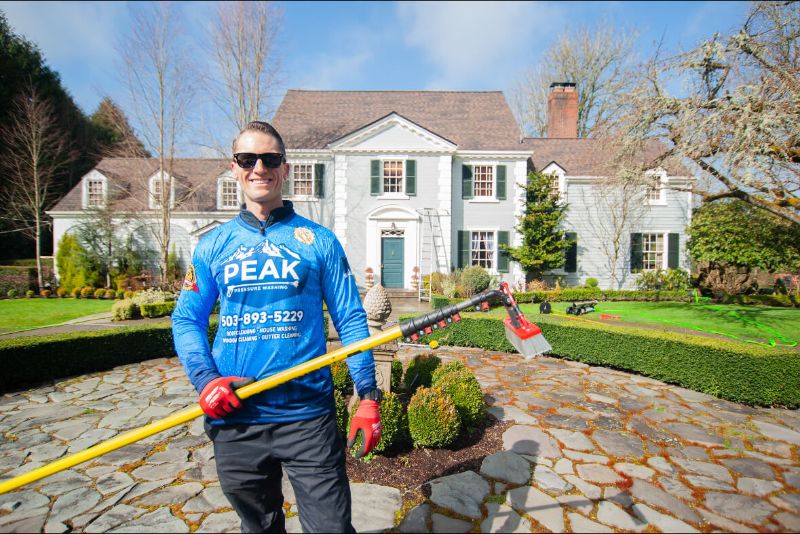
Clackamas County’s 40+ inches of annual rainfall and mild temperatures create a year-round breeding ground for moss on your roof and siding. Moss isn’t just unsightly — its root-like structures penetrate shingles and siding, accelerating rot, warping, and premature aging. One-time treatments can’t combat continuous airborne spore reintroduction in this climate. Annual treatment plans maintain consistent protection, keeping maintenance costs predictable and preventing costly replacements. Everything you need to know about protecting your property is covered ahead.
Key Takeaways
-
Clackamas County’s 40+ inches of annual rainfall creates persistently moist conditions that accelerate moss growth on roofs and siding year-round.
-
Moss rhizoids penetrate shingles and siding, compromising waterproofing, causing rot, and potentially voiding manufacturer warranties if left untreated.
-
Airborne spores and ground-level colonies continuously reintroduce moss, making one-time treatments insufficient for lasting control.
-
Annual plans include scheduled inspections, post-wet-season treatments, and fall preventive applications that eliminate moisture-retaining organic debris.
-
Consistent annual maintenance reduces long-term surface damage, keeps repair costs predictable, and extends the overall lifespan of property exteriors.
Why Clackamas County’s Climate Makes Moss a Year-Round Problem
Clackamas County’s climate creates near-perfect conditions for moss growth year-round. The region averages over 40 inches of annual rainfall, and its mild temperatures rarely drop low enough to kill established moss colonies.
You’re dealing with an environment where moisture persists across rooftops, concrete, and wood surfaces for extended periods, accelerating moss growth between dry seasons.
Climate impact here isn’t seasonal — it’s continuous. Even during summer, shaded surfaces retain enough ambient moisture to sustain dormant moss. When fall rains return, those colonies reactivate and spread rapidly.
Northwest-facing surfaces and tree-covered areas face the greatest risk, as reduced sunlight limits natural drying.
Without a structured treatment plan, moss establishes deeper root systems each year, causing progressive surface deterioration that becomes increasingly costly to reverse. Regular monitoring of these surfaces can help intervene before moss becomes a larger problem.
What Moss Actually Does to Your Roof and Siding
Moss isn’t just an eyesore — it’s an active biological threat to your roof and siding. As moss growth advances, its root-like structures called rhizoids penetrate shingle surfaces, loosening granules and compromising the waterproof layer beneath. This accelerates UV degradation and creates pathways for moisture intrusion.
On wood and fiber cement siding, moss retains water against the surface, promoting rot, warping, and paint failure. Asphalt shingles experience accelerated aging, while wood shakes can split and crack under sustained biological pressure.
Roof damage from untreated moss often voids manufacturer warranties and leads to premature replacement — a cost far exceeding routine treatment. On siding, the moisture retention creates ideal conditions for mold and mildew to establish secondary colonies, compounding structural deterioration over time. Additionally, regular inspections can help catch potential roof problems early, preventing significant issues down the line.
Why One-Time Treatments Don’t Keep Moss Away
Even after a thorough moss treatment, you’re not fully in the clear—spores remain embedded in your roof and siding surfaces, waiting for the right conditions to germinate. Clackamas County’s wet climate means moisture returns consistently, giving those spores exactly what they need to fuel rapid regrowth. Without a recurring treatment plan, you’ll find moss re-establishing itself within a single season, undoing the results of any one-time cleaning. Regular inspections can help identify potential moss growth early and prevent larger issues down the line, making early detection a crucial part of upkeep.
Moss Regrows Quickly
One treatment won’t keep moss off your Clackamas County property for long. Moss growth resumes quickly once conditions return to normal — and in the Pacific Northwest, those conditions rarely disappear.
Moisture, shade, and organic debris create a persistent environment where moss reestablishes itself within months of a single treatment. Spores remain dormant in surrounding soil, gutters, and on adjacent surfaces.
Once humidity levels rise and temperatures cool, regrowth begins. Without consistent treatment frequency, you’re fundamentally starting over each time moss becomes visually noticeable — often after structural damage has already begun.
A single application addresses what’s visible, not the underlying biological cycle driving regrowth. Controlling moss long-term requires scheduled treatments timed to Clackamas County’s seasonal patterns, not reactive cleanings triggered only when the problem becomes obvious.
Spores Remain After Treatment
After a moss treatment clears visible growth from your Clackamas County roof or surfaces, spores persist in gutters, soil, and surrounding organic debris — ready to reestablish once moisture and shade return.
Spore survival undermines single-application treatment effectiveness, making one-time cleanings insufficient for long-term control.
Three reasons spores compromise treatment effectiveness:
-
Airborne reintroduction — Neighboring trees and vegetation continuously deposit fresh spores onto treated surfaces.
-
Gutter accumulation — Spores collect in gutters and wash back onto roofing materials during rainfall.
-
Soil reservoir — Ground-level spore colonies near your foundation migrate upward onto siding and hardscapes.
Without scheduled reapplication, you’re only addressing visible symptoms — not the underlying spore population driving recurring moss growth across your property.
Moisture Fuels Regrowth
Clackamas County’s climate delivers the exact conditions moss needs to reestablish — wet winters, overcast springs, and persistent surface moisture that single treatments can’t neutralize long-term.
Shaded rooflines, north-facing surfaces, and organic debris accumulation compound moisture retention, creating ideal zones for accelerated moss growth between service visits.
When treated moss dies, it leaves behind a porous organic layer that absorbs and holds rainfall.
That residual material functions as a seedbed, drawing in airborne spores and supplying the sustained dampness they require to colonize.
Your roof or hardscape doesn’t need to stay visibly wet — intermittent moisture is enough.
Without scheduled reapplication of inhibiting treatments, surfaces in Clackamas County will cycle back into active moss growth within one to two seasons.
What an Annual Moss Treatment Plan Includes
Annual moss treatment plans take the guesswork out of protecting your Clackamas County property by bundling scheduled inspections, preventive treatments, and corrective cleanings into a single, structured program.
These plans apply proven moss treatment methods at strategic intervals, stopping regrowth before it establishes deep root systems.
A standard annual plan typically includes:
-
Spring inspection and treatment — eco-friendly solutions are applied after wet season exposure to neutralize active moss colonies.
-
Surface cleaning — roofs, gutters, and hardscapes are cleared of biological debris to eliminate moisture-retaining organic matter.
-
Fall preventive application — a protective treatment is reapplied before peak rainfall returns, maintaining a hostile environment for new moss growth.
This structured approach reduces long-term surface damage and keeps maintenance costs predictable year over year. Additionally, regular inspections after rainfall events can help identify hidden infestations early, ensuring your property remains moss-free.
How Much Moss Damage Costs Without a Prevention Plan
Skipping a prevention plan might seem like a cost-saving decision, but moss damage compounds quickly into expenses that far outweigh routine maintenance costs.
Moss removal costs for heavily infested roofs typically range from several hundred to over a thousand dollars, depending on coverage and surface condition. Without intervention, long-term damage accelerates—moss roots penetrate asphalt shingles, lifting granules and compromising waterproofing integrity.
You’re then facing potential deck rot, compromised gutters, and structural moisture intrusion that demands professional remediation. Roof replacement alone can cost $8,000 to $25,000 in the Portland metro area.
Preventative annual treatments average a fraction of that figure. Protecting your property with consistent moss management isn’t optional maintenance—it’s a financially sound decision that preserves your investment and avoids compounding repair bills. Moreover, prolonged moisture exposure can lead to leaks and wood rot if left unchecked.
How to Choose a Moss Treatment Service in Clackamas County
Choosing the right moss treatment service in Clackamas County requires evaluating more than just price.
When reviewing moss treatment options, you need to assess service provider qualifications carefully before committing.
Look for these three factors:
-
Licensing and insurance — Verify the contractor carries valid Oregon business licensing and liability coverage to protect your property during treatment.
-
Treatment methodology — Confirm they use proven soft-washing techniques combined with appropriate moss-inhibiting solutions rather than high-pressure methods that damage roofing materials.
-
Ongoing maintenance plans — Choose providers offering scheduled annual treatments, not just one-time applications.
Peak Pressure Washing serves Clackamas County with licensed, insured professionals who apply eco-friendly treatments and structured prevention plans, giving your property consistent, long-term protection against moss regrowth.
Frequently Asked Questions
Is Moss Treatment Safe for Children and Pets at Home?
Yes, moss treatment safety is a priority at Peak Pressure Washing. We use eco-friendly solutions that protect child pet health. You can let kids and pets back outside once treated surfaces have fully dried.
Can Moss Treatment Plans Be Customized for Commercial Properties?
Yes, you can get tailored solutions designed specifically for your commercial property’s needs. Peak Pressure Washing customizes moss treatment plans to maximize commercial benefits, addressing your building’s size, surface types, and Clackamas County’s environmental conditions.
Will Moss Treatments Affect My Home’s Landscaping or Garden?
Our eco-friendly moss growth prevention treatments won’t harm your landscaping health. We use targeted, plant-safe solutions applied with precision, ensuring your garden and surrounding vegetation stay protected throughout the entire treatment process.
Does Homeowner’s Insurance Ever Cover Moss-Related Property Damage?
Some policies may cover moss-related damage, but you’ll need to review your insurance policy coverage carefully. Insurers often deny claims tied to neglect, making proactive moss growth prevention essential to protecting your coverage eligibility.
How Long Does a Typical Moss Treatment Appointment Usually Take?
Most moss treatment appointments take 1–3 hours, depending on your roof’s size and moss severity. Your treatment duration affects appointment scheduling, so you’ll want to book a time slot that allows thorough, unrushed application.
Conclusion
Moss doesn’t pause between seasons, and neither should your prevention strategy. If you’re waiting until visible growth appears, you’ve already allowed structural damage to begin. An annual moss treatment plan keeps Clackamas County’s relentless climate from winning against your roof, siding, and hardscapes. Peak Pressure Washing delivers the consistent, professional-grade treatments your property requires to stay protected year-round. Don’t let deferred maintenance turn a manageable problem into a costly replacement.