
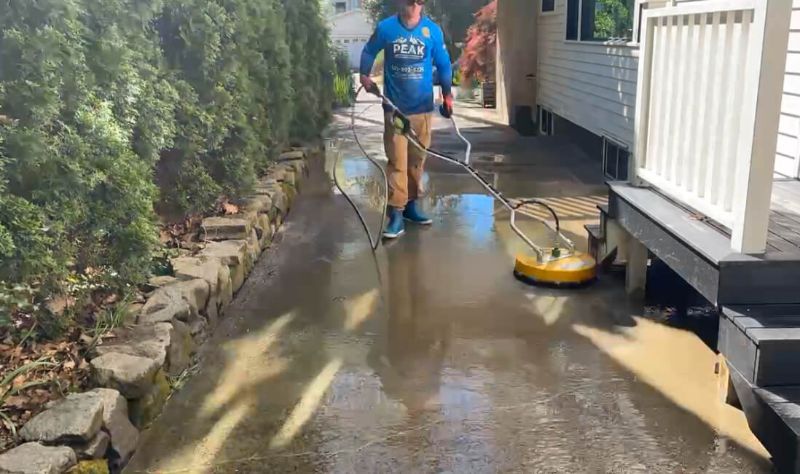
You should never pressure wash wood decks, delicate painted surfaces, outdoor furniture, solar panels, or window screens on high settings. High-pressure streams penetrate material at a microscopic level, splitting wood fibers, stripping paint, and cracking fragile surfaces before damage becomes visible. These materials require low-PSI techniques or chemical treatments to clean safely. Understanding exactly how pressure damages each surface—and what alternatives work best—will help you avoid costly mistakes.
Key Takeaways
-
Wood decks are highly vulnerable, as high pressure splinters fibers, strips natural oils, and permanently degrades the surface structure.
-
Delicate or older paint finishes can strip away instantly when exposed to aggressive pressure washing streams.
-
Solar panels risk cracking or reduced efficiency when struck with high-pressure water jets.
-
Outdoor furniture frames, particularly lightweight metals and plastics, can warp or deform under aggressive washing pressure.
-
Window screens are extremely fragile and can tear beyond repair from even moderate pressure washing force.
Surfaces You Should Never Pressure Wash on High Settings
Pressure washing is an effective cleaning method, but using high-pressure settings on the wrong surfaces can cause irreversible damage. You must identify vulnerable materials before adjusting your pressure washer’s PSI.
Wood decks splinter and erode under excessive force, while delicate paint strips away instantly. Outdoor furniture frames warp, and solar panels crack or lose efficiency when hit with high-pressure streams.
Window screens tear beyond repair, and brick surfaces suffer mortar erosion that compromises structural integrity. Stucco walls develop deep gouges, exposing the underlying substrate to moisture infiltration.
Car exteriors sustain paint chips and clear-coat damage. Always use low-pressure settings, appropriate nozzle attachments, and controlled distances when cleaning these sensitive surfaces.
The Real Damage High-Pressure Water Does to Vulnerable Materials
When high-pressure water strikes a vulnerable surface, it doesn’t just clean—it physically penetrates, fractures, and displaces material at a microscopic level.
Water damage occurs when pressurized streams exploit existing micro-cracks, forcing water deeper into porous substrates. Material vulnerability determines how quickly structural breakdown accelerates—soft wood fibers split, mortar erodes, and painted finishes lift entirely.
Understanding pressure washing risks means recognizing that surface integrity isn’t always visible until damage is done. You can’t reverse etched concrete, stripped wood grain, or compromised sealants.
Each material has a measurable pressure threshold, and exceeding it causes cumulative deterioration that compounds over time.
You’re not just removing dirt—you’re potentially dismantling the structural cohesion of surfaces that require controlled, low-pressure cleaning methods instead.
Gentler Cleaning Alternatives That Won’t Wreck Your Surfaces
Since high-pressure washing is off the table for vulnerable materials, you’ll need effective low-pressure alternatives that clean without compromising structural integrity.
These gentle alternatives protect surfaces while delivering thorough results.
Safe cleaning methods to implement:
-
Soft washing — Apply a low-PSI spray (under 500 PSI) combined with biodegradable detergents to dissolve organic buildup on wood, stucco, and painted surfaces.
-
Hand scrubbing — Use soft-bristle brushes with mild soap solutions for delicate masonry, asphalt shingles, and older painted exteriors.
-
Chemical treatments — Apply oxygen-based or diluted bleach solutions to eliminate mold and mildew without mechanical force.
-
Steam cleaning — Use low-pressure steam equipment on vinyl siding and brick to lift grime through heat rather than impact force.
The Right Pressure Settings for Borderline Surfaces
Some surfaces don’t fall neatly into the “never pressure wash” category but still require careful PSI management to avoid damage.
For borderline materials, you’ll need to dial in precise pressure settings before touching the trigger.
Follow these PSI benchmarks for common borderline materials:
-
Softwood decking — 500–600 PSI, 40-degree nozzle
-
Vinyl siding — 1,200–1,500 PSI, maintain 12-inch standoff distance
-
Composite decking — 1,500 PSI maximum, fan-tip nozzle only
-
Older concrete — 2,000 PSI with wide-angle spray
Always test pressure settings on an inconspicuous section first.
Move the nozzle continuously—never hold it stationary.
If you notice surface erosion, fiber lifting, or discoloration within two passes, reduce PSI by 200–300 increments until the damage response stops.
Warning Signs You’ve Already Pressure Washed Too Aggressively
Even if you stopped the moment something looked off, the damage from aggressive pressure washing often reveals itself in specific, identifiable ways.
Inspect the treated surface carefully for these warning signs:
-
Scuffed paint — irregular streaking or paint removal along spray paths indicates excessive PSI or a zero-degree nozzle used too closely.
-
Cracked concrete — hairline fractures or surface spalling suggest water forced its way into existing micro-voids under sustained pressure.
-
Faded wood — gray, washed-out grain means the wood’s natural oils and protective finish have been stripped prematurely.
-
Chipped tiles — broken glaze edges or grout erosion confirm the pressure exceeded what ceramic or porcelain surfaces can safely absorb.
Document the damage before attempting repairs to assess severity accurately.
Frequently Asked Questions
Can Pressure Washing Void a Manufacturer’s Warranty on Certain Materials?
Yes, aggressive pressure washing can void your manufacturer’s warranty. You’ll compromise warranty implications by ignoring surface compatibility guidelines, as manufacturers specify approved cleaning methods, and exceeding recommended PSI levels invalidates coverage on roofing, siding, and composite materials.
How Often Should Pressure Washing Equipment Be Inspected for Safety?
You should inspect your pressure washing equipment before each use. Follow safety guidelines by checking hoses, seals, and nozzles monthly. Prioritize equipment maintenance with annual professional servicing to guarantee peak performance and prevent hazardous failures.
Are There Legal Restrictions on Pressure Washing in Certain Neighborhoods?
Yes, you’ll find legal restrictions exist in many areas. Always check your local neighborhood regulations and property guidelines before pressure washing, as municipalities often enforce noise ordinances, water usage limits, and runoff management rules.
Does Water Temperature Affect How Aggressively Pressure Washing Damages Surfaces?
Yes, water temperature considerably impacts surface durability. When you’re using hot water, it’ll accelerate material breakdown on delicate surfaces, intensifying damage beyond cold water pressure washing. You should always match water temperature to your specific surface’s tolerance threshold.
Can Pressure Washing Cause Mold Growth if Surfaces Aren’t Dried Properly?
Yes, pressure washing can cause mold growth if you don’t dry surfaces properly. You’ll need effective drying techniques immediately after washing. Prioritize mold prevention by using air movers, squeegees, or direct sunlight to eliminate residual moisture quickly.
Use the Right Pressure to Protect Your Surfaces
Not every surface is built to handle high-pressure washing. Materials like soft wood, stucco, older brick, vinyl siding, and painted finishes can be easily damaged if the pressure is too aggressive. Matching your PSI to the surface—and starting with the lowest effective setting—helps prevent etching, chipping, and costly repairs. When in doubt, always test a small, hidden area first before cleaning the entire surface.
If you’re unsure about the right approach or want to avoid the risk altogether, professional cleaning ensures each surface is treated correctly. Peak Pressure Washing uses tailored pressure and soft washing techniques designed for different materials, helping protect your home while delivering a thorough clean. Request a free quote today and keep your property looking its best without compromising its longevity.