
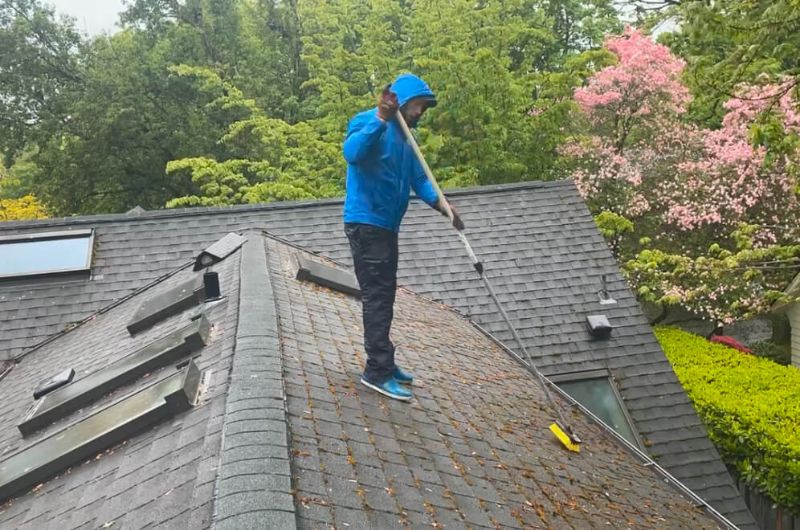
Those black streaks on your roof are most likely Gloeocapsa magma, a cyanobacterium that feeds on the limestone filler in your asphalt shingles and produces dark pigmentation to shield itself from UV rays. It thrives in humid, shaded conditions, particularly on north-facing slopes. Mold, mildew, and decomposing debris can also cause similar streaking. Understanding what’s behind the stains is the first step toward protecting your roof from long-term damage.
Key Takeaways
-
Gloeocapsa magma, a cyanobacterium, is the most common cause of black streaks, thriving on moisture and limestone in asphalt shingles.
-
Shaded, north-facing roof areas retain more moisture, making them especially vulnerable to algae and streak formation.
-
Mold and mildew can create similar dark streaking patterns, particularly near gutters where moisture and debris accumulate.
-
Organic debris like pine needles retains moisture and releases staining compounds, with streaks following debris drainage paths.
-
Clogged gutters cause moisture buildup on shingles, accelerating algae growth and contributing to persistent black streaking.
What Actually Causes Black Streaks on a Roof
Sunlight effects also play a significant role. North-facing and shaded roof sections receive less direct sunlight, reducing evaporation and sustaining the moisture Gloeocapsa magma needs to survive.
The dark pigmentation you see isn’t dirt or debris — it’s the organism’s biological shield against solar radiation, confirming that what you’re dealing with is an active, living biological colonization.
Gloeocapsa Magma: The Algae Behind Most Roof Stains
Although it resembles simple dirt or grime, Gloeocapsa magma is a cyanobacterium — often misclassified as algae — that’s responsible for the vast majority of black and dark brown streaks appearing on residential rooftops across humid climates.
It produces a dark, UV-protective pigment sheath that accumulates over time, creating the streaks you see spreading across shingles. This algae growth thrives on moisture and feeds on the limestone filler embedded in asphalt shingles.
Without consistent roof maintenance, colonies expand rapidly, accelerating shingle degradation and reducing your roof’s reflectivity.
You’ll typically notice streaks first on north-facing slopes and shaded areas where moisture lingers longest.
Identifying Gloeocapsa magma early allows you to target the correct treatment rather than applying ineffective cleaning methods.
Mold, Mildew, and Debris: Other Sources of Roof Streaking
While Gloeocapsa magma causes most roof stains, you should also recognize that mold, mildew, and debris accumulation can produce similar dark streaking patterns.
When moisture becomes trapped beneath leaves, branches, or other organic material, you’re creating ideal conditions for mold and mildew colonies to establish and spread across your shingles.
You’ll find that debris piles don’t just harbor biological growth—they also retain moisture that accelerates shingle deterioration and intensifies the appearance of streaking over time.
Mold and Mildew Growth
Mold and mildew can also develop on your roof, leaving dark streaks or patches that are often mistaken for algae growth. These fungi thrive in damp, shaded environments where moisture accumulates.
Unlike algae, mold penetrates roofing materials more aggressively, accelerating structural deterioration without proper mildew treatment.
Key indicators and mold prevention strategies include:
-
Identify early: Dark, fuzzy patches concentrated near gutters, valleys, or shaded areas signal mold activity
-
Improve ventilation: Proper attic airflow reduces moisture buildup that fuels fungal growth
-
Apply biocidal treatments: Zinc or copper-based solutions inhibit mold and mildew colonization effectively
-
Trim overhanging branches: Reducing shade and debris accumulation limits the moisture retention that promotes fungal development
Act quickly—mold spreads rapidly and compromises your roof’s integrity if left untreated.
Debris Accumulation Effects
Beyond fungal growth, debris accumulation on your roof creates its own set of streaking problems that can be just as damaging. Common debris types—including leaves, pine needles, and organic matter—collect in valleys, gutters, and around flashing.
As these materials decompose, they release tannins and dark organic compounds that stain your shingles, producing visible black streaks.
The accumulation impacts extend beyond aesthetics. Trapped debris retains moisture against your roof’s surface, accelerating shingle degradation and creating conditions favorable for secondary mold colonization.
Pine needles are particularly destructive; their high acidity erodes asphalt shingles over time. You’ll notice streaking patterns that typically follow drainage paths, revealing exactly where debris concentrations occur.
Regular removal prevents these compounding damage cycles before they compromise your roof’s structural integrity.
Are Black Streaks on Your Roof a Sign of Damage?
When you notice black streaks on your roof, you need to assess whether they’re purely cosmetic or indicative of underlying structural damage.
Algae, mold, and debris can trap moisture against your shingles, accelerating deterioration and compromising your roof’s integrity over time.
If you’re seeing widespread streaking, granule loss, or soft spots alongside discoloration, it’s time to contact a qualified roofing professional for a thorough inspection.
Identifying Roof Streak Damage
Black streaks on your roof aren’t just an eyesore—they can signal underlying damage that threatens your roof’s structural integrity and lifespan.
A professional roof inspection can pinpoint whether algae growth has compromised your shingles or if weather effects have accelerated deterioration.
Look for these critical indicators:
-
Granule loss: Shingles appear bare or smooth where algae colonies have stripped protective granules.
-
Curling or lifting shingles: Moisture retention beneath algae mats weakens adhesive bonds.
-
Dark staining patterns: Streaks running vertically indicate water channeling issues.
-
Soft or spongy decking: Prolonged moisture infiltration compromises the underlying roof structure.
Catching these warning signs early prevents costly repairs.
Don’t dismiss black streaks as purely cosmetic—they’re often your roof’s distress signal.
Structural Impact of Streaks
Those dark streaks creeping across your shingles aren’t just ruining your home’s curb appeal—they’re actively compromising your roof’s structural integrity.
Streak formation begins with algae colonies consuming your shingles’ limestone filler, breaking down the granule layer that protects against UV radiation and moisture infiltration. Once that protective barrier deteriorates, your shingles become vulnerable to accelerated cracking, curling, and premature failure.
Beyond roof aesthetics, the biological activity embedded within those streaks retains moisture against your roofing material, creating conditions that invite wood rot in your decking and underlayment.
You’re fundamentally watching a slow structural deterioration unfold. Left untreated, what starts as a cosmetic issue can escalate into compromised sheathing, weakened rafters, and costly interior water damage.
Early intervention isn’t optional—it’s structurally necessary.
When to Seek Repairs
While black streaks don’t automatically signal catastrophic damage, they do indicate an active biological infestation that’s progressively degrading your roofing system.
Repair urgency increases markedly when you notice:
-
Streak expansion: Coverage spreading beyond 25% of your roof surface
-
Granule loss: Shingle deterioration accelerating beneath algae colonies
-
Moisture penetration: Interior water stains suggesting compromised roof integrity
-
Structural softening: Decking becoming spongy or visibly warped
Cost considerations make early intervention critical.
Treating algae-stained roofing typically runs $300–$600, while neglected damage requiring full replacement can exceed $15,000. You’re fundamentally choosing between preventative maintenance and reactive reconstruction.
Don’t wait until you’re experiencing active leaks.
Consult a certified roofing professional immediately when streaks cover substantial surface areas or when accompanying shingle degradation becomes visible.
Which Roofs Are Most Vulnerable to Black Streaks
Not all roofs face equal risk when it comes to black streak formation. Asphalt shingles rank among the most vulnerable roofing materials because they contain limestone filler, which provides nutrients that sustain Gloeocapsa magma growth.
If your home features asphalt shingles, you’re at considerably higher risk, particularly in humid, shaded environments.
Metal roofs present a different vulnerability profile. While they don’t feed algae the same way asphalt shingles do, metal roofs in moisture-prone climates can still develop algae colonies, especially when debris accumulates.
Additional vulnerability factors include north-facing roof slopes, heavy tree canopy coverage, and roofs in coastal or high-humidity regions.
You’ll also face greater risk if your shingles lack copper or zinc granule treatments, which naturally inhibit biological growth.
Safe Methods for Removing Black Streaks From Your Roof
Effective, eco friendly solutions include:
-
Sodium hypochlorite mixture (50/50 water ratio): Kills algae at the root level without abrasive action.
-
Oxygen bleach formulas: Eco friendly solutions that break down organic growth while protecting surrounding vegetation.
-
Low-pressure soft washing: Applies cleaning agents at 100 PSI or less, unlike damaging pressure washing methods.
-
Commercial algae-inhibiting sprays: EPA-registered products formulated specifically for asphalt shingles.
Always apply treatments on overcast days to prevent premature evaporation and maximize chemical dwell time.
How to Keep Black Streaks From Returning
Once you’ve eliminated black streaks, preventing their return requires a combination of proactive measures and routine maintenance.
Install zinc or copper strips along your roof’s ridge line — rainwater activates these metals, releasing algae-inhibiting ions that flow down the shingles.
Apply an algae-resistant roof coating as an additional preventative measure, creating a hostile surface environment for Gloeocapsa magma spores.
Schedule annual inspections and incorporate targeted cleaning techniques, including low-pressure washing with a sodium hypochlorite solution, before biological growth establishes itself.
Trim overhanging branches to maximize sunlight exposure and reduce moisture retention on the shingle surface.
Make sure gutters remain debris-free to promote proper drainage.
Upgrade to algae-resistant shingles embedded with copper granules during your next roof replacement for long-term protection.
When to Call a Roofer About Black Streaks
While preventative measures handle most cases, some situations demand professional assessment. If your roof maintenance routine isn’t resolving persistent black streaks, a licensed roofer can identify deeper structural or moisture-related issues.
Contact a professional when you notice:
-
Widespread algae coverage across multiple roof sections, indicating systemic moisture retention
-
Shingle deterioration alongside streaking, suggesting compromised granule loss or material breakdown
-
Interior water stains appearing simultaneously with exterior black streaks, signaling potential leak pathways
-
Recurring streaks within months of cleaning, pointing to inadequate ventilation or drainage problems
Attempting aggressive DIY treatments on damaged shingles accelerates wear and voids manufacturer warranties.
A qualified roofer diagnoses root causes accurately, protecting your investment and preventing costly structural repairs down the line.
Frequently Asked Questions
Can Black Streaks on a Roof Affect My Home’s Resale Value?
Yes, black streaks can hurt your home’s resale impact considerably. They’ll diminish roof aesthetics, making buyers perceive neglect. You’re likely to face lower offers or demands for costly remediation before closing the deal.
Does Homeowners Insurance Cover Black Streak Removal or Related Repairs?
Most homeowners insurance policies don’t cover black streak removal, as it’s considered maintenance. You’ll need to review your coverage limits carefully, since cosmetic issues typically fall outside standard policy protection unless structural damage exists.
Are Black Roof Streaks Harmful to Pets or Children Playing Outside?
Black streaks won’t directly harm your pets or children during outdoor play, but you should prevent pet safety risks by keeping them away when applying chemical treatments, as cleaning agents can irritate skin and cause illness.
How Long Does a Professional Roof Cleaning Typically Take to Complete?
You’ll find that professional roof cleaning duration typically ranges from two to six hours. Cleaning duration varies based on roof size and complexity. Technicians apply roof cleaning techniques like soft washing, ensuring thorough, efficient results for your home.
Can Black Streaks Spread From My Roof to My Neighbor’s?
Yes, black streaks can spread to your neighbor’s roof. Algae spores from the streak origin travel via wind and rain, creating valid neighbor concerns. You’re fundamentally sharing a biological problem that requires coordinated treatment for lasting results.
Don’t Ignore Black Streaks. They Signal Deeper Roof Issues
Black streaks on your roof are more than a cosmetic concern—they’re typically caused by algae, mold, or trapped debris that can gradually wear down your shingles. Left untreated, this buildup can retain moisture, accelerate deterioration, and shorten the lifespan of your roof. Acting early with safe, proven cleaning methods and preventative solutions like zinc or copper strips can help slow future growth and protect your home.
If the staining is widespread or you’re noticing signs like curling shingles or granule loss, it’s best to bring in professionals before the problem worsens. Peak Pressure Washing provides roof cleaning services designed for moisture-heavy climates, helping remove buildup safely while preserving your roof’s integrity. Request a free quote today and keep your roof clean, protected, and built to last.’