
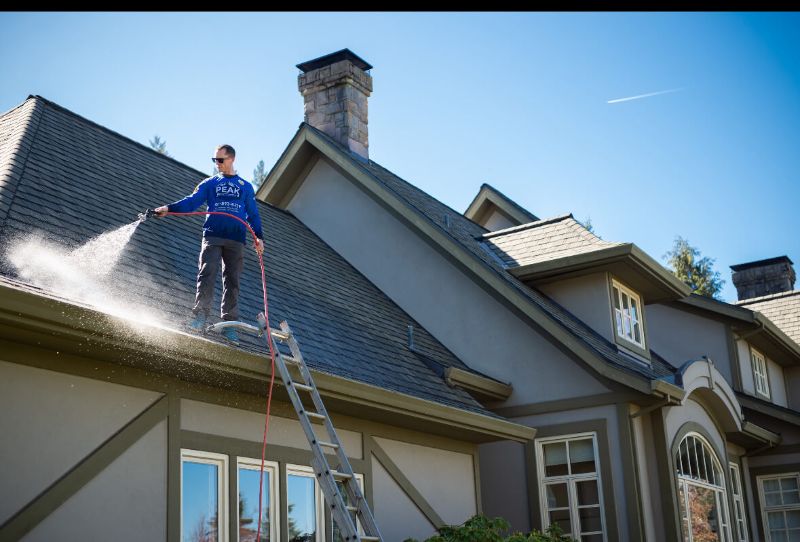
Moss comes back so quickly because the Pacific Northwest’s climate is structurally engineered for bryophyte recolonization. Your annual precipitation often exceeds 100 inches, rarely dips below freezing, and persistent cloud cover suppresses evapotranspiration — keeping surfaces continuously moist. Standard removal targets only the gametophyte generation, leaving rhizoids embedded 2–4 mm deep and dormant spores untouched. The substrate itself retains acidified pH and hygroscopic polymers long after removal. There’s greatly more to understand about breaking this cycle permanently.
Key Takeaways
-
The Pacific Northwest’s high rainfall and mild temperatures keep surfaces persistently wet, creating near-perfect conditions for continuous moss reestablishment.
-
Standard removal only eliminates surface growth, leaving rhizoids embedded 2–4 mm deep in wood grain, enabling rapid regrowth from existing root structures.
-
Mosses spread through airborne spores and vegetative fragments, allowing untreated neighboring areas to continuously reseed cleaned surfaces.
-
Pressure washing worsens the problem by compressing rhizoidal tissue deeper into surfaces, accelerating reattachment rather than preventing it.
-
Residual polymers and acidified pH left by decomposing moss create nutrient-rich, moisture-retaining zones that actively attract new moss colonies.
The Climate Conditions That Make Moss Thrive in the Pacific Northwest
The Pacific Northwest‘s temperate oceanic climate—characterized by mild temperatures, high annual precipitation, and persistent cloud cover—creates near-ideal conditions for moss establishment and growth.
You’ll find that annual rainfall exceeding 100 inches in coastal zones maintains the substrate moisture that bryophytes require for active gametophyte hydration and spore germination.
Temperatures rarely drop below freezing, eliminating the desiccation stress that limits moss ecology in harsher continental climates.
The region’s prolonged overcast periods suppress evapotranspiration rates, extending available moisture windows considerably.
These conditions reflect a precise climate adaptation framework—mosses here exploit every environmental variable efficiently.
High atmospheric humidity, combined with porous bark and decomposing organic substrates, accelerates recolonization following disturbance, explaining why you’re constantly fighting moss regrowth on roofs, walkways, and lawns.
Why Moss Grows on Roofs, Concrete, and Wood : Not Just in Your Garden
When you examine the surfaces where moss establishes itself — rooftops, concrete slabs, wooden decking — you’ll notice they share key structural and chemical properties that favor bryophyte colonization.
Rough-textured or porous surfaces give moss rhizoids mechanical purchase, while low-pH substrates like weathered concrete and cedar shingles create the acidic microenvironments that most moss species prefer.
These surfaces also trap and hold moisture far longer than surrounding soil, giving moss the sustained hydration it requires to complete its reproductive and metabolic cycles.
Ideal Surface Conditions
Moss doesn’t colonize surfaces at random — it selects substrates that satisfy a specific set of physical and chemical requirements.
You’ll find it thriving where ideal moisture retention is highest — on north-facing roof slopes, textured concrete, and weathered wood grain, all of which trap and hold water long after precipitation ends.
Surface porosity is critical; microscopic fissures give rhizoids secure anchoring points while simultaneously accumulating organic debris that increases nutrient availability.
Concrete’s alkaline pH shifts toward neutral as it weathers, creating increasingly hospitable chemistry.
Asphalt shingles develop biofilm layers that function as a nutritive substrate.
Wood’s cellulose degradation produces compounds mosses readily metabolize.
Each of these surfaces, once conditioned by weathering and biological activity, becomes progressively more suitable — accelerating recolonization with every successive seasonal cycle.
Moisture Retention Factors
Prolonged surface wetness — not mere precipitation frequency — determines where bryophytes establish and persist on built structures.
You’ll find that porous substrates like concrete and weathered wood retain capillary moisture long after rainfall ceases, creating microhabitats with elevated soil moisture analogues at the surface interface. Roof granules, bark fissures, and concrete aggregate trap particulate organic matter, which compounds retention through biological factors — decomposing material increases hygroscopic capacity, sustaining protonemata through dry intervals.
North-facing and shaded surfaces receive diminished solar radiation, suppressing evapotranspiration rates and extending wetness duration critical for gametophyte development. Your roof’s slope angle, material porosity, and canopy overhang collectively govern moisture residence time.
Where these variables converge, bryophytes colonize rapidly — not because precipitation increased, but because surface drying slowed.
The Surfaces Moss Targets First in the Pacific Northwest
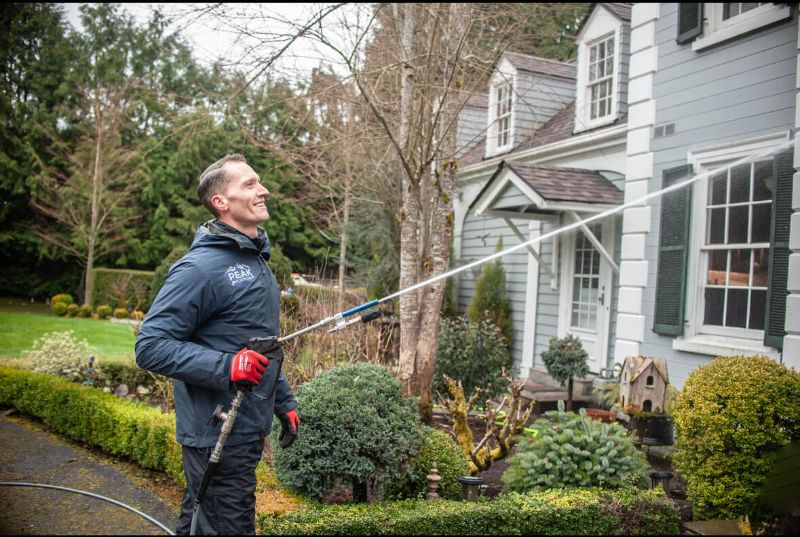
When moss colonizes your property, it targets rooftops first, where asphalt shingles retain moisture and organic debris accumulates in low-drainage zones.
Your driveway’s concrete or pavers provide a secondary substrate, with persistent growth establishing in porous surfaces and expansion joints where water pools.
Wood decks remain chronically damp in the Pacific Northwest’s wet climate, creating ideal conditions for bryophyte adhesion and rapid rhizoid penetration into the grain.
Rooftops Attract Moss First
Rooftops rank among the first surfaces colonized by moss in the Pacific Northwest, largely because they offer a near-ideal combination of persistent moisture retention, minimal foot traffic, and surface textures that facilitate spore adhesion.
Asphalt shingles, cedar shakes, and composite materials each harbor microtopographic irregularities where spores of Dicranum, Orthotrichum, and Bryum species settle and establish. North-facing slopes receive reduced UV exposure and retain moisture longer, accelerating colonization timelines considerably.
Without consistent rooftop maintenance, pioneering moss types create biological crusts that degrade substrate integrity, compromise drainage channels, and invite secondary colonizers.
You’ll find that neglecting early-stage growth allows rhizoid penetration to accelerate material deterioration swiftly.
Implementing scheduled inspections and targeted treatment protocols interrupts establishment before structural damage compounds.
Driveways Harbor Persistent Growth
-
Expansion joints, where moisture accumulates and sediment provides anchoring substrate.
-
Shaded perimeter edges, where canopy overhang reduces UV exposure.
-
Cracked asphalt surfaces, where rhizoids penetrate and accelerate structural deterioration.
-
Gravel margins, where decomposing organic matter elevates nitrogen availability.
Neglecting driveway maintenance allows these colonies to establish deep protonema networks, making moss prevention noticeably harder over successive seasons.
Pacific Northwest precipitation—averaging 37–60 inches annually—continuously rehydrates spore banks embedded within substrate crevices.
You’ll need consistent intervention to interrupt regeneration cycles before colonies achieve reproductive maturity.
Wood Decks Stay Damp
Wood decks retain moisture longer than nearly any other residential surface, making them prime colonization sites for opportunistic bryophyte species like Bryum argenteum and Hypnum cupressiforme.
Fibrous wood grain captures organic debris and holds capillary moisture far beyond rainfall events, creating persistent hypogeal humidity that accelerates spore germination.
You’re dealing with a substrate that fundamentally self-perpetuates bryophyte growth through structural water retention.
Without consistent deck maintenance, protonema networks establish rapidly across board surfaces, particularly in shaded northern exposures.
Moisture management becomes critical here—improving drainage gradients, reducing canopy shade, and applying appropriate sealants disrupts the hydric microenvironment these species require.
Ignoring these interventions allows rhizoid penetration into wood fibers, structurally degrading the deck while simultaneously deepening the colonization foothold moss maintains season after season.
Why Moss Spreads So Fast in the Pacific Northwest
The Pacific Northwest’s persistent rainfall, mild temperatures, and abundant shade create near-ideal conditions for moss propagation. Understanding moss reproduction explains why you’re constantly battling regrowth on your deck.
Mosses spread through four primary mechanisms:
-
Spore dispersal — microscopic spores travel via wind and water across vast distances
-
Vegetative fragmentation — detached stem segments regenerate into independent colonies
-
Rhizoid anchoring — root-like structures penetrate porous wood surfaces rapidly
-
Protonema development — germinating spores form dense filamentous networks within days
These ecological benefits serve forest ecosystems well, but they’re problematic for your wooden structures.
Regional humidity routinely exceeds 80%, accelerating every reproductive cycle. Once established, moss colonies self-sustain indefinitely without intervention.
Why Standard Removal Methods Only Work Temporarily
Even when you scrub moss from your deck’s surface, you’re eliminating only the gametophyte generation while leaving rhizoids embedded 2–4 mm deep within the wood grain.
Understanding the moss life cycle explains why removal techniques consistently underperform: sporophytes release thousands of airborne spores simultaneously, recolonizing treated surfaces within weeks.
Chemical treatments like zinc sulfate or potassium soap target mature gametophytes but don’t neutralize dormant spore banks already present in surrounding substrate.
Pressure washing removes visible biomass yet compresses remaining rhizoidal tissue deeper into wood pores, accelerating reattachment.
Because the Pacific Northwest‘s persistent moisture maintains ideal germination conditions year-round, any surviving propagule—whether rhizoid fragment or ungerminated spore—resumes growth rapidly.
Single-application removal strategies consequently address symptoms rather than the biological mechanisms driving colonization.
What Moss Leaves Behind in the Soil After Removal
When you remove moss from soil or garden beds, you don’t eliminate its biochemical legacy—decomposing gametophyte tissue releases allelopathic compounds, including phenolic acids and terpenoids, that suppress competing vascular plant germination for weeks post-removal.
Moss decomposition restructures soil nutrients and microbial communities in four measurable ways:
-
Acidified substrate pH from accumulated organic acids persists beneath former bryophyte colonies.
-
Elevated moisture retention increases due to residual sphagnan and pectin-like polymers binding soil particles.
-
Nitrogen immobilization occurs as decomposing biomass locks available NH₄⁺ and NO₃⁻ from surrounding flora.
-
Spore bank activation begins—viable propagules embedded in disturbed substrate rapidly colonize nutrient-rich decomposition zones.
You’re not removing moss; you’re temporarily displacing an ecosystem engineered specifically to self-perpetuate under Pacific Northwest conditions.
How to Permanently Prevent Moss From Regrowing on Your Property
Permanently suppressing bryophyte recolonization requires you to dismantle the environmental conditions that sustain gametophyte establishment—not merely treat visible colonies after they’ve matured.
Redirect surface drainage to eliminate persistent moisture retention. Increase canopy pruning to reduce photosynthetically active radiation blockage and lower relative humidity at substrate level.
Apply ferrous sulfate or zinc-based chemical treatments to acidic surfaces where spore germination occurs frequently. For natural alternatives, introduce competitive vascular ground cover, top-dress with dolomitic limestone to raise soil pH above 6.5, and use baking soda solutions on hardscape.
Improve soil aeration to discourage the hygroscopic conditions mosses exploit. Without addressing substrate chemistry, light availability, and moisture simultaneously, you’re only interrupting the bryophyte life cycle temporarily—recolonization through airborne spore dispersal will resume once conditions restabilize.
Frequently Asked Questions
Does Moss Pose Any Health Risks to Humans or Pets?
Moss poses minimal health risks, but you’ll want to monitor moss allergies in sensitive individuals. For pet safety, make certain your animals don’t ingest large quantities, as some bryophyte species may cause mild gastrointestinal irritation.
Can Moss Damage Underground Pipes or Foundations Over Time?
Yes, moss growth can compromise pipe integrity over time. Its root-like rhizoids penetrate microscopic cracks, expanding them gradually. You’ll find foundations similarly vulnerable, as moisture retention accelerates concrete deterioration, destabilizing structural components beneath your property.
Is Moss Removal Covered by Standard Homeowner’s Insurance Policies?
Standard homeowner’s insurance policies typically don’t cover moss growth removal, as insurers classify it as a maintenance issue. You’ll find insurance claims for moss-related structural damage may qualify, but preventative removal costs remain your responsibility.
Are There Any Pacific Northwest Laws Protecting Certain Native Moss Species?
Washington and Oregon don’t specifically legislate moss conservation by species, but you’ll find native species like Isothecium myosuroides indirectly protected under broader native plant harvest regulations on public lands.
Does Moss Growth Affect a Property’s Resale Value Significantly?
Yes, moss growth can considerably impact your property’s resale value. Buyers assess moss aesthetics differently — some find it charming, others concerning. You’ll notice property appeal drops when moss signals moisture damage, structural deterioration, or unmaintained surfaces during inspections.
Break the Moss Cycle by Fixing the Conditions That Feed It
Moss isn’t random—it thrives because your Pacific Northwest property gives it exactly what it needs: moisture, shade, and porous surfaces. Removing visible growth is only a temporary win if those conditions remain unchanged. To stop the cycle for good, you need to address the root causes: improve drainage, reduce excess shade where possible, manage surface porosity, and correct pH imbalances that encourage regrowth.
If moss keeps coming back despite your efforts, it’s usually a sign that deeper conditions haven’t been fully addressed. Professional treatment can go beyond surface cleaning by targeting buildup safely and helping reset your exterior surfaces. Peak Pressure Washing provides moss removal and exterior cleaning tailored to moisture-heavy climates, helping you move from short-term fixes to long-term control. Request a free quote today and take a more permanent approach to keeping your property clean and moss-free.