
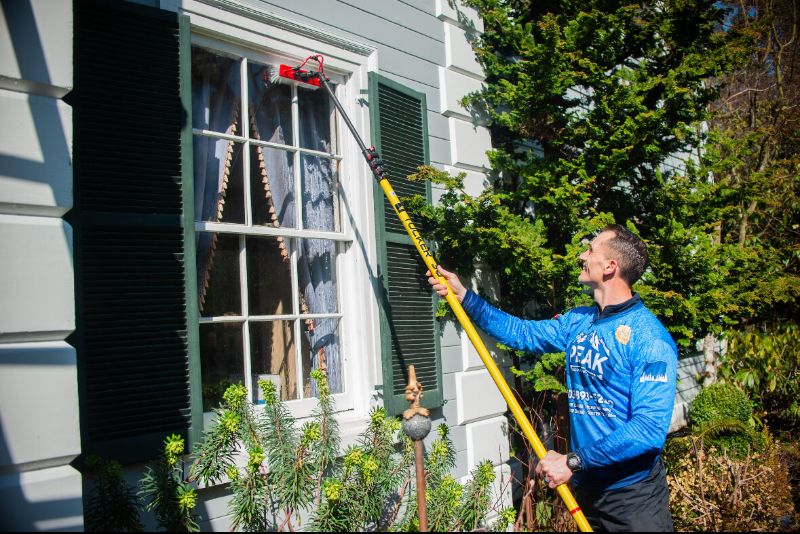
Always schedule house washing before window cleaning. Dirty runoff from exterior washing—including soap residue, dislodged debris, and chemical solutions—will contaminate freshly cleaned glass, creating stubborn streaks and wasted service calls. Cleaning in the correct sequence lets gravity work in your favor, pulling contaminants away from surfaces you’ve already finished. You’ll also save money by bundling both services into a single visit. Keep going to learn exactly how to optimize your entire exterior cleaning schedule.
Key Takeaways
-
Always schedule house washing before window cleaning to prevent dirty runoff and soap residue from contaminating freshly cleaned glass surfaces.
-
Cleaning house exteriors first uses gravity to carry dirt downward, eliminating redundant cleaning efforts and ensuring cleaner final results.
-
Incorrect sequencing causes overspray contamination, stubborn streaks, and doubled labor costs from unnecessary repeat service calls.
-
Bundling both services into one visit saves 10–30% in costs while reducing property disruption and total labor time.
-
Homes near coastlines, heavy traffic, or dense vegetation benefit most from combined, properly sequenced exterior cleaning schedules.
What House Washing and Window Cleaning Each Involve
House washing and window cleaning are distinct services that target different surfaces and rely on different equipment, techniques, and cleaning agents.
House washing techniques involve applying pressurized water, soft washing solutions, or chemical treatments to exterior siding, brick, stucco, and other large surface areas. You’re fundamentally decontaminating your home’s entire outer shell, removing mold, algae, dirt, and oxidation.
Window cleaning methods, by contrast, focus on glass surfaces using squeegees, microfiber applicators, purified water systems, or solvent-based solutions to eliminate streaks, mineral deposits, and grime.
Each service demands a separate workflow, specialized tools, and precise timing. Understanding what each process entails helps you coordinate scheduling decisions more effectively, ensuring one service doesn’t compromise the results of the other.
Why the Sequence Matters More Than Most Homeowners Realize
Sequencing these two services incorrectly can undo hours of professional work and cost you money on repeat cleanings. When house washing runs after window cleaning, dirty runoff, detergent overspray, and dislodged debris coat your freshly cleaned glass immediately. You’ve fundamentally paid twice for one result.
Understanding cleaning priorities means recognizing that each service creates conditions affecting the next. House washing generates significant surface contamination across your entire exterior, while window cleaning demands a contaminant-free starting point to achieve streak-free results.
Seasonal scheduling adds another layer of complexity — timing both services within the same maintenance window requires deliberate ordering, not guesswork. Completing house washing first eliminates the contamination variable entirely, giving your window cleaning technician a controlled surface to work from and protecting your investment in both services.
Always Do House Washing Before Window Cleaning
When you wash your house first, you’re working with gravity, not against it—dirt, grime, and cleaning solution runoff will cascade down your siding and inevitably land on your windows.
If you clean your windows first, that runoff contaminates the glass immediately, forcing you to repeat the job.
Sequencing house washing before window cleaning eliminates this redundancy and guarantees a cleaner final result in a single pass.
Dirt Falls Down
One fundamental rule of exterior cleaning is to always carry out house washing before window cleaning—never the other way around.
Gravity doesn’t negotiate—dirt accumulation on your siding, gutters, and roof flows downward, contaminating surfaces you’ve already cleaned.
During seasonal cleaning, this sequence becomes especially critical. Here’s why the order matters:
-
House washing dislodges debris from siding and overhangs, sending grime, mold spores, and residue cascading down your exterior walls.
-
That displaced debris lands directly on your windows, coating glass, frames, and seals with fresh contamination.
-
Cleaning windows first guarantees rework, wasting your time and money on surfaces that will immediately get re-soiled.
Respecting this top-down principle eliminates redundant effort and guarantees every surface stays clean once you’ve finished working on it.
Cleaner Final Results
Following the correct sequence doesn’t just save you rework—it produces measurably cleaner results across every surface. When you pressure wash your home’s exterior first, you eliminate the primary contamination sources before any detail work begins.
Overspray, dislodged grime, and residual cleaning agents have nowhere to settle afterward because window cleaning comes last. This sequencing delivers a streak-free shine that’s simply unachievable when you reverse the order.
Your windows reach maximum visibility only when the surrounding surfaces are already clean and dry. Any remaining airborne particulates have dissipated, chemical residues have dried, and no secondary contamination threatens your freshly cleaned glass.
The result is a home where every surface performs at its peak—exterior walls fully sanitized, windows crystal clear, and the entire job completed without unnecessary repetition.

What Happens When You Clean Windows First
Cleaning windows before washing the house is a common sequencing mistake that creates unnecessary rework. House washing generates overspray, runoff, and loosened debris that settle directly onto your freshly cleaned glass, causing window streaks and rapid dirt accumulation.
Here’s what you’ll face after washing the house post-window cleaning:
-
Overspray contamination: Pressure washing disperses dirty water across glass surfaces, instantly undoing your window cleaning work.
-
Soap residue deposits: House washing detergents leave chemical films on glass that dry into stubborn streaks requiring full re-cleaning.
-
Debris redistribution: Dislodged dirt, algae, and grime migrate onto window surfaces during house washing, accelerating dirt accumulation beyond pre-cleaning levels.
The result is a wasted service call and doubled labor costs, both entirely avoidable with proper scheduling sequence.
How Long to Wait Between House Washing and Window Cleaning
Once you’ve confirmed house washing comes first, the next variable that determines your results is timing—specifically, how long you wait before putting a squeegee to glass.
Most professionals recommend waiting 24 to 48 hours after house washing before scheduling window cleaning. This window allows surfaces to dry completely, preventing residual moisture from contaminating freshly cleaned glass.
Timing considerations vary based on weather conditions. High humidity, overcast skies, or low temperatures extend drying time considerably. On dry, sunny days, 24 hours is typically sufficient.
Here are practical scheduling tips to follow:
-
Check the forecast before booking both services back-to-back.
-
Avoid scheduling windows during rain or high-humidity periods.
-
Confirm surface dryness by touch before your window cleaner arrives.
When Bundling House Washing and Window Cleaning Makes Sense
When you schedule house washing and window cleaning together, you’ll typically access bundled pricing that costs less than booking each service separately.
Combining both services in a single visit also reduces labor overhead, minimizing the number of times a crew must mobilize to your property.
If your home needs both services, bundling them is the most cost-efficient and time-effective approach available.
Cost Savings Through Bundling
Bundling house washing and window cleaning into a single service visit typically reduces your overall cost by 15–30% compared to scheduling each service separately.
Service packages eliminate duplicate mobilization fees, reduce total labor hours, and maximize cost efficiency across both tasks.
Consider these financial advantages:
-
Reduced mobilization costs: You pay one trip charge instead of two, cutting baseline fees immediately.
-
Discounted labor rates: Contractors often apply bundled pricing when crews handle multiple services consecutively on the same property.
-
Equipment overlap savings: Pressure washing equipment and water supply setups serve both services, eliminating redundant setup charges.
Requesting bundled service packages upfront gives you measurable savings without sacrificing quality on either service.
Scheduling Both Services Together
Scheduling both services together makes the most sense when your home is due for seasonal maintenance, particularly in spring or fall when exterior grime accumulation peaks and windows carry pollen, dust, and oxidation buildup simultaneously.
Bundling maximizes scheduling convenience by consolidating two separate service appointments into one coordinated visit. Effective service coordination requires sequencing house washing before window cleaning, ensuring pressure washing runoff doesn’t contaminate freshly cleaned glass.
Confirm your contractor performs both services using compatible equipment and techniques before committing to a bundled package. You’ll reduce total labor time, minimize property disruption, and maintain consistent exterior cleanliness across surfaces.
For homes with significant vegetation, heavy traffic exposure, or coastal proximity, combined scheduling isn’t optional—it’s the operationally sound approach to systematic exterior maintenance.
How to Stretch Your House Washing and Window Cleaning Budget
Stretching your home maintenance budget comes down to 3 core strategies: timing, bundling, and frequency management. Smart budget tips start with service prioritization — tackle house washing before window cleaning to avoid double labor costs.
-
Bundle services with a single contractor to access multi-service discounts, often 10–20% off combined bookings.
-
Schedule seasonally — spring house washing and fall window cleaning align with peak soiling cycles, reducing unnecessary repeat visits.
-
Extend intervals strategically — applying water-repellent coatings after window cleaning and sealants after house washing lengthens service cycles without sacrificing curb appeal.
Proper service prioritization eliminates redundant scheduling, keeps contractor visits minimal, and maximizes the lifespan of each completed service.
Frequently Asked Questions
Can Rain Affect the Results of Freshly Cleaned Windows or Siding?
Yes, rain can affect your results. It’ll reduce cleaning longevity by depositing mineral deposits and dirt on surfaces. To minimize rain impact, you should schedule cleaning during dry weather forecasts for ideal, lasting outcomes.
How Often Should Homeowners Schedule Both Services Throughout the Year?
You should schedule window cleaning quarterly and house washing bi-annually for ideal maintenance frequency. Following a consistent seasonal scheduling plan keeps your home’s exterior protected, ensuring you address dirt buildup, algae growth, and environmental residue effectively year-round.
Does the Type of Siding Material Affect Which Cleaning Products Are Used?
Yes, your siding materials absolutely determine which cleaning products professionals use. Vinyl tolerates stronger solutions, while wood siding requires gentler, pH-balanced cleaners. Always confirm your siding type beforehand so technicians can select the appropriate cleaning products for safe, effective results.
Are There Any Permits Required for Professional House Washing Services?
Most areas don’t require permits for standard house washing. However, you’ll need to check your local cleaning regulations and permit requirements, as some municipalities enforce rules around water runoff, chemical usage, and pressure washing near storm drains.
Can I Pressure Wash My Own Home Instead of Hiring Professionals?
You can tackle DIY pressure washing yourself, but you’ll need to follow strict safety precautions. Wear protective gear, maintain proper distance, and select appropriate PSI settings to avoid damaging siding, windows, or injuring yourself during the process.
Get the Order Right for a Cleaner, Longer-Lasting Finish
When planning exterior cleaning, sequence matters more than most homeowners realize. Always start with house washing to remove dirt, mold, and buildup from siding and surrounding surfaces. Once everything has fully dried, follow up with window cleaning to achieve a clear, streak-free finish without risking splashback or residue undoing the results. This simple order protects your investment and avoids doing the same work twice.
If coordinating multiple services feels like a hassle, professional help can streamline the process. Peak Pressure Washing provides house washing and exterior cleaning designed to work together efficiently, so every surface is cleaned in the right order. Request a free quote today and get a complete, polished result without the extra time or cost.