
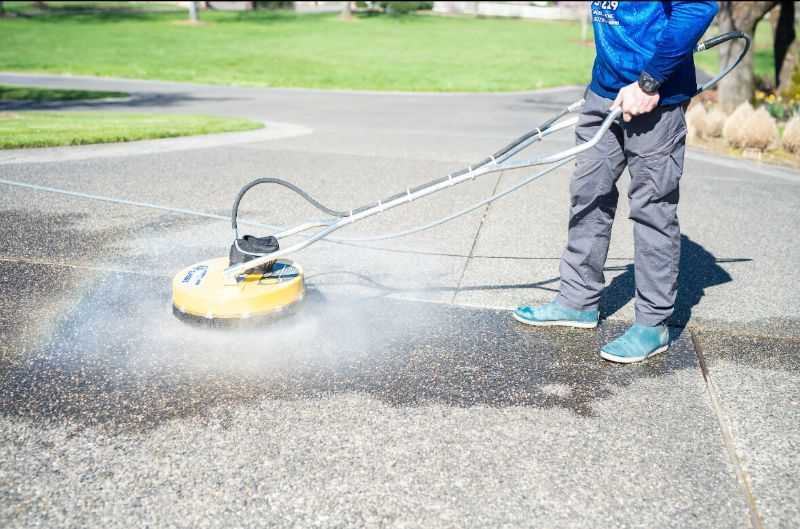
If you live in Sunnyside, your driveway faces over 140 rainy days annually, dense tree canopy that extends surface drying time by 40–60%, and porous concrete or paver materials that trap moisture at a subsurface level. These conditions don’t just support algae growth—they accelerate spore colonization within days. Once rhizoids penetrate surface pores, superficial rinsing won’t eliminate the problem. Understanding exactly how each factor works together explains why standard cleaning approaches consistently fall short.
Key Takeaways
-
Sunnyside averages over 140 rainy days annually, keeping driveway surfaces persistently moist and ideal for algae spore colonization.
-
Overhanging tree canopies block sunlight, keeping shaded surfaces damp 40–60% longer than sun-exposed areas.
-
Airborne algae spores anchor below porous surface layers, making them difficult to remove without professional treatment.
-
Leaf litter from mature trees deposits organic material onto driveways, directly feeding algae growth cycles.
-
Porous concrete and paver joints retain subsurface moisture, sustaining biological growth even during drier periods.
Why Sunnyside’s Climate Creates Perfect Algae Conditions
Sunnyside’s climate is practically engineered for algae proliferation. The region averages over 140 rainy days annually, creating persistently moist surface conditions that algae colonies require to establish and spread.
Temperatures rarely drop low enough to kill spores, allowing year-round biological activity on your driveway’s porous concrete or asphalt. Overhanging tree canopy reduces direct sunlight exposure, slowing evaporation and extending surface moisture duration considerably.
These compounding climate factors create conditions where algae shifts from surface discoloration to structural infiltration within a single season. Algae prevention becomes notably harder once root-like structures called rhizoids penetrate surface pores.
You’re not dealing with a cosmetic inconvenience — you’re managing an active biological process accelerated by Sunnyside’s specific microclimate. Understanding these conditions is the first step toward implementing an effective, proactive cleaning strategy, especially when considering the benefits of expert pressure washing services.
How Tree Cover and Shade Make Driveways a Target
While Sunnyside’s rainfall sustains algae colonies, tree cover is what concentrates their growth on driveways specifically. Canopy density from Douglas firs, big-leaf maples, and western red cedars—common tree types throughout Sunnyside—blocks solar radiation that would otherwise dry surface moisture and suppress biological growth.
Shade effects on concrete are measurable: shaded surfaces remain damp 40–60% longer than sun-exposed areas, extending the moisture window algae need to establish and spread. Additionally, regular maintenance, such as gutter cleaning strategies, can help mitigate the conditions that promote algae growth.
Leaf litter compounds the problem by depositing organic material directly onto your driveway. Decomposing matter releases nutrients that feed algae colonies already anchored in concrete pores.
If your driveway runs beneath or alongside mature trees, you’re dealing with a microenvironment that actively sustains algae year-round, not just during peak rainfall months.
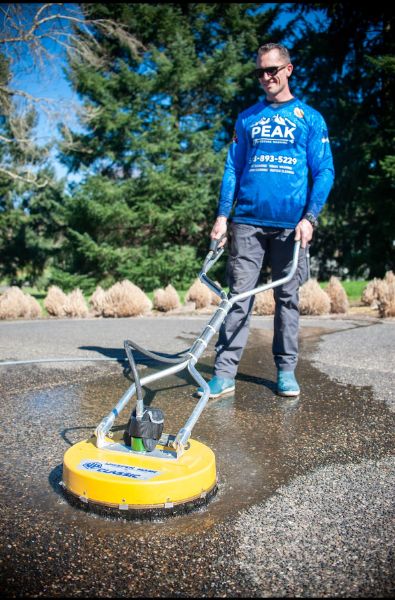
The Role of Moisture Retention in Concrete and Pavers
Concrete and pavers don’t just get wet—they hold moisture at a structural level that keeps algae viable long after rain stops.
Concrete’s porosity allows water to penetrate below the surface, creating a subsurface reservoir that sustains biological growth even during dry intervals.
Pavers compound this problem through joint gaps where organic debris accumulates and retains humidity.
In Sunnyside’s shaded driveways, evaporation rates drop considerably, extending moisture exposure across the entire surface.
Without proactive moisture management, these materials fundamentally become self-sustaining algae habitats.
Surface treatment with penetrating sealers can reduce absorption rates and interrupt the moisture cycle that algae depends on.
Untreated concrete and pavers absorb up to 10% of their volume in water, giving algae a persistent, renewable water source beneath your feet. Additionally, regular maintenance and roof cleaning services can help prevent the conditions that favor algae growth.
Which Driveway Materials Attract the Most Algae Growth
Your driveway’s material directly determines how vulnerable it’s to algae colonization.
Porous surfaces like exposed aggregate concrete and unsealed pavers trap moisture within their microscopic voids, creating the sustained wet conditions algae need to establish and spread.
Comparing standard concrete to interlocking pavers reveals distinct differences in algae susceptibility, largely driven by surface texture, joint spacing, and sealing status. Additionally, pressure washing can effectively remove algae and improve the longevity of driveway materials.
Porous Surfaces Trap Algae
Not all driveway materials are equally vulnerable to algae colonization—surface porosity plays a decisive role in determining which substrates retain the moisture and organic debris that algae need to establish and spread.
Porous materials like concrete and exposed aggregate offer microscopic voids where spores anchor, moisture persists, and organic matter accumulates. These conditions create ideal germination environments, particularly in Sunnyside’s shaded, rain-heavy climate.
Asphalt presents similar vulnerability due to its textured, open-grain composition.
By contrast, sealed pavers and dense stone surfaces reduce moisture retention considerably, slowing colonization rates.
For effective algae prevention, you’ll need to account for your driveway’s material composition before selecting a cleaning or treatment approach—ignoring porosity means addressing symptoms rather than the underlying environmental conditions enabling algae growth.
Concrete Versus Pavers
When comparing driveway materials for algae susceptibility, concrete consistently outperforms pavers in colonization rates due to its inherently porous calcium silicate matrix.
Concrete maintenance demands increase considerably because algae penetrate deeper into the substrate, accelerating surface degradation.
Paver durability offers structural advantages here—individual units allow moisture drainage between joints, reducing sustained surface saturation that algae require for colonization.
Concrete surfaces accelerate algae growth through four mechanisms:
-
Higher surface porosity retains moisture longer
-
Calcium compounds provide direct nutritional substrate for algae
-
Uniform flat surfaces eliminate natural drainage pathways
-
Surface microcracks expand colonization zones over time
You’ll notice Sunnyside’s older concrete driveways show heavier biological loading than comparable paver installations.
The joint spacing in pavers functionally disrupts the continuous moisture film algae need to spread laterally.
Why Algae Spreads Faster Than Most Homeowners Realize
Algae reproduces through airborne spores that settle onto moist surfaces and establish colonies within days, making it one of the fastest-spreading biological contaminants on residential exteriors.
Understanding the algae lifecycle reveals why surface discoloration appears deceptively gradual—by the time you notice visible green or black staining, the colony has already penetrated microscopic pores in your concrete or pavers.
One of the most common homeowner misconceptions is that algae growth begins at the surface. It doesn’t. Spores anchor below the surface layer first, making superficial rinsing ineffective.
Sunnyside’s consistent moisture retention accelerates each reproductive cycle, allowing colonies to double rapidly under the right conditions.
Without professional treatment targeting root-level biological matter, you’re managing symptoms rather than eliminating the source of recurring growth. Additionally, understanding cleaning requirements is essential to effectively combat algae and prevent future outbreaks.
How to Remove Algae From Sunnyside Driveways for Good
Removing algae from your Sunnyside driveway permanently requires addressing the biological matter below the surface, not just the visible staining on top. Effective driveway maintenance combines targeted treatment with preventive follow-through.
A professional removal process typically follows this sequence:
-
Apply a biocidal cleaning solution to penetrate spore colonies beneath the surface.
-
Use controlled pressure washing to extract loosened organic matter.
-
Treat residual growth with a post-wash algaecide to neutralize remaining spores.
-
Apply a surface sealant to reduce moisture absorption and future adhesion.
These algae prevention tips work because they eliminate root causes rather than symptoms. Regular pressure washing can also extend the longevity of your driveway by preventing deterioration.
Sunnyside’s persistent moisture creates rapid recolonization if any spores survive. Without sealing, cleaned concrete reabsorbs water within weeks, restarting the growth cycle entirely.
Frequently Asked Questions
Does Algae on Driveways Affect Property Value in Sunnyside Neighborhoods?
Yes, algae growth directly reduces your property’s curb appeal and signals neglected property maintenance to potential buyers. Studies show stained driveways can lower perceived home value, making professional cleaning a smart protective investment.
Is Driveway Algae Harmful to Pets or Children Playing Outside?
Yes, driveway algae poses real risks to pet safety and children’s health. It creates slippery surfaces causing falls, and certain algae strains produce toxins your pets can ingest and your children can absorb through skin contact.
How Much Does Professional Algae Removal Typically Cost in Sunnyside?
Costs vary based on cost factors like driveway size and buildup severity. Removal methods such as soft washing or pressure washing influence pricing. You’ll want to contact Peak Pressure Washing for an accurate Sunnyside-specific quote.
Can Algae Growth Void a Driveway’s Warranty or Manufacturer Guarantee?
Yes, algae growth can trigger warranty implications if you’ve neglected required maintenance practices. Most manufacturers mandate regular cleaning, and documented algae buildup signals poor upkeep, giving them grounds to void your driveway’s coverage entirely.
How Often Should Sunnyside Homeowners Schedule Professional Driveway Cleaning Services?
Schedule driveway maintenance at least twice yearly, prioritizing spring and fall seasonal cleaning. Sunnyside’s moisture-heavy climate accelerates algae regrowth, so you’ll benefit from professional assessment after heavy rainfall periods to prevent surface degradation and warranty complications.
Conclusion
Sunnyside’s persistent algae problem isn’t random — it’s the predictable result of converging environmental factors: high rainfall, dense tree canopy, slow-drying surfaces, and porous pavement materials. Once you understand the mechanics driving algae colonization, you’re better equipped to disrupt the cycle. Reactive cleaning alone won’t hold it back. You need a targeted, preventive approach that addresses moisture retention and spore reestablishment simultaneously, keeping your driveway structurally sound and hazard-free throughout the year.