
Your fence looks worse in November because Portland’s fall weather creates perfect conditions for accelerated deterioration. Increased rainfall saturates wood fibers, while frequent cloud cover prevents moisture from fully evaporating. These wet-dry cycles embed contaminants deeper into porous surfaces, and cooling temperatures fuel rapid moss and algae growth—particularly in shaded areas. What looked manageable in September has now become active biological colonization. Keep going to understand exactly what’s happening beneath your fence’s surface.
Key Takeaways
-
Heavy fall rainfall saturates wood fibers, promoting moisture retention and accelerating moss, algae, and mildew growth since September.
-
Frequent cloud cover slows drying, preventing evaporation and allowing biological growth to establish and spread across fence surfaces.
-
Cooling temperatures worsen moisture retention, causing visible warping, splintering, and premature graying that worsens progressively through fall.
-
Rainwater carries dirt, pollutants, and spores onto fences, while wet-dry cycles embed contaminants deeper into porous wood materials.
-
Shaded areas receive less sunlight in November, creating ideal conditions for moss and algae to rapidly proliferate and penetrate wood fibers.
Is November Too Late to Clean Your Fence?
Many homeowners assume November is too late to clean their fence, but that’s not necessarily true. While freezing temperatures can limit certain treatments, mild Pacific Northwest winters—like those in Portland—often allow for effective fence maintenance well into fall. If temperatures stay above 40°F and rain isn’t actively falling, you can still clean your fence safely and effectively.
Waiting until spring means months of additional moss, algae, and moisture damage accumulating on your wood or vinyl surfaces. The seasonal cleaning benefits of acting now include stopping biological growth before it penetrates deeper into the material. Following basic fence maintenance tips—like removing debris, washing surfaces, and inspecting for rot—can greatly extend your fence’s lifespan. After cleaning, applying sealants or protective stains to wood surfaces adds an essential barrier against winter moisture and biological growth. November isn’t too late; it’s actually a critical window you shouldn’t ignore.

What Fall Weather in Portland Does to Fence Surfaces
Portland’s fall weather creates a damaging cycle for fence surfaces: heavy rainfall saturates wood fibers, frequent cloud cover slows drying, and cooling temperatures prevent moisture from fully evaporating. This persistent moisture accelerates moss, algae, and mildew growth, embedding organic matter deeper into wood grain and surface coatings.
By November, your fence has absorbed weeks of this cycle. Wood begins to warp, splinter, and gray prematurely. Protective sealants break down faster under constant wet-dry stress, leaving raw material exposed to further degradation.
Proper fence maintenance requires understanding this seasonal pattern before damage compounds. Fall preparation done in September or October limits exposure, but even November intervention can stop active deterioration. Addressing buildup now prevents moisture from settling into compromised surfaces throughout the wetter winter months ahead. Left unchecked, moisture leads to wood rot that can compromise structural integrity, weakening the joists and support elements that keep your fence standing.
How Rain and Humidity Accelerate Fence Grime Buildup
Rain doesn’t just wet your fence—it actively transports and deposits organic material onto every surface it contacts. Combined with Portland’s persistent November humidity, that moisture creates ideal conditions for rapid grime accumulation. Understanding the weather impact on your fence helps you prioritize fence maintenance before damage sets in.
Here’s how the process works:
-
Rainwater carries airborne spores, dirt, and pollutants, embedding them into wood grain and coating surfaces.
-
Elevated humidity prevents surfaces from fully drying, keeping moisture locked against the material long enough for mold and algae to establish.
-
Repeated wet-dry cycles expand porous materials, pulling contaminants deeper into the surface with each rainfall.
These damp conditions also create an environment where pests like termites are drawn to moisture-softened wood, adding structural risk on top of surface-level grime buildup.
Why Moss and Algae Spread So Fast on Fall Fences
Moisture retention doesn’t just accelerate grime buildup—it also creates the exact conditions moss and algae need to colonize your fence fast. In fall, reduced sunlight means your fence stays damp for longer stretches, giving spores the time they need to anchor and spread. Shaded fence sections are especially vulnerable—moss growth can double in just a few weeks once temperatures drop and rainfall increases. Algae prevention becomes markedly harder once a colony establishes itself, because the root-like structures moss develops actually penetrate wood fibers and surface coatings. By November, what started as faint green discoloration in September has matured into a dense, moisture-trapping layer that accelerates rot. Waiting until spring to address it means the damage compounds all winter long. Applying a vinegar and water solution to affected areas can disrupt moss development before colonies become too entrenched to manage without professional intervention.
The Hidden Structural Damage Dirty Fences Develop Over Winter
What most homeowners don’t realize is that fence damage over winter isn’t just surface-level—it’s structural. Moss, algae, and trapped moisture actively compromise fence integrity in three specific ways:
-
Wood rot develops when moisture penetrates surface grain, breaking down cellulose fibers from the inside out.
-
Post deterioration accelerates at ground contact points where organic debris retains moisture longest.
-
Fastener corrosion causes screws and nails to rust, expanding within the wood and creating cracks.
Applying protective sealants or stains after cleaning can significantly slow these processes by creating a barrier that limits moisture penetration into vulnerable wood grain.
When to Call a Professional for Fence Cleaning
Some fence cleaning jobs go beyond what a garden hose and scrub brush can handle, and recognizing those situations early saves you time, money, and surface damage. If you’re dealing with heavy moss infiltration, widespread mold, embedded algae, or pressure-sensitive materials like older wood or vinyl, you’ll get better results by hiring a professional with the right equipment and expertise. When choosing a service, look for a licensed and insured company experienced in fence cleaning specifically, since improper pressure or incorrect cleaning solutions can accelerate the very damage you’re trying to prevent. Professionals also utilize eco-friendly cleaning products and advanced techniques that deliver superior results while minimizing environmental impact on your property.
Signs Requiring Professional Help
While routine maintenance keeps most fences in good shape, certain conditions call for professional intervention. If you’re noticing persistent fence discoloration causes that go beyond surface dirt—like deep-set algae, mold penetration, or structural staining—DIY methods won’t cut it. Ignoring these signs accelerates deterioration, especially heading into winter.
Watch for these three indicators:
-
Widespread moss or algae growth covering more than 30% of the fence surface, requiring specialized soft-washing treatment.
-
Deep staining or graying that seasonal maintenance tips and standard scrubbing haven’t resolved after two or more attempts.
-
Graffiti or chemical staining that demands commercial-grade cleaners to avoid surface damage.
Professional cleaning restores your fence’s integrity while applying protective treatments that extend its lifespan through Portland’s wet winter months. When hiring a service, always verify that the company holds the necessary licenses and insurance to protect your property and ensure quality workmanship.
DIY Versus Professional Cleaning
Knowing when to handle fence cleaning yourself versus calling in a professional saves you time, money, and potential surface damage. DIY techniques work well for light surface dirt, minor mildew, and routine maintenance using a garden hose, soft brush, and mild detergent. However, November’s conditions often expose deeper problems—embedded moss, algae penetration, and accelerating wood decay—that DIY techniques can’t fully address without risking surface damage from incorrect pressure settings or harsh chemicals.
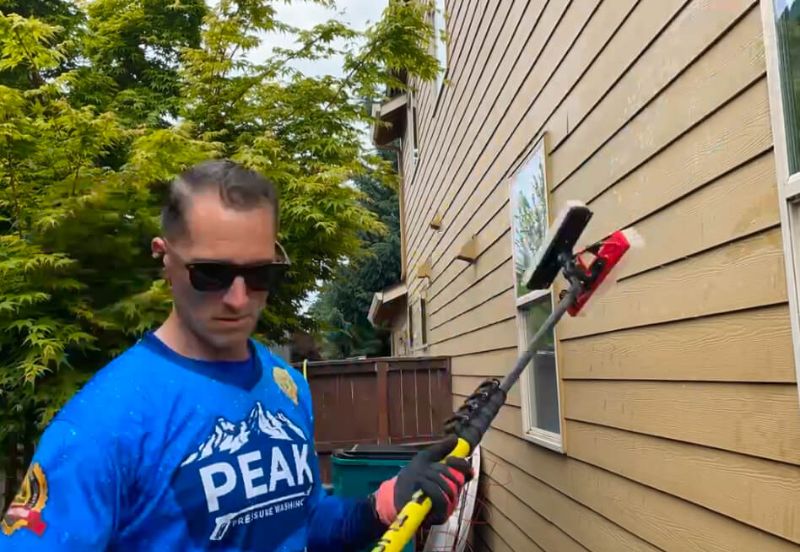
Professional benefits become clear when you’re dealing with widespread biological growth, aging wood, or composite materials requiring specialized treatment. Peak Pressure Washing uses controlled low-pressure washing and eco-friendly solutions that remove contaminants without compromising structural integrity. For wood fences, professionals apply pressure settings between 1,200 to 1,500 PSI to ensure effective cleaning without damaging the surface. If your fence looked manageable in September but noticeably deteriorated in November, that’s your signal to call a professional.
Choosing The Right Service
Deciding between a quick DIY touch-up and a professional cleaning comes down to what your fence is actually dealing with. For routine fence maintenance, a garden hose and brush might be enough. But November conditions often demand more. Consider professional service options if you’re facing:
-
Heavy moss or algae growth that’s embedded into the wood grain or composite material
-
Widespread mildew staining that’s darkened multiple fence panels across a large section
-
Soft or deteriorating wood that requires low-pressure soft washing rather than aggressive scrubbing
Applying the wrong pressure or cleaning solution can split wood fibers or strip protective coatings. A licensed professional assesses your fence’s condition first, then selects the correct method—protecting your investment rather than accelerating its decline.
Frequently Asked Questions
Does Fence Material Affect How Quickly Fall Grime Builds Up?
Yes, your fence material greatly impacts how quickly fall grime accumulates. Wood absorbs moisture and organic matter faster, accelerating buildup. Understanding these seasonal effects helps you prioritize fence maintenance before winter worsens the situation.
Can I Use a Standard Garden Hose to Remove Fall Fence Buildup?
You can use a garden hose, but it won’t deliver enough hose pressure to break down fall grime effectively. For real results, you’ll need professional cleaning techniques that reach deeper buildup.
How Do I Know if My Fence Stain Is Still Protecting the Wood?
Check your fence’s stain longevity by splashing water on the wood. If it absorbs instead of beads, your wood protection has failed. Fading color, gray weathering, and surface cracking also confirm the stain’s no longer working.
Will Cleaning My Fence in November Cause Cracking or Warping?
Seasonal cleaning won’t cause cracking or warping if you’re careful. For proper fence maintenance, avoid high pressure on wet or swollen wood, and guarantee the fence dries before temperatures drop below freezing.
How Long Does a Professional Fence Cleaning Typically Take to Complete?
Most professional services complete fence cleaning in 1–3 hours, depending on your fence’s size and condition. Following fence maintenance tips, you’ll find crews work efficiently, tackling moss, algae, and grime buildup to restore your fence quickly.
Conclusion
Your fence didn’t deteriorate by accident — Portland’s fall conditions actively accelerate moisture retention, biological growth, and structural breakdown. Waiting until spring means letting months of moss, algae, and trapped moisture do real damage to your wood or vinyl. You’ve got a narrow window to clean, treat, and protect your fence before winter sets in. Don’t let that window close. Act now, and you’ll avoid a much costlier repair job come March.