
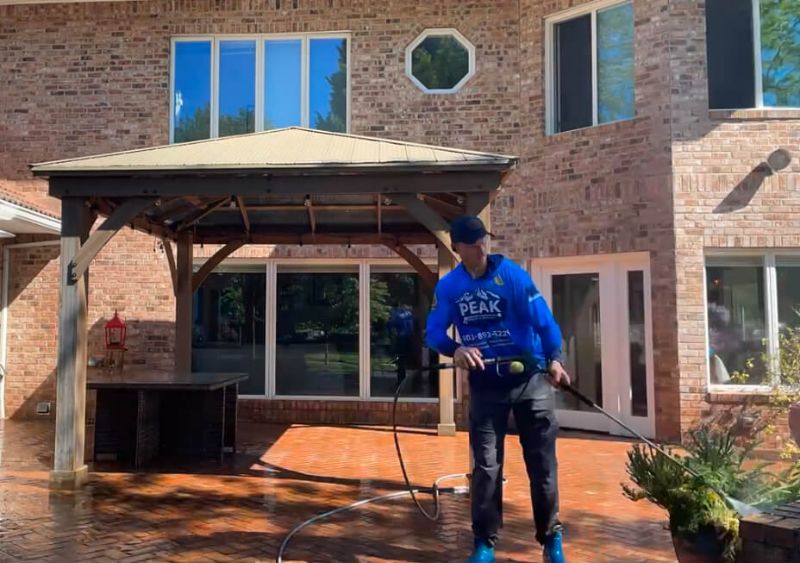
To clean a brick exterior without causing damage, you’ll want to keep pressure between 500 and 1,200 PSI, using a 25-degree nozzle held 12 to 18 inches from the surface. Always inspect mortar joints and check for spalling before you start. Use pH-neutral masonry cleaners or oxygen bleach rather than harsh acids. Match your solution to the specific stain type. The sections ahead cover each step in precise detail.
Key Takeaways
-
Inspect brick for cracks, spalling, and soft mortar joints before cleaning to avoid worsening existing damage.
-
Use pressure between 500 and 1,200 PSI, keeping the nozzle 12 to 18 inches from the surface.
-
Apply a 25-degree nozzle at a 45-degree spray angle for effective debris removal without damaging brick.
-
Choose pH-neutral masonry cleaners for general cleaning, oxygen bleach for mold, and diluted vinegar for efflorescence.
-
Avoid muriatic acid and high-pressure streams on weakened surfaces, as both can cause irreversible structural damage.
Why Brick Needs Gentler Cleaning Than Most Surfaces
Brick looks tough, but it’s actually more vulnerable to aggressive cleaning than most exterior surfaces. The porous brick texture absorbs water, cleaning solutions, and contaminants deeply into its structure.
Applying excessive pressure forces moisture into those pores, weakening the mortar joints and causing spalling, efflorescence, or surface erosion over time.
Unlike concrete or vinyl siding, brick can’t handle high-pressure streams without sustaining gradual damage. You need to account for mortar age, brick density, and existing surface conditions before selecting any cleaning method.
Cleaning frequency also matters. Over-cleaning brick accelerates wear, while infrequent cleaning allows moss, mold, and algae to penetrate deeper into the surface.
Striking the right balance protects both the brick and the mortar holding it together, and consulting with trained professionals can ensure you choose the safest cleaning approach.
How to Inspect Brick Before You Start Cleaning
Before touching a single cleaning tool, run through five key inspection checks that will determine your entire cleaning approach. Your brick condition assessment starts here.
First, scan for cracked or spalling bricks—water-forced cleaning will worsen both.
Second, probe mortar joints with a screwdriver; soft or crumbling mortar can’t withstand pressure.
Third, look for white efflorescence staining, which signals moisture migration and requires specific treatment.
Fourth, identify moss, algae, or mold growth to determine whether you’ll need a biocidal pre-treatment.
Fifth, check for existing sealers by sprinkling water on the surface—beading indicates a coating that affects your cleaning solution selection.
Use this inspection checklist before every job, not just the first one.
Brick condition changes seasonally, and skipping this step turns routine maintenance into costly repairs.
The Right Pressure and Technique for Brick Exteriors
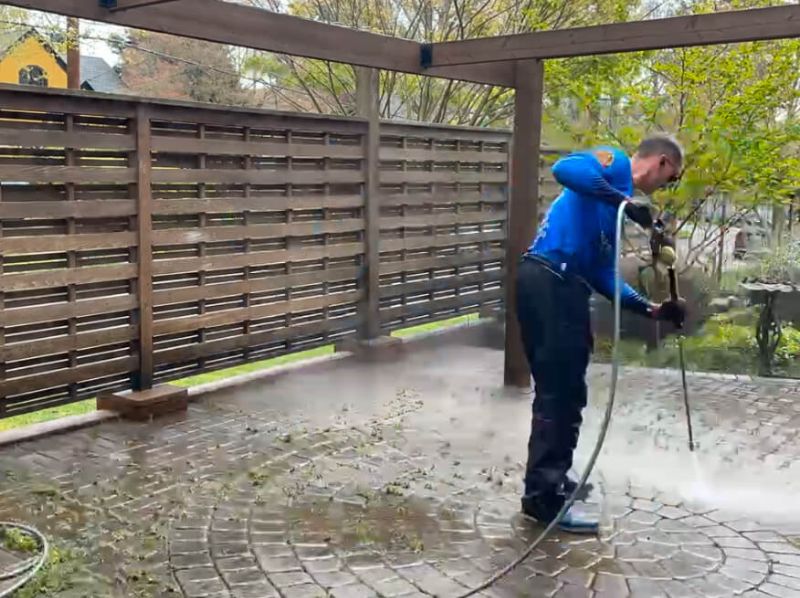
Pressure is the variable that separates effective brick cleaning from irreversible surface damage. For most brick exteriors, you’ll want to stay between 500 and 1,200 PSI. Older or softer brick requires the lower end of that range. Exceeding 1,500 PSI risks eroding mortar joints and pitting the brick face permanently.
Your nozzle types matter just as much as your pressure settings. Use a 25-degree nozzle for general surface cleaning and a 40-degree nozzle for rinsing or delicate areas. Never use a 0-degree or 15-degree nozzle on brick.
Maintain a consistent distance of 12 to 18 inches from the surface. Work in smooth, overlapping horizontal passes. Keep the spray angle at roughly 45 degrees to lift debris without driving water into the masonry.
Which Cleaning Solutions Are Safe for Brick
Getting the pressure and technique right only gets you halfway there — the cleaning solution you choose determines whether you’re lifting stains safely or quietly damaging the brick’s surface and mortar.
Stick to safe cleaning agents specifically formulated for masonry, and avoid anything overly acidic or alkaline.
Effective, eco-friendly solutions for brick include:
-
Diluted white vinegar – mild acidity cuts through light efflorescence without eroding mortar.
-
pH-neutral masonry cleaners – designed specifically for porous brick surfaces.
-
Oxygen bleach (sodium percarbonate) – targets mold and algae without harsh chemical residue.
-
Biodegradable surfactant solutions – lift grime effectively while protecting surrounding landscaping.
Never use muriatic acid without professional guidance — it aggressively strips mortar joints and permanently weakens the brick’s structural integrity over time. Additionally, it’s crucial to prepare your home for pressure washing to ensure a safe and effective cleaning process.
Stains That Need Special Treatment on Brick
Not all brick stains respond to standard cleaning methods, so you’ll need to identify what you’re dealing with before choosing a treatment.
Efflorescence, rust, oil, and biological growth each require targeted solutions—using the wrong approach can set the stain deeper or damage the brick’s surface.
Once you’ve identified the stain type, you can apply the appropriate chemical or mechanical treatment to remove it effectively without compromising the masonry. Additionally, seeking professional pressure washing services can help ensure a healthier environment by effectively eliminating stubborn stains without risking damage to the brick.
Identifying Common Brick Stains
Before you start cleaning your brick exterior, you’ll need to identify what type of stains you’re dealing with — because different stains require different treatment methods.
Each stain type has distinct visual characteristics that tell you exactly what you’re working with:
-
White, chalky deposits indicate efflorescence — mineral salts migrating to the surface that require efflorescence removal using acidic cleaners.
-
Black or green patches signal mold growth caused by moisture retention, requiring biocidal treatment before washing.
-
Rust-colored streaks stem from oxidizing metal anchors or fasteners embedded in or near the brick.
-
Dark oil or grease marks result from vehicle fluids or machinery contact, requiring degreasing agents.
Correctly identifying each stain type before treatment prevents surface damage and guarantees you’re applying the right cleaning solution.
Treating Stubborn Stain Types
Once you’ve identified what you’re dealing with, you can move into targeted treatment — because each stain type responds to a specific chemical approach, and using the wrong one wastes time or damages the brick.
Efflorescence responds to diluted white vinegar or a pH-neutral efflorescence cleaner applied with a stiff brush.
Mold and algae require a sodium hypochlorite solution or eco-friendly solutions like hydrogen peroxide-based treatments.
Oil stains need a degreasing poultice drawn into the pore structure before rinsing.
Rust demands an oxalic acid-based product — never bleach, which locks the stain deeper.
Among the most effective stain removal techniques is dwell time control: let the solution activate fully before agitating.
Always test any cleaner on an inconspicuous section first.
When to Call a Professional for Brick Cleaning
Some brick cleaning situations go beyond what DIY methods can safely handle, and recognizing those limits protects both you and your property.
If you’re dealing with severe staining, widespread discoloration, or visible structural concerns like cracking or spalling, you should contact a professional before applying any cleaning agents or pressure.
Large-scale projects also benefit from professional equipment and expertise, as improper technique on expansive brick surfaces can cause costly, irreversible damage.
Severe Staining or Discoloration
Severe staining or discoloration on brick—whether from rust, efflorescence, oil, graffiti, or long-term biological growth—often exceeds what standard DIY cleaning methods can effectively address.
Incorrect treatment can set stains deeper, damage mortar, or strip surface coatings. Professional intervention guarantees proper diagnosis and targeted treatment.
Common scenarios requiring professional assessment include:
-
Rust staining from metal fixtures or rebar bleed-through requiring oxalic acid application
-
Efflorescence buildup that’s resisted multiple cleaning attempts despite routine cleaning frequency
-
Oil or grease penetration needing emulsifying agents and controlled pressure extraction
-
Graffiti or paint overspray demanding chemical stripping without compromising the brick face
Stain prevention becomes far more manageable once professionals restore your brick to baseline condition.
They’ll also recommend appropriate cleaning frequency to keep surface contamination from compounding over time.
Structural Damage Concerns
Brick that shows signs of structural compromise—cracked or spalling faces, deteriorating mortar joints, or visible water infiltration patterns—requires professional evaluation before any cleaning begins.
Applying pressurized water to already-weakened surfaces accelerates deterioration and drives moisture penetration deeper into the substrate, compounding existing damage.
You should watch for efflorescence streaks, which signal active water migration through the masonry.
Compromised brick integrity makes the entire wall system vulnerable—cleaning becomes secondary to stabilization. A professional will assess mortar joint depth, surface cohesion, and drainage patterns before recommending any cleaning method.
Attempting to clean structurally compromised brick yourself risks turning a maintenance task into a costly repair project.
Get a structural assessment first, then proceed with an appropriate, professionally executed cleaning protocol.
Large-Scale Cleaning Projects
When a cleaning project spans an entire building facade, multiple stories, or large sections of commercial or industrial masonry, you’re dealing with a scope that demands professional equipment, expertise, and safety protocols that go well beyond DIY capability.
Professionals apply brick cleaning essentials and safe cleaning methods systematically across complex surfaces where inconsistency causes visible damage.
Large-scale projects typically involve:
-
Scaffolding or lift equipment for multi-story access and uniform application
-
Pressure calibration across zones to account for varying brick age and porosity
-
Commercial-grade detergents applied at controlled dilutions to prevent efflorescence
-
Post-cleaning sealing to protect restored masonry from rapid recontamination
Attempting this work without proper training risks uneven cleaning, mortar erosion, and costly repairs.
Professional crews deliver consistent, documented results across every square foot.
Frequently Asked Questions
How Often Should Brick Exteriors Be Professionally Cleaned Each Year?
You should professionally clean your brick exterior once a year. Sticking to this maintenance schedule prevents buildup from damaging surfaces, and proper cleaning techniques guarantee you’re protecting the brick’s integrity without causing deterioration.
Can Brick Cleaning Help Improve a Home’s Resale Value?
Yes, clean brick greatly boosts your home’s resale value. By following proper maintenance tips, you’ll enhance curb appeal, signaling to buyers that the property’s well-maintained. Professional cleaning removes stains, moss, and buildup that otherwise devalue your exterior.
Does Weather Affect How Quickly Brick Exteriors Get Dirty Again?
Yes, weather conditions directly affect your brick’s dirt accumulation rate. You’ll notice high rainfall, humidity, and wind accelerate mold, algae, and debris buildup, requiring more frequent cleaning to maintain your brick exterior’s appearance and structural integrity.
Is Sealing Brick After Cleaning Always Recommended or Sometimes Unnecessary?
Sealing isn’t always necessary, but you’ll maximize sealing benefits on porous or weathered brick. After applying proper cleaning techniques, assess absorption levels — if water soaks in quickly, you should apply a quality breathable sealant.
How Long Does a Typical Brick Exterior Cleaning Job Take?
Most brick exterior cleanings take 2–5 hours, depending on surface area and condition. You’ll factor in prep time, applying solutions, dwell periods, and pressure washing safety protocols. Using proper brick cleaning techniques guarantees you don’t rush and risk surface damage.
Conclusion
Cleaning your brick exterior isn’t complicated, but it does require discipline and the right approach. You’ll need to inspect first, control your pressure, and choose solutions that won’t compromise mortar or surface integrity. Skip any one of those steps and you’re risking damage that’s costly to reverse. If the job’s beyond your equipment or comfort level, don’t hesitate — contact a professional exterior cleaning company like Peak Pressure Washing to get it done correctly.