
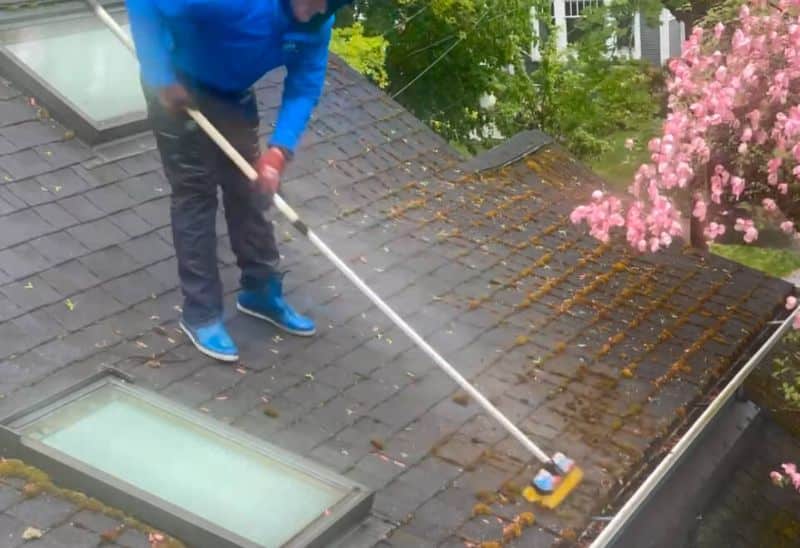
For Portland roofs, timing your cleaning around leaf season depends on your situation. If you’ve got visible moss, algae streaking, or blocked drainage, don’t wait—act before fall moisture accelerates the damage. If your roof is surrounded by deciduous trees, cleaning after the leaves fully drop can be smarter, combining leaf removal and moss treatment into one efficient visit. The details behind both approaches can make the difference between a roof that lasts and one that doesn’t.
Key Takeaways
-
Pre-fall cleaning kills moss and algae before winter moisture sets in, clearing drainage pathways to prevent dangerous buildup.
-
Cleaning after leaf drop eliminates redundant cleaning cycles, maximizing effectiveness by removing all organic debris at once.
-
Wet leaves trap moisture against shingles, promoting decomposition and risking damage from tannic acids if left unaddressed.
-
Moss treatments applied after leaf drop bond better to dry surfaces, inhibiting regrowth and extending protection through wet seasons.
-
Combining gutter and roof cleaning into one post-leaf-drop service visit saves time and maximizes seasonal maintenance efficiency.
Before or After? The Short Answer for Portland Roofs
When it comes to roof cleaning in Portland, timing matters — and the short answer is: clean your roof before the rainy season hits. Scheduling roof maintenance in late summer or early fall gives you a critical window to remove moss, algae, and debris before moisture accelerates their growth. Once rain sets in, organic buildup traps water against your shingles, speeding up deterioration and increasing the risk of leaks. Seasonal cleaning before the wet season also means treatments bond more effectively to dry surfaces, maximizing their protective lifespan. Waiting until after leaves drop extends exposure time unnecessarily. If you’re in Portland, don’t let the fall rainfall make the decision for you — proactive scheduling protects your investment and keeps your roof structurally sound longer. Overhanging branches that shade your roof also accelerate moss development, making trimming overhanging branches an important step to include alongside any pre-season roof cleaning plan.

Wet Leaves on Your Roof Are More Damaging Than You Think
Timing your roof cleaning before the rainy season is only part of the equation — what falls onto your roof afterward matters just as much. Wet leaves trap moisture directly against your shingles, accelerating leaf decomposition that releases tannic acids capable of breaking down roofing materials over time. That sustained moisture contact promotes moss, algae, and mold growth — all threats to long-term roof integrity. Leaves also collect in valleys and around flashings, blocking drainage and forcing water to pool where it shouldn’t. Left unaddressed, that standing water works beneath shingles and into your underlayment. Oregon’s wet winters increase mold and mildew buildup on surfaces, making post-leaf-fall roof monitoring especially critical for protecting your home’s exterior. You don’t have to clean your roof twice, but you do need to monitor it after heavy leaf fall and clear debris before it compounds the damage Portland’s wet season already creates.
Why Fall Leaves Make Roof Cleaning More Urgent
Fall accelerates roof deterioration in ways that make cleaning a time-sensitive priority rather than routine maintenance. Leaf accumulation traps moisture directly against your shingles, creating sustained wet conditions that promote moss, algae, and mold growth. Once biological growth establishes itself beneath debris, it begins breaking down roofing materials at the substrate level — damage you won’t see until it’s already costly.
Roof maintenance becomes critical during fall because decomposing leaves also block drainage pathways, forcing water to pool and seep under shingles. That moisture infiltration can compromise your roof deck, insulation, and interior ceiling structure within a single wet season. You’re not just dealing with surface-level dirt — you’re managing active deterioration. Waiting until after leaf drop ends extends that damage window unnecessarily, increasing both repair complexity and long-term costs. In the Pacific Northwest especially, the wet climate causes moss and algae growth to establish rapidly once leaf debris creates the sustained moisture conditions biological organisms need to thrive.
Signs You Shouldn’t Wait Until After Leaf Season to Clean Your Roof
Certain warning signs indicate your roof needs immediate attention rather than a delayed post-season cleaning. Don’t let leaf removal mask underlying damage that’s actively worsening.
Watch for these critical signs:
-
Visible moss identification — Green, black, or fuzzy growth already spreading across shingles signals active biological damage requiring immediate treatment.
-
Dark streaking or staining — Algae colonies are breaking down your roofing material right now.
-
Sagging or soft spots — Trapped moisture beneath debris has likely compromised structural integrity.
-
Granule loss in gutters — Shingle deterioration is accelerating, meaning further delay increases replacement costs considerably.
If you’re noticing any of these conditions, waiting until after leaf season isn’t a safe option. In high-moisture climates like the Pacific Northwest, moss and algae growth can seep into roofing materials and cause rapid deterioration if left untreated. Schedule professional roof cleaning before damage compounds further.
Why Roof Cleaning Before Fall Pays Off
Scheduling a roof cleaning before fall gives treatments time to kill moss and algae while conditions still favor fast drying and full chemical penetration. Once moss dies ahead of winter, it loses its grip on your shingles and stops trapping the moisture that accelerates decay. You’ll also start the season with clear drainage pathways, so falling leaves don’t compound existing buildup or block runoff during Oregon’s heavy autumn rains. Regular cleaning also helps preserve warranty coverage through documented upkeep, protecting your investment well into the future.
Prevents Fall Debris Buildup
Before fall arrives, getting your roof professionally cleaned removes the organic buildup that turns seasonal debris into a long-term problem. A clean surface resists debris accumulation more effectively, reducing moisture retention and biological growth risks.
Seasonal maintenance before leaf drop protects your roof by:
-
Eliminating existing moss and algae that trap fallen leaves and accelerate decomposition
-
Clearing debris channels so gutters and valleys drain properly during heavy fall rainfall
-
Removing dirt layers that bond with wet leaves, creating compacted buildup that’s harder to clear
-
Reducing microbial activity that intensifies when decaying organic matter sits on shingles through wet months
Addressing buildup before fall conditions arrive keeps your roof structurally sound and prevents compounding damage throughout the season. Left unaddressed, mold and algae growth can compromise indoor air quality as moisture-driven biological activity works its way beneath shingles and into the home.
Moss Dies Before Winter
Treating moss before fall gives the biocide time to work through the organism’s structure before winter locks moisture into your roof. Moss growth accelerates under wet, cool conditions, so eliminating colonies before those conditions arrive reduces the biological load your roofing materials carry through the season. Once winter effects take hold, freeze-thaw cycles force moisture deeper into shingle layers where living moss already holds it. Dead moss doesn’t retain moisture the same way, which means your roof sheds water more effectively during heavy rain and freezing temperatures. You’ll also avoid the compounding damage that occurs when moss roots continue expanding beneath shingles through months of wet weather. Treating in late summer or early fall gives you the timing advantage that protects your roof when it matters most. Soft washing treatments use eco-friendly biocide solutions that not only remove existing moss but inhibit future regrowth, extending the protection well into the wet season.
Why Cleaning After Leaf Season Works for Some Portland Roofs
Once leaf season ends, cleaning your roof becomes a strategic move for certain Portland homes—particularly those surrounded by deciduous trees that deposit heavy organic debris across shingles and in valleys. Addressing leaf accumulation post-season guarantees you’re not cleaning prematurely before debris finishes falling. Seasonal maintenance is most effective when timed correctly.
Post-leaf season cleaning works well when:
-
Deciduous trees completely surround your roofline, assuring continued debris drop through November
-
Organic matter has compacted into roof valleys, trapping moisture against shingles
-
Moss treatments applied after leaf drop adhere more effectively to exposed surface areas
-
Gutter cleaning and roof cleaning can be combined into a single, efficient service visit
Waiting eliminates redundant cleaning cycles while maximizing protective treatment effectiveness before winter rainfall intensifies.
Frequently Asked Questions
How Much Does Professional Roof Cleaning Typically Cost in Portland?
In Portland, you’ll typically pay $300–$600 for professional roof cleaning, depending on cost factors like roof size and pitch. Service benefits include preventing moss damage and extending your roof’s lifespan considerably.
What Cleaning Methods Are Safe for Different Portland Roof Materials?
For roof maintenance tips, you’ll want soft washing for asphalt shingles, cedar shakes, and tile roofs—never high pressure. Follow cleaning frequency recommendations of every 2–3 years to safely protect your Portland roof’s integrity.
How Long Does a Professional Roof Cleaning Service Usually Take?
Most professional roof cleanings take 2–4 hours, depending on your roof’s size and condition. For solid roof maintenance tips and cleaning frequency recommendations, you’ll want to schedule service annually to prevent moss and debris buildup effectively.
Will Roof Cleaning Damage or Remove My Roof’s Protective Granules?
Professional soft wash techniques prioritize granule preservation by using low-pressure water and specialized solutions. When you hire experts who apply proper cleaning techniques, you won’t risk stripping protective granules, unlike aggressive high-pressure methods that can cause damage.
How Often Should Portland Homeowners Schedule Professional Roof Cleanings?
You should schedule professional roof cleanings every 1–2 years as part of your roof maintenance tips routine. Portland’s wet climate accelerates moss growth, so a seasonal cleaning schedule keeps your roof protected and structurally sound year-round.
Conclusion
Don’t leave your roof’s health to chance this fall. Whether you clean before or after the leaves drop, what matters most is that you don’t skip it entirely. Trapped moisture, decomposing debris, and unchecked moss growth can compromise your shingles faster than you’d expect in Portland’s wet climate. Schedule your roof cleaning at the right time, and you’ll protect your home’s most critical barrier against the elements all season long.