
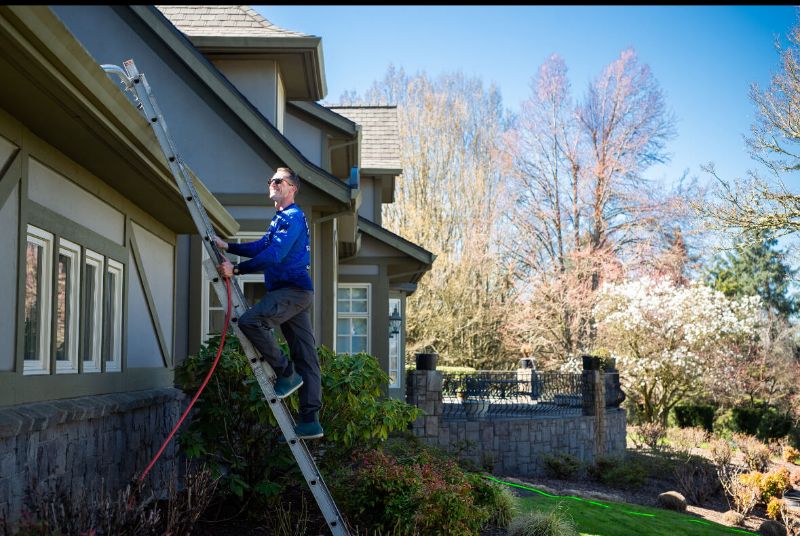
Shaded surfaces on your Beaverton home collect moss, algae, and mildew faster than exposed areas because tree canopy blocks UV radiation while persistent rainfall locks in moisture year-round. You’ll need to match your PSI to each surface type, apply a pre-treatment solution, and avoid washing debris toward moisture-prone areas. Using the right nozzle angle and cleaning solution makes all the difference between lasting results and rapid regrowth—and there’s much more to unpack ahead.
Key Takeaways
-
Pre-treat shaded surfaces with diluted sodium hypochlorite (1:10 ratio) and allow 10–15 minutes of dwell time before pressure washing.
-
Use 500–800 PSI for wood and 1,000–1,200 PSI for vinyl to avoid damaging moisture-weakened surfaces in shaded areas.
-
Maintain a 12–18 inch nozzle distance using a 25- or 40-degree tip to protect vulnerable shaded surfaces.
-
Clean north-facing walls and heavily shaded surfaces every 6–12 months, with quarterly inspections to control biological growth.
-
Always apply post-treatment biocide after washing to prevent rapid algae and moss regrowth in persistently shaded areas.
Why Shaded Surfaces in Beaverton Get Dirty So Fast
Beaverton’s Pacific Northwest climate creates ideal conditions for biological growth on shaded surfaces, where reduced sunlight and persistent moisture allow algae, moss, lichen, and mildew to establish colonies faster than most homeowners expect.
You’re dealing with compounding shaded surface factors: tree canopy coverage blocks UV radiation that would otherwise inhibit microbial growth, while Pacific moisture accumulates on surfaces that never fully dry. These environmental influences accelerate contamination cycles considerably.
Decomposing organic debris—leaves, pollen, and airborne particles—settles onto shaded areas, providing additional nutrients for biological colonizers. North-facing walls, covered patios, and surfaces beneath dense tree coverage experience the most severe buildup.
Without consistent maintenance, these colonies penetrate porous materials like wood, concrete, and composite siding, causing structural degradation that extends well beyond cosmetic discoloration.
Safe PSI, Nozzle, and Distance Settings for Shaded Surfaces
When pressure washing shaded surfaces in Beaverton, you’ll want to keep your PSI between 500 and 1,200, since these areas often harbor soft, moisture-damaged material that high pressure can erode or splinter.
Use a 25- or 40-degree nozzle to spread the water stream and reduce concentrated impact force on vulnerable surfaces like wood siding, painted trim, or algae-covered concrete.
Maintain a working distance of at least 12 to 18 inches from the surface, adjusting farther back if you notice any paint lifting, wood grain raising, or substrate softening.
Optimal PSI for Shade
Shaded surfaces in Beaverton homes require lower PSI settings than sun-exposed areas because reduced evaporation rates and persistent moisture make them more susceptible to damage and mold infiltration during pressure washing.
You’ll want to calibrate your pressure settings based on specific surface types. For wood decks and fences, keep PSI between 500–800. Vinyl siding tolerates 1,000–1,200 PSI, while concrete surfaces can handle 1,200–1,500 PSI.
Brick and masonry in shaded zones shouldn’t exceed 1,000 PSI, since existing moisture weakens mortar joints. Reducing PSI by 20–30% below standard recommendations protects structurally compromised materials common in consistently shaded environments.
Always test a small inconspicuous area first, incrementally increasing pressure only when the surface demonstrates adequate structural integrity without visible deterioration.
Nozzle and Distance Guidelines
Three key variables—nozzle type, standoff distance, and PSI—work together to determine the force applied to shaded surfaces, and miscalibrating any one of them can cause irreversible damage.
For shaded, moisture-prone surfaces, use a 40-degree white nozzle or a soap black nozzle; both nozzle types distribute pressure across a wider surface area, reducing concentrated impact. Avoid zero-degree red nozzles entirely on these surfaces.
For distance measurement, maintain a minimum 18-inch standoff on wood, composite siding, and algae-covered concrete. Test at 24 inches first, then incrementally decrease until you achieve effective cleaning without surface disruption.
Pair your distance with 1,200–1,500 PSI for organic growth removal. Adjust distance before adjusting PSI—it’s the safer, more controlled variable to modify first.
The Best Cleaning Solutions for Moss, Algae, and Mildew on Shaded Surfaces
When tackling moss, algae, and mildew on shaded surfaces, you’ll want to use either a sodium hypochlorite (bleach) solution diluted at a 1:10 ratio with water or a sodium percarbonate-based cleaner mixed at roughly 4–8 ounces per gallon for a gentler, eco-friendly alternative.
You can also use a commercial surfactant-based biocide specifically formulated for organic growth, following the manufacturer’s dilution specs precisely.
Apply your chosen solution with a low-pressure downstream injector or hand pump sprayer, let it dwell for 10–15 minutes to break down organic matter, then rinse thoroughly.
Recommended Cleaning Solution Types
Moss, algae, and mildew thrive on Beaverton’s shaded surfaces, so you’ll need targeted cleaning solutions to break them down effectively. You have two primary options: eco-friendly solutions and commercial products.
Eco-friendly solutions, like diluted white vinegar or oxygen bleach, break down organic growth without harming surrounding vegetation or local waterways. They’re ideal for surfaces near gardens or natural landscaping.
Commercial products, such as sodium hypochlorite-based cleaners or specialized biocides, deliver faster, more aggressive results. They’re best suited for severe moss or algae infestations where organic alternatives fall short.
Regardless of your choice, always pre-wet the surface, apply the solution evenly, and allow adequate dwell time before pressure washing.
Matching the solution type to the infestation’s severity guarantees you’ll achieve the most effective clean.
Mixing and Application Ratios
Getting the ratios right is critical, because even the best cleaning solution loses effectiveness—or becomes damaging—when mixed incorrectly.
For sodium hypochlorite-based solutions, you’ll typically mix one part bleach with four parts water, then add a small amount of surfactant to improve dwell time on shaded surfaces.
For oxygen bleach, follow the manufacturer’s mixing ratios precisely—usually two to four ounces per gallon of water.
When applying, use low-pressure application techniques to prevent spatter and guarantee even coverage.
Apply the solution downstream, never upstream through the pressure washer’s pump.
Let it dwell for eight to ten minutes before rinsing.
You should reapply on heavily infested moss or algae areas rather than increasing concentration, which risks damaging siding, wood, or surrounding vegetation.
How to Pressure Wash a Moss-Covered Deck or Fence
Tackling a moss-covered deck or fence requires a few extra steps compared to a standard pressure wash. Start by applying your pre-treatment solution and letting it dwell for 10–15 minutes before you touch the trigger.
For deck maintenance, hold the nozzle 12–18 inches from the surface and sweep in consistent, overlapping strokes aligned with the wood grain. Jumping between sections creates uneven results, so work methodically from one end to the other.
For fence restoration, angle the spray slightly downward to push debris away from the wood rather than into it. Use a 25-degree tip on heavily textured surfaces.
Once you’ve cleared the moss, rinse thoroughly to remove any remaining detergent. Let the wood dry completely before applying any sealant or stain.
How to Pressure Wash Shaded Driveways Without Spreading Algae or Creating Slip Hazards
Shaded driveways present a different challenge than decks or fences because algae spreads quickly across concrete when disturbed by high-pressure water.
Before you begin algae removal, apply a concrete-safe algaecide and let it dwell for 10–15 minutes. This kills the organism rather than simply displacing it.
When you pressure wash, work in a consistent direction—always moving water toward the street, never back toward clean sections.
Use a 25-degree nozzle at 2,000–2,500 PSI, keeping the wand moving steadily.
Standing water on shaded concrete dries slowly, so slip prevention requires you to block off the area until the surface fully dries.
After washing, apply a penetrating concrete sealer to reduce future algae colonization and improve traction during Beaverton’s wet seasons.
Pressure Washing Mistakes That Make Shade Problems Worse
Even experienced homeowners make pressure washing mistakes that compound shade-related problems rather than solve them.
On shaded surfaces, common mistakes accelerate biological regrowth and create dangerous conditions.
Avoid these errors:
-
Skipping pre-treatment: Blasting dry algae scatters spores across previously clean areas.
-
Using excessive PSI: High pressure opens wood grain and concrete pores, inviting faster microbial colonization.
-
Washing toward shade: Directing runoff into shadowed zones deposits organic debris where moisture already accumulates.
-
Neglecting post-treatment: Leaving shaded surfaces untreated after washing guarantees rapid algae and moss return.
-
Pressure washing in cold temperatures: Wet shaded surfaces in cool Beaverton weather freeze overnight, creating dangerous ice patches.
Recognizing these patterns helps you work more strategically and protect your property’s surfaces long-term.
How Often Should You Pressure Wash Heavily Shaded Areas?
How often you pressure wash heavily shaded areas depends on biological growth rates, surface material, and Beaverton’s local climate patterns.
Beaverton’s wet winters accelerate moss, algae, and mildew development, making pressure washing frequency a critical maintenance variable.
For heavily shaded concrete and wood surfaces, you’ll typically need cleaning every 6–12 months.
North-facing surfaces with dense tree cover may require quarterly inspections and semi-annual treatments.
Shaded area maintenance becomes more demanding when organic debris accumulates faster than sunlight can suppress biological growth.
Track surface conditions rather than following rigid schedules.
If you notice green discoloration, slick textures, or visible organic buildup before your scheduled cleaning, treat the surface immediately.
Delaying cleaning allows root systems to penetrate porous materials, compounding damage and increasing restoration costs considerably.
Signs It’s Time to Hire a Beaverton Pressure Washing Pro
Knowing when to call a professional pressure washing company in Beaverton can save you from costly surface damage, equipment misuse, or ineffective cleaning outcomes.
Watch for these signs of neglect that warrant a professional assessment:
-
Black or green streaks spreading across siding, concrete, or rooflines
-
Deeply embedded moss lifting shingles or cracking mortar joints
-
Slippery algae colonies covering walkways, stairs, or deck surfaces
-
Stains that persist after repeated DIY cleaning attempts
-
Visible biological growth concentrated beneath dense tree canopy coverage
These indicators signal that surface contamination has advanced beyond basic maintenance.
A qualified Beaverton technician uses calibrated pressure settings, targeted detergents, and proper surface techniques to restore your home’s exterior without causing structural or cosmetic damage.
Frequently Asked Questions
Can Pressure Washing Remove Tree Sap From Shaded Siding or Surfaces?
Yes, you can remove tree sap through pressure washing, but you’ll need hot water and a degreaser for effective tree sap removal. Combine this with routine siding maintenance to prevent buildup on shaded surfaces.
Is It Safe to Pressure Wash Near Shaded Garden Beds or Plants?
You can pressure wash near shaded garden beds safely if you prioritize plant protection by covering delicate foliage and directing water runoff away from root zones, preventing soil erosion and chemical-laden overspray from damaging your plants.
Does Pressure Washing in Shade Require Different Seasonal Timing in Beaverton?
Yes, you’ll want to adjust your seasonal scheduling based on shade considerations. In Beaverton, target late spring through early fall, when temperatures stay above 50°F, ensuring surfaces dry completely before overnight moisture accumulates.
Can Pressure Washing Damage Older Wood That Rarely Sees Sunlight?
Yes, pressure washing can damage older wood that rarely sees sunlight. You’ll want to prioritize wood preservation by lowering pressure settings to under 500 PSI, preventing fiber damage to already-weakened, moisture-saturated wood in shaded areas.
Will Pressure Washing Shaded Areas Affect Nearby Outdoor Furniture or Fixtures?
Yes, it can. You’ll want to prioritize furniture protection and fixture safety by moving items away or covering them with waterproof tarps before you begin pressure washing shaded areas to prevent water intrusion and potential damage.
Treat Shaded Surfaces Differently to Prevent Ongoing Damage
Shaded areas hold moisture longer, making them prime spots for moss, algae, and mildew to take hold and spread. Using the wrong pressure or technique can damage surfaces or push contamination deeper instead of removing it. The key is matching the right PSI, using proper cleaning solutions, and working methodically to eliminate buildup without harming the material underneath.
Staying consistent with maintenance is what keeps these areas under control long-term. Regular cleaning prevents growth from taking hold and turning into costly repairs. If the buildup is widespread or beyond your equipment, professional help can ensure it’s handled safely and effectively. Peak Pressure Washing provides exterior cleaning tailored to moisture-prone, shaded environments. Request a free quote today and keep your surfaces clean, protected, and built to last.