

Portland’s wet fall climate turns your gutters into a trap. Rain saturates fallen leaves, compressing them into dense, waterlogged mats that block drainage fast. Species like bigleaf maple and sweetgum make it worse, dropping large, interlocking debris that packs tightly. In high-canopy neighborhoods, accumulation happens two to three times faster than average. Understanding which trees, neighborhoods, and timing factors are at play can help you stay ahead of serious damage.
Key Takeaways
-
Portland’s wet fall climate saturates fallen leaves, causing them to compress and form dense, waterlogged mats that rapidly block gutters.
-
Tree species like bigleaf maple, sweetgum, and Oregon white oak shed large, slow-decomposing leaves that intensify clogging.
-
High-canopy neighborhoods experience leaf accumulation two to three times faster than less densely wooded areas.
-
Areas like Eastmoreland, Laurelhurst, and Sellwood-Moreland face severe seasonal clogging due to mature, abundant tree canopies.
-
A single heavy rainfall can overwhelm drainage systems, making proactive maintenance essential before peak fall rainfall.
Why Portland’s Fall Foliage Clogs Gutters So Fast?
Portland’s wet fall climate creates the perfect storm for rapid gutter clogs. When leaves fall, they don’t stay dry for long. Rain saturates them quickly, causing them to compress and pack tightly against your gutter channels. This compression accelerates leaf decomposition, turning loose debris into a dense, waterlogged mat that blocks water flow almost immediately.
Portland’s tree canopy makes this worse. The city’s abundant maples, oaks, and sweetgums shed massive volumes of large leaves within a short window. If you’re not staying ahead of gutter maintenance during this period, even a single heavy rainfall can overwhelm your drainage system.
You’re not just dealing with leaves — you’re dealing with fast-decaying organic matter that adheres to gutter surfaces and creates stubborn blockages that worsen with every storm. Experts recommend cleaning gutters twice yearly, in both spring and fall, to prevent these blockages from escalating into costly water damage to your home’s foundation.
Which Portland Trees Clog Gutters the Fastest Each Fall?
Five tree species dominate Portland’s fall gutter-clogging problems: bigleaf maple, Oregon white oak, sweetgum, black cottonwood, and red alder. Maple trees drop large, water-retaining leaves that compress tightly, blocking water flow almost immediately. Oak trees shed thick, slow-decomposing leaves that build dense leaf accumulation layers resistant to flushing. Sweetgum releases star-shaped leaves and spiky seed pods that interlock and trap debris effectively. Black cottonwood and red alder contribute smaller leaves that slip past gutter guards and pack into downspouts.
If pine needles from nearby conifers mix into this debris, you’re dealing with a nearly impenetrable mat. Identifying which trees surround your property lets you schedule seasonal maintenance before clogs form. Proactive scheduling protects gutter health and prevents costly water damage to your fascia, foundation, and siding. Portland homeowners living near deciduous trees should plan at least twice yearly cleanings to manage the accelerated debris accumulation these species cause each season.
How Clogged Gutters Quietly Wreck Your Home Over Time?
When your gutters clog, the damage doesn’t stop at the roofline—it works its way down to your foundation as overflowing water saturates the soil and creates hydrostatic pressure against your home’s base. Standing moisture trapped in blocked gutters also accelerates roof deck rot, deteriorating fascia boards and shingles from the edge inward. On top of that, the damp, debris-filled environment makes your gutters an ideal nesting site for mosquitoes, rodents, and carpenter ants looking for shelter. Neglected gutters can also develop rust and peeling paint as protective coatings break down under prolonged moisture exposure, signaling that deterioration has moved beyond simple cleaning into structural repair territory.
Foundation Damage From Overflow
Clogged gutters don’t just create roofline problems—they redirect water directly toward your home’s foundation. When gutters overflow, water saturates the soil immediately surrounding your foundation. That sustained moisture retention causes soil to expand and contract repeatedly, destabilizing the structural base beneath your home.
Over time, this cycle compromises foundation stability, producing cracks, uneven settling, and hydrostatic pressure against basement walls. Water intrusion follows, accelerating interior damage and mold growth.
Portland’s wet seasons intensify this risk considerably. Heavy rainfall combined with leaf-blocked gutters creates consistent overflow conditions that your foundation wasn’t designed to handle long-term. Downspout extensions and proper drainage help, but they’re ineffective when gutters can’t move water in the first place. Beyond foundation damage, prolonged moisture intrusion can also compromise your home’s insulation and electrical systems, creating hazards that extend well beyond structural concerns. Keeping gutters clear is your first line of foundation defense.
Roof Rot And Deterioration
Foundation damage gets the attention, but the deterioration happening just above your gutters is equally destructive. When clogged gutters overflow, standing water backs onto your roof deck, compromising both roof maintenance and moisture control quickly.
Here’s what happens structurally:
-
Water saturates wood fascia boards, causing them to soften and split within one to two seasons.
-
Moisture migrates beneath shingles, rotting the roof decking underneath.
-
Trapped organic debris accelerates mold and algae growth along your roof’s edge.
-
Repeated moisture cycles weaken shingle adhesion, shortening your roof’s lifespan considerably.
You won’t notice this damage until it’s expensive. Keeping gutters clear directly protects your roofing system from preventable deterioration. It’s not optional maintenance — it’s structural preservation. Scheduling gutter cleanings twice yearly, ideally in spring and fall, is the most reliable way to prevent moisture from quietly compromising your roof structure season after season.
Pest Infestations In Gutters
Rotting leaves, standing water, and decomposing debris turn clogged gutters into ideal nesting environments for pests. Mosquitoes breed in stagnant water, while rodents, birds, and carpenter ants exploit damp, compacted leaf matter as shelter. Once pests establish a presence in your gutters, they often migrate into your attic, walls, and crawl spaces, creating infestations that cost considerably more to eliminate than prevent.
Effective pest prevention starts with consistent gutter maintenance. When you remove leaf buildup and restore proper drainage, you eliminate the conditions pests depend on. Schedule cleanings at least twice yearly — once in late spring and again after peak leaf fall in autumn. In Portland’s tree-dense neighborhoods, quarterly inspections may be necessary to stay ahead of rapid debris accumulation and the pest activity it invites. Portland’s high moisture levels also accelerate the decomposition of leaf matter in gutters, further compounding the conditions that attract pests year-round.
Which Portland Neighborhoods Face the Highest Risk Each Fall?
If you live in Portland’s tree-heavy districts, your gutters face a substantially higher leaf load each fall than properties in more open areas. Neighborhoods like Sellwood-Moreland, Eastmoreland, and Laurelhurst sit beneath dense canopies of mature oaks, maples, and elms that shed aggressively from October through December. These high-risk zones see gutters clog faster and more severely, making seasonal cleaning not just a good idea but a practical necessity. In areas with heavy tree coverage, clogged gutters can lead to ice dams forming during winter storms, compounding the damage caused by fall leaf accumulation.
Tree-Heavy Portland Districts
Portland’s urban tree canopy is one of the densest in the Pacific Northwest, and certain neighborhoods bear a disproportionate leaf load each fall. If you live near high-canopy corridors, you’re dealing with aggressive debris accumulation from multiple tree species.
Highest-risk districts include:
-
Eastmoreland – Dense canopy of oak and sweetgum trees drops heavy, matted leaf loads
-
Laurelhurst – Mature elms and maples accelerate clog formation by mid-October
-
Sellwood-Moreland – Mixed deciduous tree species deposit layered debris that compacts quickly
-
Forest Heights – Proximity to natural woodlands intensifies conifer needle and broadleaf buildup
Your maintenance tips should reflect your specific district. Knowing your local tree species helps you schedule cleanings before peak drop cycles hit your gutters hardest. Left unaddressed, clogged gutters in these high-canopy neighborhoods can lead to roof and foundation damage that compromises the structural integrity of your home.
Neighborhoods With Dense Canopies
Certain Portland neighborhoods experience markedly higher gutter clog rates each fall due to canopy density, tree species composition, and leaf volume per property. Areas like Eastmoreland, Laurelhurst, and Sellwood-Moreland feature mature hardwood canopies—primarily oak, maple, and sweet gum—that generate substantial leaf accumulation across rooflines and gutters within short weather windows.
If you live in these districts, you’re dealing with compounded debris loads that standard seasonal schedules can’t adequately address. Leaf accumulation in high-canopy zones typically accelerates gutter blockage two to three times faster than in neighborhoods with younger or sparser tree cover. Adjusting your gutter maintenance frequency—ideally scheduling mid-fall and post-fall cleanings—directly reduces overflow risk, fascia deterioration, and foundation moisture intrusion before Portland’s peak rainfall season intensifies.
High-Risk Fall Zones
Knowing which specific Portland neighborhoods carry the highest fall gutter risk helps you schedule cleaning windows before blockage damage occurs. Dense canopy coverage combined with rainfall timing creates predictable leaf accumulation hotspots requiring urgent seasonal maintenance.
High-risk zones include:
-
Eastmoreland – Mature oaks and maples drop heavy loads through October and November.
-
Laurelhurst – Street tree density pushes significant debris directly onto rooflines.
-
Lake Oswego – Hillside lots accelerate runoff, compressing leaf accumulation faster than flat properties.
-
Southwest Portland Hills – Fir and deciduous mixing creates multi-wave debris events extending deep into December.
If your property sits within these zones, target late October and early December for professional gutter cleaning to prevent overflow damage before winter rain peaks.

When to Schedule Gutter Cleaning This Fall
Timing your gutter cleaning correctly this fall makes the difference between effective maintenance and wasted effort. Schedule your first cleaning after the majority of leaves have dropped — typically late November in Portland — to avoid clearing gutters twice. However, if you have dense canopy coverage overhead, you’ll want an interim clearing in mid-October to prevent early blockages from saturating and compacting.
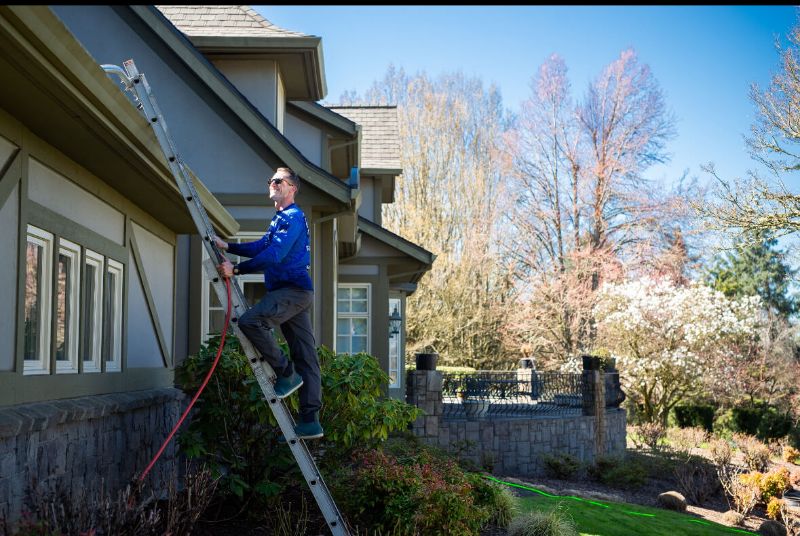
Add gutter maintenance tips to your fall cleaning checklist alongside downspout flushing and fascia inspection. Check that downspouts discharge at least four feet from your foundation, and confirm all hangers remain secure after summer’s dry contraction cycle. If you’re unsure about timing, Peak Pressure Washing serves Portland and surrounding communities and can assess your property’s specific tree coverage and drainage needs before the heaviest rainfall hits.
What Professional Gutter Cleaning Costs and Covers
Professional gutter cleaning costs vary depending on your home’s linear footage, story height, and debris volume, but most Portland homeowners pay between $150 and $300 for a standard single-story service. Following cleaning frequency recommendations guarantees you’re protecting that investment year-round.
A professional service typically covers:
-
Complete debris removal from gutters and downspouts
-
Downspout flushing to confirm proper drainage flow
-
Inspection for cracks, sagging sections, or loose fasteners
-
A post-cleaning report with gutter maintenance tips
Two-story homes and heavily wooded lots run higher due to added safety requirements and debris volume. Peak Pressure Washing provides transparent pricing upfront, so you won’t encounter surprise charges. Scheduling before heavy fall rainfall hits Portland keeps your system functioning when it matters most.
Frequently Asked Questions
Can Clogged Gutters Attract Pests or Insects to My Portland Home?
Yes, clogged gutters absolutely attract pests. Standing water and decomposing leaves create ideal breeding grounds for mosquitoes, rodents, and insects. Prioritizing gutter maintenance is your best pest prevention strategy for protecting your Portland home.
How Long Does a Professional Gutter Cleaning Appointment Typically Take?
Most professional gutter maintenance appointments take 1–2 hours, depending on your home’s size and debris buildup. Your cleaning frequency affects duration—heavily clogged gutters from Portland’s falling leaves take longer to clear thoroughly.
Should Gutters Be Cleaned Before or After the Last Leaves Fall?
You’ll get the most from your gutter maintenance by scheduling seasonal cleaning after the last leaves fall. That way, you’re clearing everything in one efficient pass, preventing clogs from forming over winter.
Does Homeowners Insurance Cover Damage Caused by Neglected Gutters?
Most homeowners insurance policies won’t cover damage from neglected gutters. Insurers consider gutter maintenance your responsibility, so if you skip it, you’ll likely pay out-of-pocket for resulting water damage repairs.
Are Gutter Guards Worth Installing After a Professional Cleaning Service?
Gutter guards are worth it if you weigh gutter guard effectiveness against installation costs. They’ll reduce debris buildup considerably, but you’ll still need periodic professional cleanings to maintain ideal performance, especially in Portland’s heavy leaf-fall seasons.
Conclusion
Don’t let Portland’s stunning fall foliage become your home’s worst enemy. Once leaves pack into your gutters, water backs up fast, attacking your roof, siding, and foundation simultaneously. You’ve seen the damage patterns, the highest-risk neighborhoods, and what cleaning actually costs — now it’s time to act. Schedule your gutter cleaning before peak leaf drop hits, because waiting until clogs form means you’re already behind the damage curve.