Auto dealerships use pressure washing to control how customers perceive their brand before a single conversation happens. You’ll want to target high-traffic zones like entrance lanes, showroom aprons, display pads, and service bays on a consistent schedule — weekly, monthly, or quarterly depending on the surface. Using the right PSI for each area prevents damage while removing oil stains, grime, and mildew. The details behind building an effective lot cleaning strategy go deeper than most dealerships realize.
Key Takeaways
-
Auto dealerships pressure wash high-traffic areas like entrances, display pads, and service bays to maintain a professional, customer-ready appearance.
-
Clean lots signal quality and professionalism, directly influencing how potential buyers perceive the dealership before any interaction occurs.
-
Dealerships follow structured cleaning schedules, with weekly cleanings for entrances and quarterly deep cleaning for full lot surfaces.
-
Early morning cleanings between 5:00–7:00 a.m. ensure surfaces are washed and dried before customers arrive at opening.
-
Higher PSI settings clean concrete and service bays effectively, while softer pressure protects delicate surfaces from damage.
Why Lot Appearance Directly Impacts Car Sales
When a customer pulls into your dealership, the condition of your lot forms their first impression before a single salesperson says a word. Stained concrete, oil-streaked service bays, and grimy showroom exteriors signal neglect, directly damaging customer perception before any vehicle conversation begins.
Research consistently shows that buyers associate environmental cleanliness with product quality. If your lot looks poorly maintained, customers unconsciously question how well you’ve maintained your inventory. That connection costs you sales.
In Portland’s competitive automotive market, a clean, well-presented lot gives you a measurable competitive advantage. Dealerships that invest in regular pressure washing communicate professionalism, attention to detail, and pride of ownership — qualities buyers want reflected in the vehicles they purchase. Regular pressure washing not only enhances curb appeal but also helps combat moss and mildew growth that can detract from the overall presentation.
Your lot’s appearance isn’t cosmetic; it’s a sales tool.
What Pressure Washing Actually Cleans on a Dealership Lot
When you run a dealership, pressure washing targets two critical surface areas first: your pavement and parking lots, and your showroom entrances and curbs.
Oil stains, tire marks, and fluid leaks accumulate fast on asphalt and concrete, leaving your lot looking neglected before a customer even exits their car.
Your showroom entrance takes the heaviest foot traffic, making curb buildup, gum, and grime visible at eye level where first impressions are made. Regular maintenance through pressure washing can minimize risks of mold and mildew growth, ensuring a clean and inviting environment for potential buyers.
Pavement and Parking Areas
Asphalt and concrete surfaces on a dealership lot take a beating from daily traffic, fluid drips, and weather exposure.
Oil stains, tire marks, and embedded grime accumulate quickly, dragging down parking aesthetics and making your entire operation look neglected.
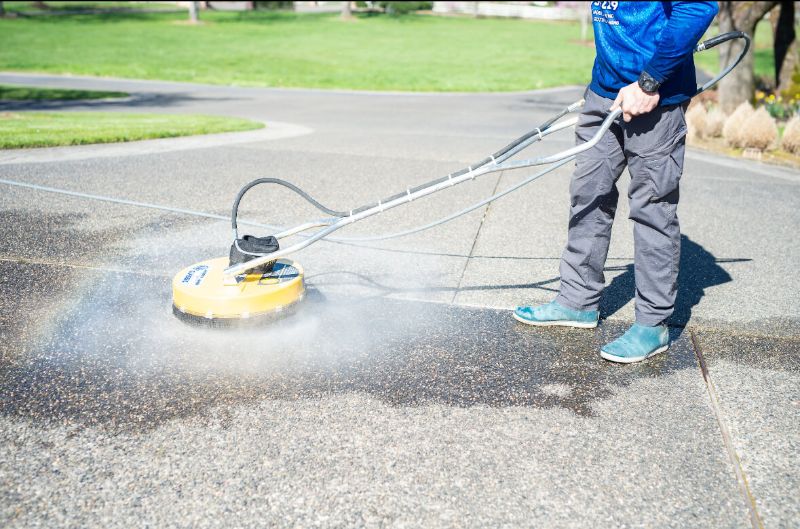
Pressure washing removes these stubborn deposits using high-pressure water and targeted cleaning agents that break down hydrocarbon-based stains without damaging the surface.
Consistent pavement maintenance extends the lifespan of your lot by preventing contaminants from degrading asphalt binders and concrete sealers over time.
You’ll also eliminate algae and moss growth that creates slip hazards in wetter climates like Portland.
Clean driving lanes and parking stalls signal professionalism to every customer who pulls onto your lot before they ever step inside your showroom.
Showroom Entrances and Curbs
The showroom entrance is the last surface a customer crosses before walking through your doors, and it shows every bit of that traffic. Tire marks, oil drips, gum, and compacted dirt accumulate fast on entrance slabs and curbs. Pressure washing strips all of it without damaging concrete edges or painted curb markings.
Entrance maintenance directly supports curb appeal by keeping the passage from lot to showroom clean and intentional. Stained or cracked-looking entryways signal neglect before a customer ever speaks to your sales team.
Pressure washing can also clear debris from expansion joints and flush out standing water zones that accelerate surface wear.
Cleaning this area weekly or bi-weekly, depending on foot traffic volume, keeps your first indoor impression consistent with the professional standard your dealership projects.
How Often Should Auto Dealerships Pressure Wash?
How often you pressure wash your dealership depends on several factors, including lot size, vehicle inventory turnover, local weather conditions, and foot traffic volume.
Frequency recommendations vary, but most dealerships benefit from a consistent schedule built around seasonal considerations.
Use this general framework:
-
Weekly – High-traffic showroom entrances, curbs, and customer walkways
-
Monthly – Service bay floors, drive lanes, and vehicle display pads
-
Quarterly – Full lot surfaces, fencing, signage, and exterior walls
-
Seasonally – Deep cleaning after winter road salt exposure or heavy spring pollen buildup
Sticking to this schedule prevents surface staining, reduces slip hazards, and keeps your lot looking sharp year-round without allowing grime to permanently bond to concrete or pavement. Additionally, incorporating eco-friendly approaches ensures a cleaner lot while aligning with environmentally conscious practices.
The Right Pressure Washing Techniques for Showroom Surfaces
Knowing how often to clean your lot is only part of the equation—using the right techniques on the right surfaces is what prevents costly damage while still getting the job done.
Different surface materials require different pressure settings and cleaning solutions. Concrete driveways and service bays can handle higher PSI, typically between 2,500 and 3,500, while showroom entryways, painted curbs, and decorative pavers need lower pressure to avoid etching or stripping finishes.
Soft washing works better on delicate surfaces, using low pressure combined with targeted cleaning solutions to lift grease, algae, and grime without causing surface damage. Additionally, employing eco-friendly cleaning practices can enhance the overall sustainability of your dealership’s operations.
Always pre-wet surfaces before applying chemicals, work in consistent overlapping passes, and rinse thoroughly to prevent residue buildup that can attract dirt faster.
Professional vs. In-House Pressure Washing for Dealerships
Once you’ve nailed down the right techniques, the next decision is whether to handle pressure washing in-house or hire a professional service. Both options have trade-offs worth evaluating carefully.
A honest cost analysis should cover these four factors:
-
Equipment costs – In-house equipment requires upfront investment, maintenance, and storage space.
-
Labor – Staff training takes time, and untrained operators risk surface damage.
-
Consistency – Professionals deliver repeatable results across your entire lot and showroom exterior.
-
Liability – Licensed, insured contractors protect your dealership from damage claims.
In-house pressure washing works for routine maintenance if you’ve already invested in commercial-grade equipment. Additionally, understanding material-specific techniques ensures that various surfaces are cleaned without damage.
However, for high-visibility surfaces and large lots, professional services typically offer better efficiency, reliability, and long-term value per cleaning cycle.
How to Schedule Lot Cleaning Without Disrupting Business
Scheduling lot cleanings during early morning hours—before the sales floor opens—lets you maintain a spotless property without slowing foot traffic or moving vehicles mid-shift.
You’ll want to loop in your sales staff ahead of time so they can stage inventory accordingly and avoid parking in freshly cleaned zones.
Focus the crew on high-traffic areas first, like the main entrance, showroom apron, and customer parking lanes, so the most visible sections are done before your first customers arrive.
Schedule Early Morning Cleanings
Early morning cleanings—typically between 5:00 and 7:00 a.m.—let you get the lot washed and dried before the first customers or sales staff arrive.
Being an early bird pays off when you’re managing a busy dealership. Build this into your service schedule to minimize operational friction.
Coordinate with your pressure washing crew to prioritize these four tasks in sequence:
-
Entrance lanes and customer-facing drive paths — highest traffic, first priority
-
Display vehicle pads — must be dry before inventory is repositioned
-
Service bay aprons — clear oil and fluid stains before technicians clock in
-
Sidewalks and perimeter curbing — finish last since foot traffic arrives later
This sequence keeps cleaning efficient and guarantees your lot is showroom-ready at opening.
Coordinate With Sales Staff
Getting your sales team in the loop before scheduling any lot cleaning prevents last-minute conflicts and keeps vehicles moving without interruption.
Sales collaboration between your cleaning crew and floor staff guarantees high-traffic sale days, test drives, and customer appointments aren’t disrupted by hoses, wet surfaces, or repositioned vehicles.
Share a weekly cleaning calendar with your sales manager and update it whenever scheduling changes occur. Use a shared digital calendar or group chat to communicate real-time adjustments.
Staff training matters here too. Teach your team which zones are being cleaned, how long each section takes, and where vehicles will be temporarily staged.
When everyone understands the cleaning workflow, your lot stays productive, your customers stay safe, and your pressure washing schedule runs without friction.
Prioritize High-Traffic Areas
Not every part of your lot needs the same cleaning frequency, so focus your pressure washing schedule around the zones that see the most foot and vehicle traffic. High traffic zones directly shape customer perceptions, making consistent cleaning non-negotiable in these areas.
Prioritize cleaning in this order:
-
Entrance driveways and entry lanes — first impressions form here before customers step out of their cars.
-
Showroom aprons and display pads — featured inventory sits here, so staining and grime are immediately visible.
-
Customer parking areas — dirty, stained surfaces signal neglect before anyone enters your building.
-
Service drive approaches — returning customers evaluate your professionalism every visit.
Schedule these zones two to three times more frequently than low-traffic perimeter areas to maintain a consistently sharp appearance.
Frequently Asked Questions
Does Pressure Washing Remove Oil Stains From Dealership Service Bay Floors?
Yes, pressure washing effectively handles oil stain removal from your service bay floors. You’ll get the best results by combining hot water, degreaser, and high-pressure spray — making service bay maintenance cleaner, safer, and more professional-looking.
Can Pressure Washing Damage Vehicle Paint if Cars Are Nearby?
Yes, it can. You’ll want to keep vehicles moved away from active cleaning zones and adjust pressure settings carefully. Proper distance and lower PSI help guarantee paint protection while you’re washing surrounding surfaces.
Is Pressure Washing Safe for Dealership Signage and Exterior Lighting Fixtures?
You can safely pressure wash dealership signage and exterior lighting fixtures if you adjust pressure settings for signage materials and account for lighting durability—keep PSI low and avoid directing water into electrical housings or sealed connections.
What Time of Year Is Best for Dealership Lot Pressure Washing?
Spring and early fall are your best windows for dealership lot pressure washing. You’ll tackle spring cleaning after winter grime builds up, and fall’s seasonal maintenance prepares surfaces before wet weather returns.
Are Eco-Friendly Cleaning Solutions Required for Dealership Pressure Washing in Portland?
Portland’s cleaning regulations don’t always mandate eco-friendly options, but you’ll want to use them anyway. Runoff from dealership lots can contain chemicals that violate stormwater rules, so sustainable solutions protect both your business and the environment.
Conclusion
Your dealership’s lot is a direct reflection of your standards, and pressure washing keeps it working in your favor. By scheduling regular cleanings, using the right techniques for each surface, and deciding whether to hire professionals or handle it in-house, you’re protecting your investment and your reputation. Don’t let dirty concrete undermine the quality of your inventory. Start building a maintenance schedule today, and you’ll notice the difference in customer perception almost immediately.