
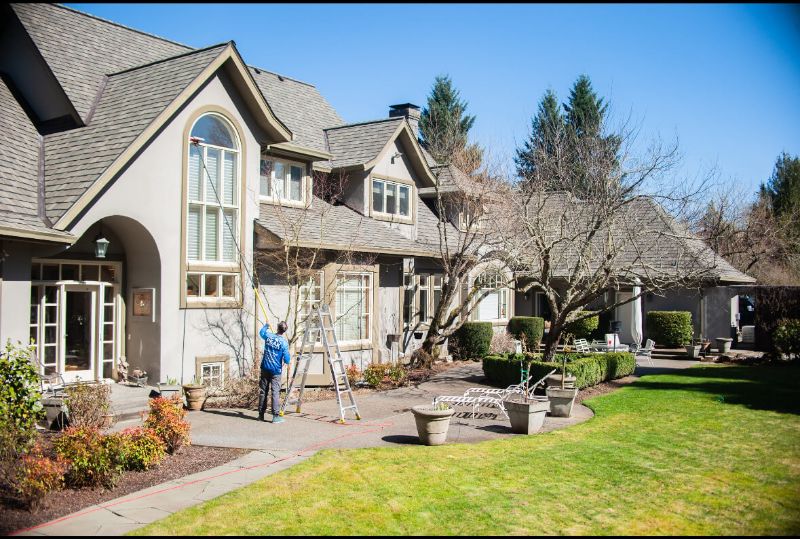
If your Gresham home sits beneath a dense tree canopy, you’re dealing with accelerated moss growth, clogged gutters, and moisture-trapped surfaces year-round. Start by clearing gutters before tackling roofs or siding. Use biodegradable, pH-balanced cleaners to protect surrounding landscaping, and apply soft washing on moss-prone surfaces. North and west-facing areas dry slowest and need the closest attention. The right cleaning sequence and frequency make all the difference — and there’s more to know.
Key Takeaways
-
Dense tree canopy retains moisture, accelerating moss, algae, and lichen growth on roofs, siding, and concrete surfaces.
-
Clean gutters first to prevent overflow, fascia damage, and foundation issues caused by clogged debris.
-
Homes under heavy canopy coverage may require roof and gutter cleaning up to three times annually.
-
Use biodegradable, phosphate-free cleaning products and direct runoff away from garden beds and storm drains.
-
Moss-covered roofs and steep pitches create serious fall hazards; licensed professionals should handle high-risk cleaning tasks.
Why Gresham’s Tree Cover Creates Unique Cleaning Challenges
Gresham’s dense urban tree canopy—dominated by Douglas fir, big-leaf maple, and red alder—creates persistent moisture conditions that accelerate biological growth on exterior surfaces.
Overhanging limbs deposit organic debris—needles, seed pods, and decomposing leaves—directly onto roofs, gutters, and siding. This material retains moisture, feeding moss, algae, and lichen colonies that degrade surfaces over time.
Your home’s exposure level depends heavily on canopy density and sun access. North and west-facing surfaces dry slowly, compounding buildup between seasonal cleanup cycles.
Without consistent tree maintenance to reduce overhang, debris accumulation accelerates after every wind event or rain cycle. Regular inspections and effective gutter maintenance strategies can help mitigate these issues and protect your home.
Understanding these regional conditions lets you prioritize cleaning frequency and target the surfaces most vulnerable to biological growth before damage becomes structurally significant.
The Surfaces Most Damaged by Leaf and Moss Buildup
Once you understand how Gresham’s tree canopy drives moisture retention and debris accumulation, the next step is identifying which surfaces take the most damage.
Rooftops suffer most from leaf accumulation, where trapped organic matter accelerates moss growth and deteriorates shingles over time. Gutters clog quickly, causing water to back up and damage fascia boards.
Concrete driveways and walkways develop persistent moss growth in shaded zones, creating slip hazards and surface staining that penetrates deeply.
Wood decks and fences absorb moisture held in place by decomposing leaves, leading to rot and structural weakening.
Solar panels lose efficiency when coated with debris. Regular roof moss removal can significantly preserve roof lifespan and protect your investment.
Each surface responds differently, so you’ll need targeted cleaning approaches rather than a single method applied across your entire property.
How Often Gresham Homes Near Trees Need Exterior Cleaning
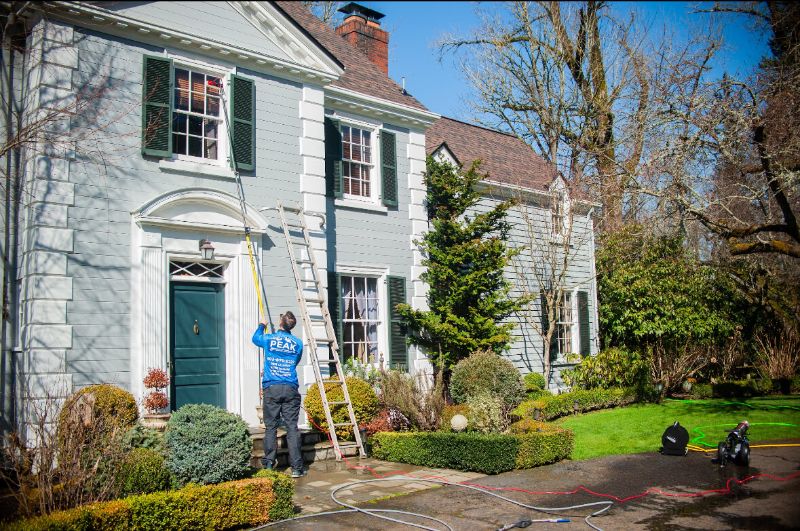
Cleaning frequency for Gresham homes near trees depends on canopy density, surface type, and seasonal debris cycles rather than a fixed annual schedule.
If you’ve got heavy Douglas fir or maple canopy overhead, you’ll likely need seasonal cleaning twice yearly — once after spring pollen and once following autumn leaf drop.
Roofs and gutters under dense cover may require three cleanings annually.
Moss-prone surfaces, particularly north-facing roof planes and shaded concrete, accumulate biological growth faster in Gresham’s wet climate and need closer monitoring.
Pairing your cleaning schedule with routine tree maintenance — trimming overhanging limbs and thinning canopy — reduces debris volume and moisture retention on surfaces.
Tracking buildup patterns over two to three seasons helps you establish a precise, property-specific cleaning interval. Additionally, regular roof cleaning can significantly enhance the longevity and performance of your roof, ensuring it remains in optimal condition.
Clean Gutters First: Here’s Why Everything Else Depends on It
When you’re planning an exterior cleaning sequence for a Gresham home, gutters should be your starting point — not an afterthought. Clogged gutters overflow during rain, sending water down your siding, fascia, and foundation — undoing any cleaning work you’ve already done. Proper gutter maintenance protects every surface below it.
In Gresham’s tree-dense neighborhoods, cleaning frequency matters greatly. Fir needles, maple seeds, and oak debris accumulate fast, especially after fall and spring.
If you clean your roof or siding before clearing your gutters, runoff will recontaminate those surfaces almost immediately. Regular gutter maintenance is essential to prevent water damage and maintain the integrity of your property.
Start at the top, work downward, and treat your gutters as the foundation of your entire exterior cleaning plan. Everything downstream — literally — depends on getting this step right first.
Safe Cleaning Methods That Won’t Harm Your Trees or Landscaping
When cleaning your home’s exterior in the Pacific Northwest, you need to use eco-friendly solutions that break down organic buildup—moss, algae, mildew—without introducing harsh chemicals into your soil.
You’ll want to pre-soak surrounding plant beds and tree roots with water before applying any cleaning agents, which dilutes chemical contact and reduces absorption into root systems.
Protecting foliage means directing runoff away from garden beds and rinsing treated surfaces thoroughly, keeping your landscaping intact while still achieving a deep, effective clean. Additionally, it’s important to communicate concerns about delicate materials with the pressure washing service, ensuring they use safe methods around your landscaping.
Eco-Friendly Cleaning Solutions
Protecting your trees, shrubs, and garden beds during exterior cleaning requires deliberate chemical selection and application control. In Gresham’s wet, heavily wooded environment, runoff from cleaning agents can saturate root zones and damage sensitive understory plants.
You’ll want to prioritize eco-friendly products that are biodegradable, phosphate-free, and pH-balanced for use near living vegetation.
Sustainable practices like low-pressure soft washing reduce chemical volume and limit overspray near tree bases and planted borders. Pre-wetting surrounding soil before application creates a dilution barrier, slowing chemical absorption into root systems.
Always direct runoff away from garden beds using tarps or temporary berms.
Sodium hypochlorite solutions, when diluted correctly and paired with plant-safe surfactants, effectively treat moss and algae without causing lasting harm to Gresham’s native Douglas fir and cedar landscapes.
Protecting Roots And Foliage
Mature Douglas firs, western red cedars, and native understory shrubs common throughout Gresham and the broader Portland metro can sustain serious root damage if cleaning runoff reaches their drip zones unchecked.
Before you start any exterior cleaning, pre-soak surrounding soil thoroughly. Saturated ground dilutes chemical concentrations and reduces absorption rates, directly supporting root health.
Direct runoff away from tree bases using berms or temporary diversion channels. For foliage protection, wet leaves and branches before applying any surfactant-based solution, then rinse them immediately after cleaning concludes.
Keep dwell times short and concentrations low when working near canopy edges. You should also avoid high-pressure application near exposed roots or shallow-rooted native plants like salal and Oregon grape, which are especially vulnerable to physical and chemical disruption.
When to Call a Professional Instead of Doing It Yourself
Some exterior cleaning tasks around your Portland home carry real risks that make DIY attempts more costly than hiring a pro from the start.
Working on roofs, steep pitches, or multi-story surfaces puts you at serious fall risk without proper harnesses and ladder safety training.
If you’re also dealing with entrenched moss, algae, or mold that won’t respond to basic scrubbing, professional-grade equipment and specialized chemical treatments will clear it faster and more thoroughly than anything you can rent from a hardware store.
Roof And Height Risks
Cleaning your roof or upper exterior in Portland’s wet climate comes with real physical risks that go beyond the task itself.
Moss-covered surfaces stay slick year-round, and improper footing on a pitched roof can turn routine roof maintenance into a serious fall hazard. Height safety isn’t just about ladders—it’s about surface conditions, pitch angles, and knowing your limits.
Gresham homeowners surrounded by tall trees face compounded risks:
-
Debris accumulation makes roof surfaces unpredictably slippery after rainfall.
-
Overhanging branches restrict safe ladder placement and movement.
-
Steep pitches common in Pacific Northwest home designs increase fall probability considerably.
If your roof requires cleaning above one story, call a licensed professional.
The cost of professional service is far lower than the cost of an injury.
Stubborn Moss And Algae
Beyond fall hazards, the surfaces you’re trying to clean can present their own set of challenges—particularly when moss and algae have taken hold.
In Gresham’s wet, tree-shaded environment, both organisms embed deeply into roofing, concrete, and siding. Ineffective moss removal techniques—like dry scraping or high-pressure blasting—scatter spores and accelerate surface deterioration.
Algae prevention methods require applying the right chemical treatments at the correct dilution, something that’s easy to miscalculate without professional training. You’ll also need to account for runoff affecting nearby landscaping and storm drains.
If growth covers large areas or keeps returning after DIY attempts, it’s a clear signal that the problem requires professional intervention. Attempting to resolve it yourself often makes the underlying issue worse.
Equipment And Safety Concerns
Equipment failures and pressure miscalculations are among the most common causes of DIY exterior cleaning injuries in the Portland metro area.
Without proper equipment maintenance and safety precautions, you’re risking both personal injury and surface damage to your Gresham home.
Know when professional intervention is the safer choice:
-
Roof access: Steep or moss-covered rooflines create serious fall hazards, especially during Oregon’s wet seasons.
-
PSI mismanagement: Incorrect pressure settings strip wood siding, etch concrete, and void manufacturer warranties.
-
Aging equipment: Worn seals, cracked hoses, and uncalibrated nozzles produce unpredictable spray patterns that damage surfaces.
If you’re working near electrical components, above single-story height, or tackling heavy organic buildup from surrounding tree coverage, contacting a licensed exterior cleaning professional protects both your property and your safety.
Frequently Asked Questions
Does Tree Debris Affect My Home’s Paint or Siding Color Over Time?
Yes, tree debris affects your siding’s paint longevity and causes color fading over time. Tannins, sap, and moisture from Gresham’s dense tree canopy penetrate surfaces, breaking down pigments and accelerating deterioration if you don’t clean regularly.
Can Moss From Trees Spread to My Driveway or Concrete Surfaces?
Yes, moss from nearby trees can absolutely spread to your concrete. In Gresham’s damp climate, spores travel easily. You’ll need routine driveway maintenance and moss prevention treatments to stop growth before it penetrates and damages your concrete surfaces.
Are There Cleaning Products Safe for Both Wood Decks and Nearby Trees?
Yes, you’ll find eco-friendly cleaners like oxygen bleach solutions offer excellent surface compatibility for wood decks while protecting Gresham’s surrounding trees. Always dilute properly, rinse thoroughly, and avoid harsh sodium hypochlorite formulas near exposed root zones.
How Does Tree Shade Affect How Quickly Cleaned Surfaces Get Dirty Again?
Tree shade accelerates resoiling by limiting light exposure, which slows drying and increases tree moisture retention. In Gresham’s wet climate, you’ll find shaded surfaces accumulate moss, algae, and organic debris considerably faster than sun-exposed areas.
Will Pressure Washing Remove Stains Caused by Tree Sap or Berries?
Yes, pressure washing effectiveness against tree sap removal and berry stains depends on how long they’ve set. You’ll get better results treating fresh stains quickly, as Gresham’s damp climate accelerates bonding to your home’s exterior surfaces.
Conclusion
Living among Gresham’s towering Douglas firs and maples means you’re always one season away from serious exterior buildup. You’ve learned the surfaces to watch, the cleaning frequency to follow, and the methods that protect your landscaping. Now it’s time to put that knowledge to work. Don’t wait for moss to root into your roof or debris to collapse your gutters — stay consistent, act methodically, and you’ll keep your tree-surrounded home in solid condition year-round.