
Concrete sealing and paver sealing aren’t interchangeable services — each surface has different porosity, structure, and sealer compatibility requirements. With concrete, you’re treating a continuous slab where penetrating or topical sealers prevent moisture intrusion and staining. With pavers, you’re also stabilizing joints, locking sand, and protecting individual units from absorption. Using the wrong sealer on either surface can trap moisture, cause delamination, or accelerate deterioration. What follows breaks down exactly what sets these two services apart.
Key Takeaways
-
Concrete sealers coat a continuous slab uniformly, while paver sealers must also treat individual joints to stabilize sand and prevent weed growth.
-
Using the wrong sealer can cause irreversible damage, including delamination, discoloration, and accelerated efflorescence from chemical incompatibilities.
-
Trapped moisture beneath incorrect sealers leads to freeze-thaw spalling, mold growth, and adhesion failure over time.
-
Concrete requires full curing of at least 30 days before sealing, while pavers need joint inspection and sand stabilization beforehand.
-
Matching sealer type to surface material and conditions is essential; penetrating sealers suit moisture resistance, while topical sealers enhance appearance.
Concrete vs. Paver Sealing: What’s Actually Different
Concrete and paver sealing both protect hardscape surfaces, but they aren’t interchangeable processes.
Concrete composition—a continuous, monolithic slab—allows sealers to penetrate or coat uniformly across a single surface.
Pavers, by contrast, are individual units with joints between them, and paver design requires you to address both the unit surface and the joint material separately.
The sealing benefits differ accordingly.
Concrete sealing primarily prevents moisture intrusion, staining, and surface degradation.
Paver sealing also stabilizes joint sand, inhibits weed growth, and locks the paver system together structurally.
Application techniques vary just as notably.
Concrete often takes film-forming or penetrating sealers applied in broad passes.
Pavers typically require polymeric sand resetting before sealing, followed by controlled application to avoid joint displacement.
Knowing these distinctions helps you book the right service, as paver sanding is essential for stability and preventing shifting.
Why the Wrong Sealer Can Damage Your Surface
Applying the wrong sealer to your surface isn’t just ineffective—it can actively cause damage that’s costly to reverse.
Certain acrylic or penetrating sealers formulated for poured concrete can chemically react with the polymeric sand in paver joints, breaking down the binder and destabilizing the entire surface.
On both materials, an incompatible sealer can trap moisture beneath the surface layer, accelerating freeze-thaw deterioration, promoting efflorescence, and causing spalling, flaking, or permanent discoloration. Additionally, using the wrong sealant can lead to sealant failure, resulting in more frequent maintenance and repairs.
Sealer Chemical Incompatibility Risks
Using the wrong sealer on your surface isn’t just ineffective—it can cause serious, sometimes irreversible damage.
Chemical interactions between incompatible products and your surface material create costly problems that go beyond aesthetics. Sealer compatibility isn’t optional—it’s foundational.
Common chemical incompatibility risks include:
-
Delamination – Solvent-based sealers applied over existing water-based coatings dissolve the bond, causing peeling and flaking.
-
Discoloration – Reactive chemicals alter surface pigmentation permanently, particularly on colored pavers.
-
Efflorescence acceleration – Wrong sealers trap moisture, forcing mineral salts to the surface.
-
Surface degradation – Acidic or alkaline compounds in mismatched sealers erode concrete or paver material at the molecular level.
Identifying your surface type and existing coatings before selecting any sealer isn’t a suggestion—it’s a requirement.
Surface Discoloration and Damage
Three chemical mechanisms explain most sealer-related surface damage: reactive bonding failures, moisture entrapment, and pigment alteration.
When you apply a solvent-based sealer over pavers treated with a water-based product, trapped solvents fracture the existing film, producing white hazing or dark staining.
Moisture entrapment occurs when you seal over insufficiently dried concrete, causing blistering and efflorescence that undermines surface maintenance goals entirely.
Pigment alteration happens when acidic sealers react with iron oxide compounds in colored pavers, shifting hues permanently rather than delivering the aesthetic enhancement you intended.
These outcomes aren’t cosmetic inconveniences—they’re structural vulnerabilities.
You can’t reverse pigment shifts, and delaminated sealer requires full mechanical removal before reapplication.
Choosing the correct sealer chemistry from the start eliminates these preventable, costly consequences.
Trapped Moisture Causes Deterioration
Moisture trapped beneath an impermeable sealer film doesn’t stay inert—it migrates, expands, and fractures the very surface you’re trying to protect.
Poor moisture retention management through incorrect sealing techniques accelerates deterioration rather than preventing it.
Four failure patterns emerge consistently:
-
Spalling – Freeze-thaw cycles force trapped water to expand, fragmenting the surface layer from beneath.
-
Efflorescence acceleration – Sealed moisture carries soluble salts upward, intensifying white mineral deposits on concrete.
-
Adhesion failure – Hydrostatic pressure breaks the sealer bond, causing peeling and flaking across paver joints.
-
Mold colonization – Trapped humidity beneath film-forming sealers creates anaerobic conditions that accelerate biological growth.
Matching your sealer’s vapor permeability to your specific substrate prevents these outcomes before they compromise your investment.
Which Surfaces Actually Need Sealing?
Not every surface benefits equally from sealing, so knowing what you’re working with saves you time and money.
Porous surfaces like brick pavers, exposed aggregate, and natural stone absorb water, oils, and contaminants readily, making sealing a practical necessity rather than an option. Additionally, paver sealing is particularly beneficial in climates like Portland’s, where moisture can lead to moss and algae growth.
Smooth, dense concrete—such as machine-troweled slabs—resists absorption naturally, so many contractors skip sealing it altogether, while pavers demand consistent reapplication to maintain their protective barrier against weathering and staining.
Porous Surfaces Need Sealing
Both concrete and pavers are porous materials, but they don’t absorb water, oils, and contaminants at the same rate. Understanding your surface’s porosity determines whether sealing benefits your property or becomes an unnecessary expense.
Surfaces that consistently require sealing include:
-
Unsealed concrete driveways — high foot and vehicle traffic accelerates staining and surface degradation.
-
Clay and brick pavers — naturally high absorption rates make them vulnerable to moss, algae, and efflorescence.
-
Concrete pavers — manufactured density varies, meaning some absorb moisture rapidly without protection.
-
Natural stone pavers — extreme porosity makes sealing non-negotiable for long-term preservation.
If your surface shows water absorption rather than beading, it’s pulling in contaminants.
That’s your clearest indicator that the porous material beneath your feet needs professional attention.
Smooth Concrete Often Skipped
Smooth, machine-troweled concrete gets skipped more often than any other surface — and sometimes that’s the right call. Dense, low-porosity slabs resist moisture absorption naturally, which reduces the urgency for sealing.
However, don’t confuse low porosity with zero risk. Smooth surface benefits from sealing include stain resistance, UV protection, and easier maintenance over time.
The sealing techniques used on smooth concrete differ from those applied to pavers. Penetrating sealers work best here, bonding chemically within the slab rather than forming a surface film that can peel.
Film-forming sealers on smooth concrete often trap moisture and delaminate.
If your driveway or garage floor sees heavy traffic, oil drips, or freeze-thaw cycles, skipping the sealer becomes a calculated risk — not a smart default.
Pavers Require Regular Protection
Pavers demand more consistent sealing attention than poured concrete because their segmented, joint-dependent structure creates multiple points of vulnerability.
Effective paver maintenance requires you to account for joint sand erosion, surface porosity, and interlock stability simultaneously. Sealing frequency typically falls every 2–4 years depending on traffic load, climate exposure, and paver material.
Prioritize sealing when you observe:
-
Joint sand displacement or washout following heavy rainfall
-
Visible color fading or surface chalking on individual paver faces
-
Weed or moss intrusion establishing within the joint system
-
Water absorption rather than beading on the paver surface
Each condition signals deteriorating protection that compounds structural instability over time.
Skipping scheduled sealing doesn’t just affect appearance—it accelerates joint failure, paver shifting, and costly reinstallation work you’d otherwise avoid.
How to Choose the Right Sealer for Your Property
Choosing the right sealer starts with identifying your surface material and your primary goal—protection, aesthetics, or both.
For concrete, you’ll typically choose between penetrating sealers, which absorb into the surface and resist moisture without altering appearance, and topical sealers, which form a protective film and can enhance sheen.
For pavers, polymeric-based or wet-look sealers are common, with application techniques varying between roller, sprayer, and brush methods depending on joint stability and surface porosity.
Consider your climate, traffic load, and maintenance capacity. Portland’s wet seasons demand moisture-resistant sealer types that prevent moss and algae reestablishment. Additionally, the right sealant will ensure long-lasting protection against elements like UV rays and water infiltration.
If you’re unsure which product suits your surface, a professional assessment eliminates guesswork and guarantees correct application techniques are used—preventing premature failure, discoloration, or uneven coverage.
What to Expect From a Professional Sealing Service
When you hire a professional sealing service, the process follows a defined sequence that guarantees surface preparation, product compatibility, and application technique are all executed correctly.
Professional techniques eliminate guesswork and protect your investment long-term. Here’s what the process typically includes:
-
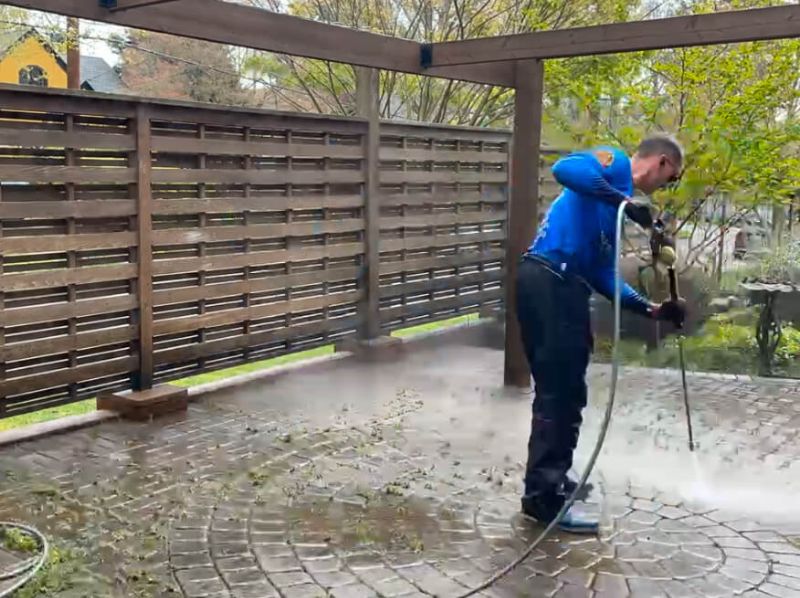
Surface cleaning — Pressure washing removes contaminants, moss, and debris before any product is applied.
-
Surface inspection — Cracks, joint erosion, or damage are identified and addressed prior to sealing.
-
Product selection — Sealers are matched to your specific surface material and exposure conditions.
-
Controlled application — Even coats are applied using professional-grade equipment to confirm full coverage and adhesion.
These sealing benefits only materialize when each step is performed correctly, making professional execution far more reliable than a DIY approach. Additionally, proper sealing can significantly extend the lifespan of pavers, ensuring that your outdoor surfaces remain in top condition for years to come.
Is Your Portland Driveway or Patio Ready to Seal?
Portland’s wet climate accelerates surface degradation, making timely sealing one of the most effective ways to extend the life of your driveway or patio.
Before scheduling a service, assess your surface carefully. Driveway maintenance requires sealing only after the concrete has fully cured—typically 30 days minimum for new installs—and after any existing cracks or spalling have been repaired.
Patio preparation demands similar diligence: confirm the surface is clean, structurally sound, and free of moss, algae, and efflorescence.
If you’re noticing water absorption rather than beading, fading color, or increased surface erosion, your surface is signaling it needs attention.
Sealing a compromised or dirty surface traps contaminants beneath the coating, reducing adhesion and shortening product lifespan. Additionally, paver sanding stabilizes pavers and prevents weed growth, which is essential for maintaining integrity.
Address deficiencies first, then seal.
Frequently Asked Questions
How Long Does Concrete or Paver Sealing Typically Last Before Reapplication?
You’ll typically get 2–5 years of sealing longevity before reapplication, depending on traffic and weather exposure. Follow maintenance tips like regular cleaning to maximize protection and extend your concrete or paver sealer’s lifespan effectively.
Can Sealing Be Done in Rainy Portland Weather Conditions?
You can’t apply sealers in rainy conditions. Proper sealing techniques require dry surfaces and mild temperatures. Weather considerations are critical — you’ll need at least 24–48 rain-free hours before and after Peak Pressure Washing completes your sealing project.
Does Sealing Change the Appearance or Color of My Surface?
Yes, sealing does change your surface’s appearance. You’ll notice surface enhancement through added sheen, while color variations depend on the sealer type—wet-look sealers deepen tones considerably, whereas matte options preserve your surface’s natural, original appearance.
How Soon Can I Walk or Drive on Freshly Sealed Surfaces?
You’ll typically wait 24–48 hours before foot traffic and up to 72 hours for vehicles. Drying time varies based on surface preparation quality, sealer type, humidity, and temperature conditions affecting your specific project.
Is Sealing Safe for Pets and Children After It Dries?
Once the sealer’s fully cured, it’s safe for pet safety and child safety. You won’t face chemical exposure risks after complete drying, but always confirm full cure times with your Peak Pressure Washing technician beforehand.
Conclusion
You now know the difference — and that knowledge protects your investment. Applying the wrong sealer doesn’t just waste money; it damages the surface underneath. Whether you’re sealing poured concrete or interlocking pavers, the material dictates the method. Don’t guess. Contact Peak Pressure Washing and get the right service for your specific surface. Portland homeowners trust us to handle it correctly the first time.