
Fiber cement siding is durable, but Portland’s wet climate makes regular cleaning essential. Moisture, algae, and mildew build up fast and can damage your paint finish and surface seal if left untreated. You’ll want to use low-pressure washing between 500 and 1,500 PSI with a mild detergent solution to clean it safely. Knowing the right tools, techniques, and warning signs can make all the difference in protecting your investment long-term.
Key Takeaways
-
Portland’s wet climate accelerates mold, algae, and mildew buildup on fiber cement siding, making regular cleaning essential for long-term durability.
-
Use low-pressure washing between 500 and 1,500 PSI to clean siding without causing surface damage.
-
A 25- to 40-degree nozzle tip and mild detergent effectively remove dirt and organic growth safely.
-
Always work from top to bottom, maintaining at least 12 inches between the nozzle and siding surface.
-
Peeling paint, soft spots, or widespread algae growth are signs you should contact a professional.
Why Fiber Cement Siding Needs Special Care
Fiber cement siding is durable, but it’s not invincible. While its fiber cement durability makes it resistant to rot, insects, and warping, the material still absorbs moisture and accumulates dirt, mold, algae, and mildew over time.
Left untreated, that buildup breaks down the paint finish, compromises the surface seal, and shortens the siding’s lifespan.
Portland’s wet climate accelerates this process. Frequent rain, humidity, and shade create ideal conditions for organic growth to take hold.
Following basic maintenance tips helps you stay ahead of the damage. You need to clean the surface carefully—using too much pressure or the wrong technique can crack the siding or force water behind the panels, leading to structural issues that cost far more to fix. Regular commercial pressure washing can effectively remove harmful buildup while preserving the integrity of your siding.
How Portland’s Climate Damages Fiber Cement Over Time
Portland’s climate doesn’t just dirty your fiber cement siding—it systematically breaks it down.
The Pacific Northwest’s prolonged wet seasons create ideal conditions for moisture retention within surface paint layers and seams. Once moisture penetrates, it accelerates paint failure, causes edge swelling, and weakens the board’s structural integrity over time.
Overcast skies and limited sunlight mean surfaces stay damp far longer than in drier climates, which fuels aggressive algae growth across north-facing and shaded walls.
That algae isn’t cosmetic—it holds additional moisture against the surface, compounding the damage cycle.
Without regular cleaning, you’re fundamentally letting Portland’s weather slowly degrade what should be a decades-long investment. Regular roof maintenance helps in mitigating these effects and preserving the integrity of your siding.
Staying proactive about removal keeps your siding performing the way the manufacturer intended.
Safe Cleaning Methods for Fiber Cement Siding
When cleaning fiber cement siding, you’ll want to use low-pressure washing techniques—typically no more than 1,500 PSI—to avoid forcing water behind the panels or damaging the surface coating.
You should apply approved cleaning solutions specifically formulated for fiber cement, avoiding bleach concentrations above 10% and steering clear of abrasive or acidic cleaners that can compromise the finish.
Always work from top to bottom, keeping the nozzle at a consistent angle to prevent streaking and guarantee thorough, even coverage.
Low-Pressure Washing Techniques
For fiber cement siding, low-pressure washing is the safest and most effective cleaning method you can use without risking surface damage. The low pressure benefits include protecting the siding’s painted finish, preventing water intrusion behind panels, and avoiding fiber damage that high-pressure streams cause.
To apply effective techniques, set your pressure washer between 500 and 1,200 PSI and use a 25- to 40-degree nozzle.
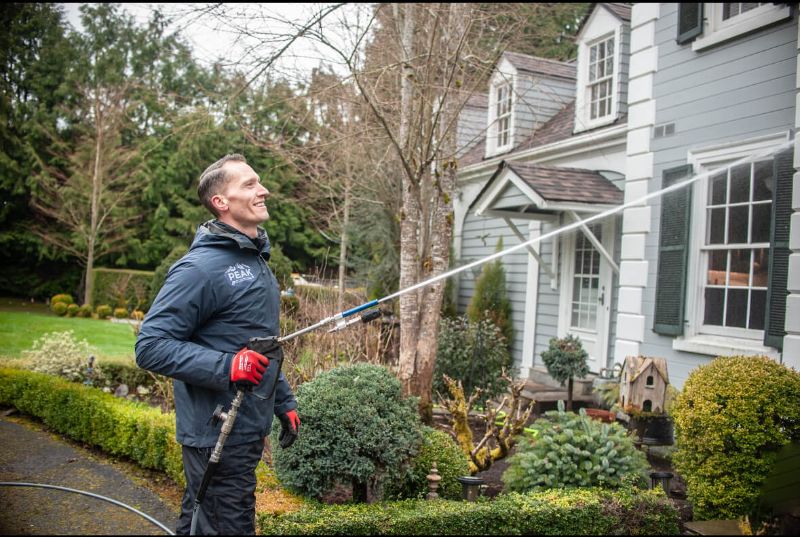
Keep the nozzle at least 12 inches from the surface and work from top to bottom in overlapping horizontal passes. Always spray downward to prevent water from getting behind the siding.
Pair low pressure with a mild detergent solution to break down dirt, algae, and mildew without relying on force to do the work.
Approved Cleaning Solutions
Choosing the right cleaning solution makes a significant difference in how well your fiber cement siding cleans without sustaining damage.
Stick to manufacturer-approved cleaning products specifically formulated for fiber cement or general exterior surfaces. Mild detergent mixed with water works well for routine dirt and grime.
For mold, algae, or mildew buildup, a diluted oxygen bleach solution effectively breaks down organic growth without degrading the siding material. Avoid chlorine bleach at full strength, as it can strip paint and damage the surface finish.
Eco-friendly solutions like plant-based surfactants are increasingly available and perform comparably to harsher chemical alternatives.
Always check the cleaning product’s label to confirm compatibility with painted or primed fiber cement before applying it to your siding.
Pressure Settings and Tools That Won’t Cause Damage
Getting the pressure settings right is critical when cleaning fiber cement siding, since too much force can crack the surface, force water behind panels, or strip the paint.
Keep your pressure washer between 500 and 1,500 PSI, staying closer to the lower end on older or painted siding. Use a 25- to 40-degree nozzle tip to widen the spray pattern and reduce concentrated force.
For cleaning tools, a soft-bristle brush works well for scrubbing stubborn spots without scratching the surface.
Always spray at a slight downward angle to prevent water intrusion behind the panels. Maintain at least 12 inches of distance between the nozzle and the siding. Additionally, it’s essential to prepare your home properly before starting the pressure washing to ensure optimal results.
If you’re unsure about the right pressure settings, hire a professional to avoid costly damage.
Signs It’s Time to Call a Professional
While DIY cleaning works well for routine maintenance, some situations call for a professional. If you notice widespread moss or algae growth that keeps returning despite regular cleaning, it’s a sign the problem runs deeper than surface buildup.
Staining that doesn’t respond to standard solutions, paint that’s peeling or bubbling after washing, or siding that shows soft spots and cracks all indicate conditions that need expert assessment.
You should also call in professional services if your home is multi-story, has difficult roof lines, or requires equipment you don’t own. Improper technique on fiber cement can void manufacturer warranties or cause irreversible surface damage.
Following these maintenance tips protects your investment and keeps small issues from becoming expensive repairs down the road.
How Often Should You Clean Fiber Cement Siding?
How often you clean fiber cement siding depends on your local climate, surrounding vegetation, and the level of pollution or moisture in your area.
In Portland, where rainfall, shade, and organic growth are common, you should plan on cleaning your siding at least once a year.
If your home sits near trees or experiences heavy moss and algae buildup, increase your cleaning frequency to twice yearly.
As part of your regular maintenance tips, inspect the siding each spring for dirt streaks, biological growth, and paint degradation.
Catching buildup early prevents deeper staining and surface damage.
Homes in high-traffic or industrial areas may also need more frequent attention due to airborne pollutants.
Consistent cleaning extends the life of your siding and preserves its factory finish, ultimately enhancing curb appeal in real estate.
Frequently Asked Questions
Can Cleaning Fiber Cement Siding Affect My Homeowner’s Insurance Coverage?
Improper cleaning methods can trigger insurance implications if they cause damage, potentially leading to coverage limitations. You should always use manufacturer-approved techniques and hire licensed professionals like Peak Pressure Washing to protect both your siding and your policy.
Does Fiber Cement Siding Cleaning Differ for Painted Versus Primed Surfaces?
Yes, it differs. You’ll need lower pressure on painted surfaces to protect paint adhesion, while primed surfaces require careful surface preparation cleaning to prevent moisture intrusion before the topcoat fully cures.
Will Cleaning Remove Existing Paint or Staining From Fiber Cement Siding?
Proper cleaning techniques won’t cause paint removal if done correctly. You’ll want to avoid high pressure settings, as they can strip existing paint or staining from your fiber cement siding, causing costly damage.
Can I Clean Fiber Cement Siding During Oregon’s Rainy Winter Months?
You can clean fiber cement maintenance projects during winter, but you’ll want to choose dry weather windows between storms. Winter cleaning techniques work best when temperatures stay above 40°F and you’ve got at least 24 hours of dry conditions ahead.
Does Cleaning Fiber Cement Siding Help Maintain Its Manufacturer Warranty?
Yes, regular cleaning supports warranty compliance, as most manufacturers require documented upkeep. Follow their maintenance tips—avoid high-pressure washing and use approved methods—so you don’t accidentally void your fiber cement siding’s warranty through improper care.
Conclusion
Your fiber cement siding is built to last, but only if you maintain it correctly. Stick to low-pressure washing, approved cleaning solutions, and a consistent schedule — and you’ll avoid costly repairs down the road. Don’t ignore early signs of algae, mildew, or paint deterioration; catching problems early is always cheaper than fixing them later. When in doubt, call a professional rather than risk voiding your warranty or damaging your siding.