
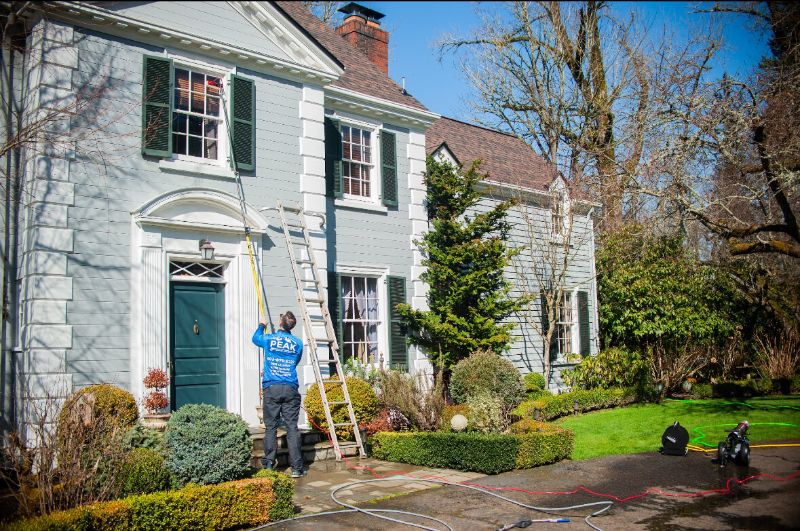
When your house smells musty after a rainy week, you’re detecting microbial volatile organic compounds released by mold, algae, and Streptomyces bacteria reactivated by moisture. Rain elevates humidity, triggering biological colonies already present on your siding, roof, and foundation to off-gas earthy, pungent compounds. Geosmin from bacterial activity intensifies that distinct wet-earth odor. These colonies form within 24 to 48 hours of moisture exposure — and understanding exactly where they hide changes everything.
Key Takeaways
-
Rain raises humidity levels, promoting mold growth in porous materials that releases musty-smelling microbial volatile organic compounds indoors.
-
Geosmin, produced by Streptomyces bacteria in moist soil, releases a distinctive earthy odor intensified by rainfall.
-
Moss and algae on exterior surfaces retain moisture and release musty-smelling compounds during and after rainy periods.
-
Clogged gutters trap water against the roofline, accelerating mold growth and contributing to musty odors near the home.
-
If odors intensify indoors with windows closed, moisture has likely breached the building envelope, indicating an internal source.
What Causes That Musty Smell After Rain?
When rain falls, it raises soil moisture levels and humidity, triggering the release of geosmin—a volatile organic compound produced by soil-dwelling bacteria like Streptomyces.
You’re detecting that compound when you notice the earthy, musty odor following a rainstorm.
But geosmin isn’t always the culprit inside your home. Elevated humidity levels drive moisture into porous building materials—wood, drywall, insulation—creating ideal conditions for mold growth.
Existing mold colonies also become more active and release higher concentrations of microbial volatile organic compounds (MVOCs) when moisture increases. These MVOCs produce the stale, musty odor you notice indoors after prolonged rain.
If your home’s exterior has accumulated organic debris, moss, or algae, those biological materials amplify the problem by retaining moisture and intensifying microbial activity against your siding and roof.
Additionally, mold can cause health problems when spores settle on damp spots, making moisture control essential for maintaining a healthy indoor environment.
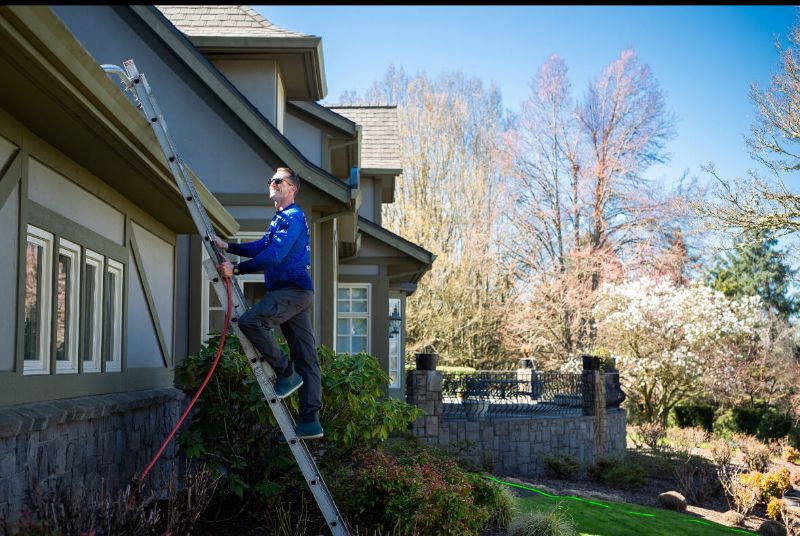
Where Moisture Hides in Your Home’s Exterior
Moisture doesn’t accumulate evenly across your home’s exterior—it concentrates in specific structural zones where airflow is restricted and organic debris collects.
North-facing walls receive less sunlight, making them prime zones for moisture retention. Roof valleys, fascia boards, and soffits trap standing water after heavy rainfall.
Exterior surfaces like wood siding, stucco, and fiber cement absorb water at different rates, but all support microbial growth when they stay damp long enough.
Window frames, door thresholds, and foundation edges also collect runoff that doesn’t fully evaporate. Gutters clogged with leaf debris hold water directly against your roofline.
Each of these zones creates conditions where mold and mildew establish themselves, producing the volatile organic compounds responsible for that persistent musty odor you’re noticing indoors. Regular cleaning, including commercial pressure washing, can significantly reduce moisture buildup and prevent these issues.
How Moss and Algae Make the Problem Worse
When moss takes hold on your roof or siding, it acts like a sponge, holding moisture against surfaces long after rain stops and creating the persistent damp conditions that fuel musty odors.
Algae compounds the problem by metabolizing organic material on your exterior surfaces, releasing microbial byproducts that carry that characteristic musty smell directly into your home.
If you’ve noticed the odor intensifying after each rain event, moss and algae growth on your exterior is likely accelerating the cycle. Regular cleaning enhances home energy efficiency, which can help mitigate moisture retention and reduce musty odors.
Moss Traps Persistent Moisture
Moss and algae don’t just signal a moisture problem—they actively sustain one. Moss absorbs and retains water like a sponge, holding moisture against your siding, roof, or concrete long after rain stops. That prolonged contact accelerates surface degradation and creates the persistent damp conditions that fuel mold and mildew growth indoors.
Algae form dense biofilms that similarly restrict evaporation, keeping surfaces wet far longer than they should be. Both organisms thrive in Portland’s climate, making moisture prevention increasingly difficult without intervention. Once established, they compound every rain event, continuously reintroducing humidity into your exterior materials.
Professional moss removal eliminates these moisture-retaining colonies at their source, allowing surfaces to dry properly and reducing the microbial activity responsible for that lingering musty smell inside your home.
Algae Spreads Musty Odors
Algae produces microbial volatile organic compounds (MVOCs) as a natural byproduct of its metabolic activity, and those compounds are the direct source of the earthy, musty odor you’re detecting inside your home.
During and after rain, algae growth accelerates across your siding, roof, and foundation as moisture availability increases. This rapid cellular activity intensifies MVOC output, pushing odor concentrations higher.
Because MVOCs are gaseous, they penetrate porous building materials and migrate through wall assemblies into your living spaces.
Unlike moss, algae doesn’t require visible colonization to cause odor—thin biofilm layers you can barely see still generate measurable MVOC levels.
Effective odor prevention requires eliminating algae colonies entirely, not just surface rinsing. Residual biological matter left behind continues emitting compounds even after the rain stops.
Is the Smell Coming From Outside or Inside?
Before you can fix the problem, you need to pinpoint whether the odor originates outside your home, inside it, or both.
Outdoor musty smells typically stem from biological growth on exterior surfaces—moss, algae, and mold colonies releasing microbial volatile organic compounds (MVOCs) when rain reactivates them. Additionally, roof contaminants like moss and algae can contribute to these odors, especially in the Pacific Northwest’s wet climate.
Indoor sources, by contrast, usually indicate moisture has already breached your building envelope, pointing to compromised siding, roof penetrations, or saturated insulation requiring immediate attention.
Identifying the Odor Source
Pinpointing whether the musty smell originates inside or outside your home is the critical first step toward resolving it.
Begin odor detection by stepping outside immediately after rainfall. If the smell is absent outdoors but strong indoors, mold growth within your home’s structure is likely responsible. Check crawl spaces, attics, basements, and wall cavities — areas where moisture accumulates undetected.
If the odor is equally strong outside, decomposing organic matter on your roof, siding, or hardscaping may be the culprit. Walk your perimeter and inspect surfaces for dark staining, moss, or algae.
Close all windows and doors, wait 15 minutes, then re-enter your home. A sudden increase in odor intensity upon entry confirms an internal source requiring immediate investigation.
Indoor vs. Outdoor Origins
Once you’ve located the general vicinity of the odor, the next step is determining whether it’s originating from inside your home or from exterior surfaces.
Source location directly affects your solution.
Use these diagnostic steps:
-
Close all windows and doors for 30 minutes. If the musty smell intensifies indoors, elevated indoor humidity is likely trapping moisture within walls, crawlspaces, or HVAC systems.
-
Step outside and smell near your foundation. Pooling water from poor outdoor drainage promotes mold growth on siding, concrete, and soil.
-
Check indoor surfaces for condensation. Visible moisture on walls or ceilings confirms an internal moisture problem rather than an exterior one.
Pinpointing the origin—indoor or outdoor—prevents you from treating the wrong surface and wasting time on ineffective fixes.
When to Clean Your Exterior Before Mold Spreads
Timing your exterior cleaning correctly can mean the difference between a simple wash and a costly remediation. Mold colonies establish within 24 to 48 hours of moisture exposure, so waiting until you smell something musty means you’re already behind. Preventative maintenance targets biofilm, algae, and organic debris before they penetrate surface materials and migrate indoors through wall assemblies and soffit gaps. Regularly cleaning your roof and gutters enhances gutter functionality by ensuring they effectively channel rainwater away from your home’s foundation.
Schedule seasonal cleaning twice yearly — once in early spring after persistent rainfall and again in late fall before wet weather returns. Pay particular attention to north-facing walls, roof valleys, and shaded siding panels, as these zones retain moisture longest. Addressing these areas proactively stops spore loads from reaching concentrations that compromise indoor air quality and require notably more aggressive intervention to resolve.
How Pressure Washing Removes the Source of the Odor
Scheduling exterior cleaning before mold establishes itself addresses timing, but understanding what that cleaning actually does to eliminate odor helps you see why surface washing produces lasting results rather than temporary relief.
Pressure washing benefits your home by physically removing the biological matter responsible for musty smells—not masking it. High-pressure water dislodges:
-
Mold colonies embedded in siding pores and wood grain
-
Algae biofilm that traps moisture and accelerates microbial growth
-
Organic debris accumulating in gutters and roof valleys that feeds odor-producing bacteria
Odor elimination occurs because the source itself is extracted and flushed away. Without that biological material present, rain no longer activates the volatile compounds that create the smell.
Cleaning solutions applied during the process further break down residual spores before rinsing confirms complete removal.
Frequently Asked Questions
Can Musty Smells From Outside Eventually Affect Indoor Air Quality?
Yes, musty outdoor odors can compromise your indoor air quality. When you’ve got poor air circulation, mold spores infiltrate your home, elevating indoor humidity levels and triggering respiratory issues, especially if exterior surfaces harbor untreated biological growth.
How Often Should Portland Homeowners Schedule Exterior Cleaning Services?
Schedule exterior maintenance annually at minimum, but Portland’s wet climate accelerates moss and mold growth, so you’ll benefit from increasing your cleaning frequency to twice yearly—especially targeting roofs, gutters, and siding after heavy rain seasons.
Does Rainy Weather in Portland Make Moss Growth Significantly Worse Over Time?
Yes, Portland’s persistent rainfall greatly accelerates moss growth over time. You’re dealing with compounding moisture cycles that embed spores deeper into surfaces. Without consistent moss prevention and humidity control measures, you’ll face increasingly severe infestations each season.
Are Eco-Friendly Cleaning Solutions Effective at Permanently Eliminating Musty Odors?
Eco-friendly ingredients with natural deodorizing properties can effectively eliminate musty odors by neutralizing mold and mildew at their source. You’ll achieve longer-lasting results when you combine proper surface treatment with adequate ventilation to prevent moisture reaccumulation.
Can Dirty Solar Panels Contribute to Musty Smells Around My Home?
Dirty solar panels don’t directly cause musty smells, but they’re potential odor sources. Neglecting solar panel maintenance allows moisture-trapping debris to accumulate, promoting mold and algae growth nearby, which can contribute to musty odors around your home.
Conclusion
That musty smell after a rainy week isn’t random — it’s biological growth signaling active moisture intrusion in your exterior surfaces. Mold, mildew, and algae colonies produce volatile organic compounds that penetrate your home’s envelope. You’re not dealing with an air quality problem; you’re dealing with a surface contamination problem. Pressure washing removes the microbial source, eliminates trapped organic matter, and disrupts the moisture-retention cycle. Address the exterior, and you’ll eliminate the odor at its origin.