

After a storm, you’ll want to walk your property immediately and look for downed power lines, unstable trees, and structural hazards before touching anything. Check your roof for missing shingles, sagging sections, and exposed underlayment. Inspect gutters for debris blockages, then assess your siding, fences, and decks for cracks, warping, and shifting. Document everything with photos for insurance purposes. There’s much more to uncover about protecting your exterior from hidden damage.
Key Takeaways
-
Walk around your property to spot hazards like downed power lines, unstable trees, and compromised structures before beginning any cleanup.
-
Inspect your roof for missing shingles, sagging sections, and exposed underlayment using binoculars to avoid climbing.
-
Check gutters for debris blockages, sagging sections, and water overflow, then flush downspouts to ensure clear flow.
-
Examine siding, fences, and decks for cracks, warping, lifted boards, and signs of mold or discoloration.
-
Address standing water and debris accumulation immediately, as mold growth can begin within 24–48 hours after a storm.
Start With a Safety Walk Around Your Property
Before you grab any tools or start hauling debris, walk the full perimeter of your property to assess storm damage and identify hazards. This initial property inspection sets the foundation for safe, organized cleanup.
Look for downed power lines, unstable trees, or compromised structures before stepping onto any surface. Check the roof from ground level for missing shingles, displaced flashing, or sagging sections.
Inspect gutters, downspouts, fences, and exterior walls for visible damage or separation.
Take photos as you go—they’ll support any insurance claims you file later. Wet surfaces, broken materials, and hidden structural damage all present real risks, so treat safety precautions as non-negotiable before beginning physical work. Regular gutter cleaning ensures effective drainage and prevents water damage, which is especially crucial after a storm.
Only after completing this walk should you move into active cleanup and repairs.
Roof Damage Signs You Shouldn’t Ignore After a Storm
After a storm passes, many signs of roof damage are visible from the ground if you know what to look for. Scan your roofline carefully for missing, curled, or displaced shingles.
Check gutters and downspouts for granule accumulation, which signals shingle deterioration. Look for sagging sections, exposed underlayment, or damaged flashing around chimneys and vents.
Clear storm debris from your roof’s surface before it traps moisture and accelerates decay. Leaves, branches, and wet organic matter create conditions where moss and mold establish quickly.
Use binoculars for closer roof inspection tips without climbing. If you spot compromised areas, document them with photos before attempting any cleanup.
Addressing visible damage early prevents minor issues from becoming costly structural problems after the next rain event. Additionally, regular cleaning and maintenance, such as engaging professionals for pressure washing, can help preserve your roof’s integrity and extend its lifespan.
Check Your Gutters for Debris and Blockages
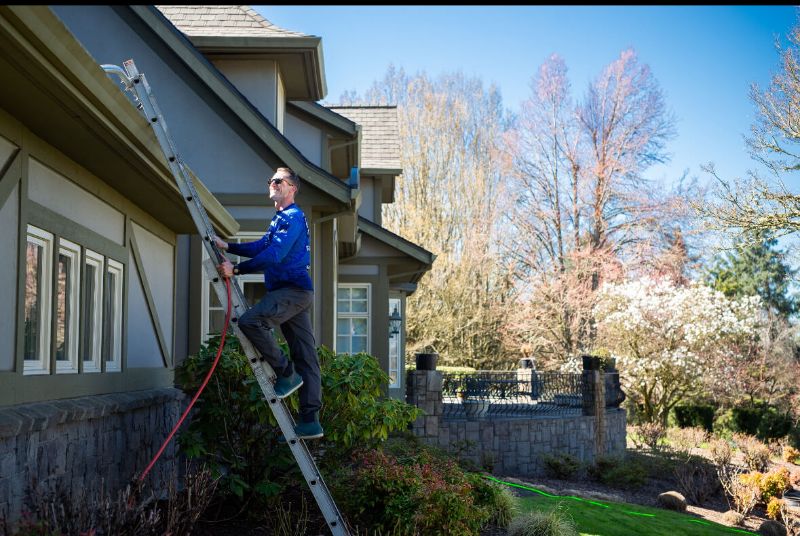
After a storm, your gutters are one of the first places you should inspect, as high winds and heavy rain drive leaves, twigs, and granules from roofing shingles directly into the channels.
Watch for telltale signs of blockages: water spilling over the sides during rain, sagging gutter sections, or visible debris packed at the downspout openings.
Clear any buildup promptly, since trapped moisture accelerates rust, pulls fasteners loose, and forces water against your fascia boards and foundation. Regular gutter cleaning frequency helps prevent these issues from escalating.
Signs of Clogged Gutters
Gutters take a beating during a storm, and blockages can develop quickly when leaves, twigs, and debris accumulate. Knowing the warning signs helps you act before minor clogs cause serious damage.
Watch for these indicators:
-
Water overflow along the gutter’s edge during or after rain suggests a blockage is restricting flow.
-
Sagging sections indicate accumulated weight from trapped debris and standing water.
-
Staining or streaking on fascia boards points to water backing up behind the gutter.
-
Pooling water near your foundation signals that downspouts aren’t directing water away properly.
-
Visible debris or plant growth emerging from gutters confirms buildup.
Consistent gutter maintenance prevents these issues from escalating.
If you’re spotting multiple signs after a storm, a professional inspection and cleaning should be your next step.
Post-Storm Gutter Maintenance
Once you’ve identified the warning signs, the next step is clearing the source of the problem. Regular gutter inspections after storms prevent minor blockages from escalating into costly structural damage.
Follow these maintenance tips systematically:
-
Remove visible debris — Clear leaves, twigs, and sediment by hand or with a gutter scoop before flushing.
-
Flush downspouts — Run water through each downspout to confirm unobstructed flow.
-
Check outlet screens — Remove and rinse any debris-clogged mesh guards blocking drainage.
-
Inspect seams and fasteners — Look for separated joints or loose hangers that storms may have weakened.
If blockages persist or gutters show structural damage, professional gutter cleaning guarantees a thorough, safe solution without risking injury from ladder work.
Siding, Fences, and Decks: What Storm Damage Looks Like
After a storm, walk the perimeter of your property and inspect your siding, fences, and decks for cracked panels, splintered wood, loose fasteners, and impact marks from debris.
You’ll also want to look beyond surface-level damage — soft spots underfoot, warped boards, discoloration, and new mold or mildew growth often signal moisture intrusion that isn’t immediately obvious. Regular cleaning and maintenance are essential to preserve the lifespan of your fence, catching both visible and hidden damage early prevents minor storm wear from escalating into costly structural repairs.
Identifying Visible Storm Damage
Storms leave behind 3 primary areas of visible damage worth inspecting closely: your siding, fences, and decks.
Begin your damage assessment by systematically working through each surface after clearing storm debris.
-
Siding: Look for cracks, dents, warped panels, or sections that have pulled away from the structure.
-
Fences: Check for leaning posts, broken boards, missing sections, or hardware that’s shifted under wind pressure.
-
Decks: Inspect for lifted boards, popped fasteners, splintering wood, or structural instability along the frame.
-
Surface Staining: Note any new discoloration, mold streaking, or debris embedding across all three surfaces.
Document everything with photos before touching anything.
A methodical walkthrough now prevents costly oversights later and gives you a clear repair and cleaning priority list.
Hidden Damage Warning Signs
While visible damage gives you a starting point, the most structurally compromising storm damage often hides behind surfaces, beneath boards, and inside joints.
On siding, press firmly against panels to check for soft spots indicating moisture infiltration and hidden leaks behind the cladding. Inspect seams and corners for structural cracks where water repeatedly forces its way through.
On fences, examine post bases at ground level — storm saturation accelerates rot inside the wood while the exterior looks intact. Wiggle each post to test stability.
On decks, probe between boards with a screwdriver. If it penetrates easily, the wood’s structural integrity is already compromised.
Check ledger board connections against the house closely, as hidden leaks here can transfer moisture directly into your home’s framing.
How Wet Weather Accelerates Moss and Mold Growth
Wet weather doesn’t just leave surfaces dirty — it creates the exact conditions moss and mold need to establish and spread. Prolonged moisture, low light, and organic debris combine to accelerate biological growth across roofs, siding, and concrete.
Watch for these four high-risk post-storm scenarios:
-
Standing water on flat surfaces feeds mold colonies within 24–48 hours.
-
Debris accumulation in gutters traps moisture against fascia and soffits.
-
Shaded roof sections retain humidity longest, requiring targeted moss prevention strategies.
-
Organic staining on siding signals early mold colonization needing immediate mold treatment options.
Don’t delay your response. Biological growth compounds quickly, and what starts as surface discoloration can penetrate materials, causing structural deterioration that costs far more to repair than to prevent. Regular inspections are essential for identifying potential issues before they escalate.
When to Call a Pressure Washing Pro After Storm Cleanup
Some post-storm cleanup tasks fall within DIY range, but others require the equipment, technique, and expertise that only a professional can deliver.
If you’re dealing with widespread moss reactivation, embedded debris on concrete, storm-stained siding, or roof contamination, a professional assessment helps you identify damage you might otherwise miss.
Attempting high-pressure cleaning without proper training risks surface erosion, water intrusion, and voided warranties. The pressure washing benefits extend beyond surface aesthetics — correct technique removes biological growth at the root level, preventing accelerated deterioration.
Call a pro when post-storm buildup covers large surface areas, when soft-wash applications are required for delicate materials, or when safety hazards like roof access are involved.
Precision cleaning now prevents costly repairs later.
Frequently Asked Questions
How Soon After a Storm Should I Document Damage for Insurance?
Document storm damage assessment as soon as it’s safe—ideally within 24–48 hours. You’ll strengthen your insurance claim process by photographing all exterior damage immediately, capturing timestamps, and noting affected surfaces before any cleanup begins.
Can Storm Debris Scratch or Permanently Damage My Home’s Exterior Surfaces?
Yes, storm debris types like branches, gravel, and metal fragments can permanently scratch and gouge your home’s surface materials. You’ll want to inspect siding, wood, and painted areas carefully for embedded particles causing lasting damage.
Are Pressure Washing Services More Expensive Following Major Storm Events?
Prices don’t automatically increase, but cost factors like debris volume and surface damage can affect your total. High demand impacts service availability post-storm, so you’ll want to schedule with Peak Pressure Washing promptly.
Does Storm Runoff Cause Lasting Damage to Concrete Driveways and Walkways?
Yes, storm runoff can cause lasting concrete erosion and drainage issues on your driveways and walkways. It slowly undermines the surface, widens existing cracks, and weakens the structural integrity beneath, leading to costly long-term repairs if you don’t address it promptly.
Should I Clean Solar Panels Immediately After a Storm Passes?
You shouldn’t clean solar panels immediately after a storm. Wait until conditions are completely safe, then prioritize storm debris removal to restore efficiency. Proper solar panel maintenance guarantees you’re maximizing energy output without risking damage from rushed cleaning.
Conclusion
After a storm, you can’t afford to skip your exterior inspection. Work through each area methodically — roof, gutters, siding, decks, and fences — documenting what you find before conditions worsen. You’re looking for debris accumulation, moisture intrusion points, and early biological growth that’ll accelerate if left untreated. Once you’ve completed your assessment, bring in a pressure washing professional to clear storm residue and restore your home’s protective surfaces before the next weather system hits.