

When wet leaves sit on your concrete, they release tannins that penetrate the porous surface within hours. You won’t see the damage immediately, but oxidation is already occurring beneath the surface. Cold weather makes it worse — freeze-thaw cycles drive stains deeper while slowing the cleaning agents that break them down. By winter, those stains have polymerized into stubborn compounds that standard cleaning can’t touch. Keep scrolling to understand exactly what you’re up against.
Key Takeaways
-
Wet leaves release tannins that penetrate concrete’s porous surface within hours, with oxidation occurring even before discoloration becomes visible.
-
Freeze-thaw cycles drive stains deeper into concrete while degrading surface sealants, increasing vulnerability to permanent staining over winter.
-
Cold temperatures slow evaporation, causing pores to contract and trap tannin-rich moisture deeper inside the concrete’s structure.
-
Rain dilutes cleaning solutions and flushes fresh tannins deeper into concrete, compounding stains and making winter treatment less effective.
-
Longer tannin contact causes polymerization and hardening, requiring stronger chemical agents as stains chemically bond within the concrete matrix.
Why Wet Leaves Stain Concrete Before You Even Notice
Wet leaves begin staining concrete long before the discoloration becomes visible to the naked eye. Leaf biology explains why: decomposing leaves release tannins, lignins, and organic acids that penetrate concrete’s porous surface within hours of contact. You won’t see the damage immediately because the compounds absorb beneath the surface layer first, oxidizing as they settle deeper into the material. Seasonal effects accelerate this process. Fall’s fluctuating temperatures and frequent rainfall keep leaves consistently wet, creating ideal conditions for accelerated tannin transfer. By the time you notice brown or rust-colored patches on your driveway or walkway, the staining compounds have already bonded with the concrete at a molecular level. Waiting to address fallen leaves doesn’t just delay cleaning—it compounds the difficulty of removal markedly. Keeping gutters clear of autumn debris ensures water and leaves are channeled away from concrete surfaces, reducing the frequency and severity of tannin staining exposure.
Why Leaf Stains on Concrete Go Deeper Than They Look
When a leaf sits on concrete, its tannins don’t just rest on the surface—they migrate into the porous matrix of the concrete itself. Concrete’s capillary structure actively draws in moisture, pulling tannin-laden liquid deeper with each wet-dry cycle. The longer the stain sits, the more it polymerizes and hardens within those pores, making surface-level cleaning increasingly ineffective. At this stage, chemical cleaning agents like degreasers and sodium hypochlorite become necessary to break down the stain at a molecular level rather than simply washing it away.
Tannins Penetrate Concrete Pores
Concrete looks solid, but it’s actually a porous material filled with microscopic capillaries that absorb liquids on contact. When wet leaves sit on your concrete, they release tannins—organic compounds that act as natural dyes. Concrete porosity makes this especially problematic. Those capillaries pull tannin-rich moisture deep into the slab through tannin absorption, embedding the compounds well below the surface layer.
Once inside, tannins bind with calcium hydroxide in the concrete matrix, forming stable chemical compounds that resist simple cleaning methods. The longer leaves remain in contact with the surface, the deeper that penetration goes. Rain accelerates the process by continuously flushing fresh tannins downward. By the time you notice the discoloration, the stain isn’t sitting on your concrete—it’s locked inside it. High-pressure water spray is particularly effective at extracting contaminants from porous concrete surfaces, reaching depths that traditional cleaning methods simply cannot match.
Stains Harden Over Time
Once tannins penetrate the concrete matrix, oxidation accelerates the staining process and makes removal considerably harder. Exposure to rain, freezing temperatures, and UV light chemically bonds organic compounds deeper into the surface. Without stain prevention measures in fall, you’re facing a much harder job by winter.
Hardened stains resist standard cleaning because:
-
Oxidized tannins polymerize, forming stable compounds that bond tightly to calcium silicate in concrete
-
Freeze-thaw cycles drive stains deeper, expanding moisture carries pigments further into pores
-
Surface sealants degrade, leaving concrete increasingly vulnerable with each passing week
-
Repeated wetting reactivates tannins, compounding discoloration with every rainfall
Applying a penetrating or topical sealant before fall debris accumulates creates a protective barrier that significantly slows tannin absorption into the concrete surface. Seasonal maintenance during fall—before stains cure completely—is the only reliable way to prevent permanent discoloration requiring aggressive chemical treatment or surface grinding.
Why Cold Weather Makes Concrete Leaf Stains Permanent
Cold weather greatly worsens leaf staining on concrete by slowing the evaporation of tannin-rich moisture before it penetrates deeper into the surface. When cold temperatures drop below 50°F, the concrete’s pores contract slightly, trapping tannins further inside the material. Simultaneously, reduced microbial activity means organic compounds break down more slowly, giving pigments additional time to bond with the concrete matrix. Freeze-thaw cycles then expand absorbed moisture, physically driving stains deeper into the slab. By winter, stain prevention becomes considerably harder because the compounds have already undergone chemical bonding within the concrete. You’re no longer dealing with surface-level contamination — you’re dealing with embedded pigmentation that resists standard cleaning methods. Waiting until temperatures drop turns a manageable cleaning task into a far more intensive remediation process. Clogged gutters that allow water and decomposing leaves to overflow onto concrete surfaces accelerate tannin absorption, making timely gutter maintenance a critical factor in preventing permanent staining before cold weather sets in.
Why Winter Is the Worst Time to Remove Leaf Stains From Concrete
If you’re dealing with leaf stains on concrete, winter is the worst time to address them. Cold temperatures slow the chemical reactions that cleaning agents rely on to break down tannins and organic compounds, reducing their effectiveness greatly. Rain further dilutes those solutions before they can penetrate, and saturated concrete resists treatment by limiting the absorption needed for deep stain removal. Clogged gutters that overflow during storms can continuously deposit leaf debris and tannins onto concrete surfaces, making stains progressively harder to remove as the season advances.
Cold Slows Cleaning Chemistry
When temperatures drop, the chemical reactions that break down tannin bonds in concrete slow considerably. Cold weather effects directly compromise cleaning solution efficacy, making winter the least effective time to treat leaf stains.
Here’s what happens chemically when you attempt concrete cleaning in cold conditions:
-
Enzyme-based cleaners become nearly inactive below 50°F, losing their ability to oxidize tannin compounds
-
Alkaline degreasers require heat to saponify organic material; cold neutralizes that reaction
-
Dwell time increases markedly, yet results still fall short of warm-weather applications
-
Surface tension rises in cold water, reducing solution penetration into concrete’s porous structure
You’re fundamentally fighting the stain with a weakened formula. Waiting until winter doesn’t just delay cleaning—it actively works against it. Professional pressure washing services use eco-friendly cleaning agents that are specifically formulated to work at optimal temperatures, making warmer months the ideal window for effective stain removal.
Rain Dilutes Cleaning Solutions
Temperature isn’t the only factor working against you in winter—Portland’s relentless rainfall compounds the problem considerably. When rain falls during or after treatment, it dilutes cleaning solutions before they penetrate the stained concrete surface. Chemical dwell time is critical to all effective cleaning methods, and rain interrupts that process entirely. Surfactants need uninterrupted contact with organic stain compounds to break molecular bonds. Rain doesn’t allow that. Seasonal effects also extend beyond simple dilution—runoff carries diluted chemicals away from the treatment zone, reducing concentration below effective thresholds. You’re fundamentally wasting product while leaving stains intact. Mold and mildew growth(link) thrives in Portland’s damp climate, meaning winter rain doesn’t just hinder cleaning efforts—it actively encourages new biological stains to develop on already compromised surfaces. Winter’s wet conditions make it nearly impossible to control application timing, coverage, or dwell periods with any precision, undermining even professional-grade treatments before they can produce results.
Wet Concrete Resists Treatment
Beyond dilution, wet concrete itself actively resists chemical penetration. Water molecules already occupying the pores block cleaning agents from reaching embedded tannins. Wet surface challenges fundamentally compromise effective treatment methods, making winter cleaning attempts largely ineffective.
When concrete stays saturated, here’s what happens:
-
Pore blockage prevents degreasers and alkaline cleaners from bonding with stain molecules
-
Surface tension from standing water repels hydrophilic cleaning solutions before absorption occurs
-
Diluted dwell time shortens chemical reaction windows, reducing breakdown of organic compounds
-
Temperature-slowed evaporation keeps concrete wet longer, extending the window where treatment fails
You can’t force a chemical reaction on a surface that won’t accept the solution. Waiting until winter means you’re fighting concrete’s saturated state on top of an already-set stain.
Can Pressure Washing Remove Set-In Leaf Stains From Concrete?
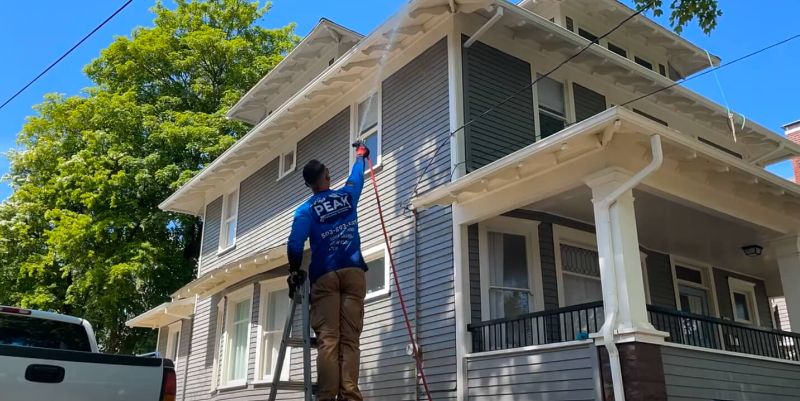
Pressure washing can remove leaf stains from concrete, but the outcome depends on how deeply the tannins have penetrated the surface and how long they’ve been sitting. Pressure washing effectiveness drops considerably once tannins bond with the concrete’s porous structure. Fresh stains respond well to high-pressure water alone. Set-in stains typically require combining pressure washing with targeted stain removal techniques, including pre-treatment with alkaline degreasers or oxalic acid-based cleaners that break down tannin compounds before rinsing. Even with ideal equipment and chemistry, deeply embedded stains may only lighten rather than fully disappear. The longer you wait, the more aggressive the treatment required. Acting before winter allows standard pressure washing to handle the job without chemical intervention.
Clean Concrete Leaf Stains Before the Rain Arrives
Rain consistently accelerates tannin penetration by driving organic compounds deeper into concrete’s porous matrix, which means cleaning before the wet season arrives isn’t optional—it’s strategic. Seasonal cleaning eliminates staining agents before rainfall locks them in permanently.
Prioritize preventive maintenance by acting on these critical timing factors:
-
Surface moisture opens concrete pores, allowing tannins to migrate deeper with each rain event
-
Temperature drops slow cleaning chemical activation, reducing treatment effectiveness in winter
-
Accumulated leaf debris continues oxidizing beneath rain, compounding stain severity weekly
-
Wet concrete resists sealants, eliminating your post-cleaning protection window entirely
You lose leverage every time it rains. Scheduling professional concrete cleaning before fall’s first heavy rainfall preserves your surface integrity and keeps restoration costs manageable rather than significant.
Frequently Asked Questions
How Long Do Leaves Need to Sit Before Staining Concrete?
Leaves can stain your concrete within 1–2 weeks of contact. As leaf decomposition accelerates with moisture, tannins penetrate porous surfaces fast. Don’t skip seasonal maintenance—you’ll face stubborn, set-in stains that are harder to remove.
Do Certain Tree Species Cause Worse Concrete Staining Than Others?
Yes, tree species considerably affect staining severity. Oak, maple, and walnut leaves contain high leaf tannins that penetrate concrete aggressively. Seasonal factors like wet conditions accelerate this process, making you especially vulnerable during fall accumulation periods.
Can Leaf Stains Affect Concrete’s Structural Integrity Over Time?
Leaf stains won’t directly crack your concrete, but they accelerate surface degradation. Tannic acid etches the top layer, making it more porous and vulnerable to freeze-thaw damage. Prioritizing stain prevention through regular concrete maintenance protects your surface’s long-term structural health.
Does Sealing Concrete Prevent Leaf Tannins From Causing Stains?
Yes, sealing concrete with quality sealing products does block leaf tannins from penetrating the surface. You’ll find these preventative measures create a protective barrier, reducing absorption and making future cleaning considerably easier and more effective.
Are Leaf Stains on Concrete Covered by Homeowner’s Insurance?
Homeowner’s insurance won’t cover leaf stains since they’re considered maintenance neglect, not sudden damage. You’ll need to handle stain removal out-of-pocket, as insurance claims require accidental, unforeseen events—not gradual organic buildup on your concrete.
Conclusion
Don’t let seasonal procrastination turn a simple cleanup into an expensive restoration project. Once leaf tannins penetrate your concrete’s pore structure and winter’s freeze-thaw cycles drive them deeper, you’re fighting a losing battle against chemistry and physics. Remove leaves promptly, treat staining early, and seal your concrete before Portland’s rainy season begins. Every week you wait, those organic compounds are bonding more aggressively with your concrete’s calcium matrix—and your removal options are narrowing.